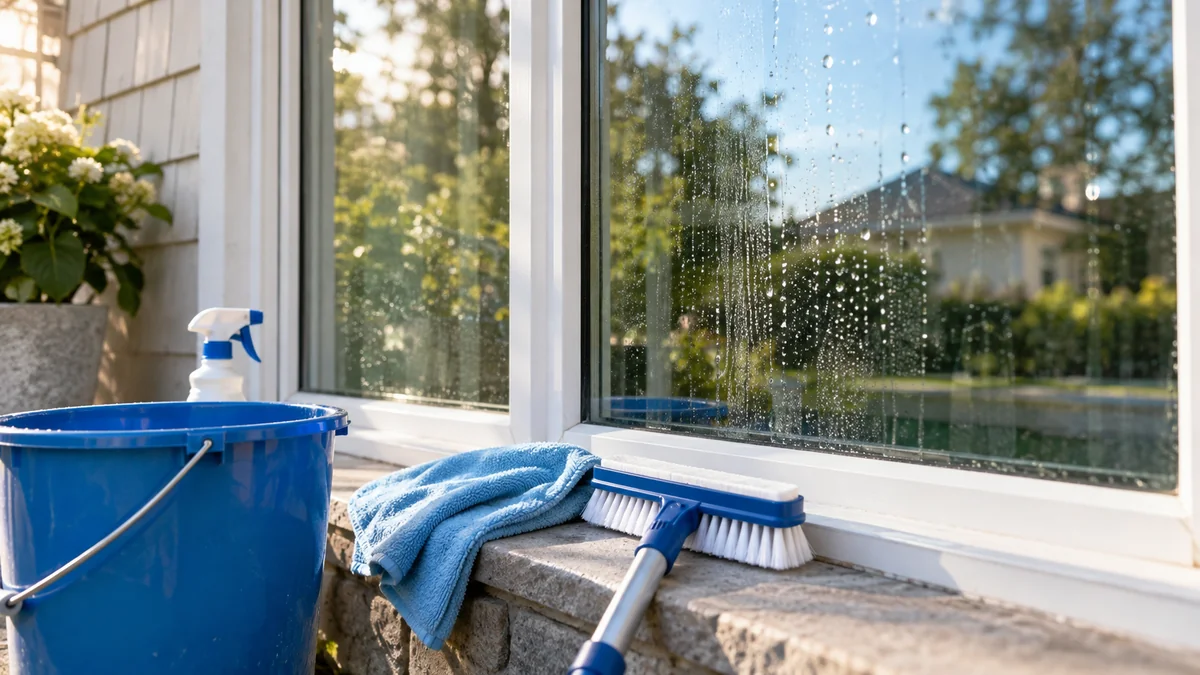
To wash exterior windows of a house, remove screens and loose grit, wet the glass with a mild soap solution, scrub with a microfiber washer, then pull a clean squeegee across the pane with overlapping strokes. Work in shade below 80°F (27°C), detail the edges with a dry microfiber cloth, and use a ground-based pole system for unsafe heights.
Key Facts at a Glance
- A practical DIY solution uses about 1 teaspoon of liquid dish soap per 1 gallon of warm water.
- Washing in shade prevents solution from drying before the squeegee can remove it.
- A clean, undamaged squeegee blade reduces streaks more effectively than adding extra detergent.
- Pure-water window systems clean upper windows without ladder work, but they cost more initially.
- High-pressure spray can damage insulated-glass seals, screens, trim, and exterior caulking.
- Typical DIY cleaning takes 15-20 minutes per accessible window, including screen and sill work.
What Does Exterior Window Washing Remove?
Exterior window washing removes loose dirt, pollen, cobwebs, bird droppings, insect residue, greasy film, and some mineral deposits from the outside glass and surrounding frame. The process combines surfactant action, mechanical scrubbing, and rinsing: detergent loosens oily binders, the washer agitates soil, and clean water carries suspended particles away.
Glass can still look cloudy after washing when the problem is etched mineral scale, failed insulated-glass seals, or oxidation on the frame rather than ordinary dirt. Cleaning cannot restore a failed seal between double panes, and aggressive scraping can permanently scratch glass.
Which Conditions Make Cleaning More Difficult?
Hard municipal water leaves calcium and magnesium deposits as it dries. Construction dust, paint overspray, tree sap, and baked-on bird droppings require longer wet contact and sometimes a compatible specialty cleaner.
Window design also changes the task. Tilt-in sash windows may be cleaned from inside, while fixed panes, skylights, storm windows, and third-story units require extension equipment or professional access.
Which Exterior Window Cleaning Method Should You Use?
The best method depends primarily on height, soil type, water quality, and the condition of the glass and seals. Use a hand scrubber and squeegee for reachable panes, a water-fed pole for elevated routine cleaning, and a pressure washer only for carefully controlled low-pressure rinsing around suitable exterior assemblies.
| Method | Typical reach | Typical DIY cost | Best use | Main limitation |
|---|---|---|---|---|
| Hand scrubber and squeegee | Ground floor, about 6-10 feet | $30-$80 | Detailed cleaning of accessible glass | Requires safe access |
| Telescoping water-fed pole | About 15-30 feet, equipment-dependent | $150-$600+ | Second- and third-story maintenance | Needs purified water and practice |
| Low-pressure washer attachment | About 10-25 feet | $100-$400 if already owning washer | Fast light-duty rinsing | Seal and spotting risk |
| Professional window cleaner | Any height with suitable equipment | $150-$450 typical home range | High, fragile, or numerous windows | Service cost and scheduling |
Is a Water-Fed Pole Better Than a Squeegee?
A water-fed pole is safer for upper windows because the operator remains on the ground, while a squeegee usually produces more precise edge detailing on reachable panes. The pole system pumps deionized or reverse-osmosis-treated water through a brush; the final rinse dries with little or no mineral residue.
Pure water is not magic. It does not quickly dissolve thick paint, silicone, heavy oxidation, or hardened construction debris. A brush can also move grit across delicate coated glass if the pane was not pre-rinsed.
Can You Use a Pressure Washer on Exterior Windows?
A pressure washer can rinse some exterior windows when fitted with a low-pressure attachment and used from a suitable distance, but it is not the preferred method for detailed residential glass cleaning. Never aim a concentrated high-pressure jet at insulated-glass edges, weatherstripping, screens, vents, caulk joints, or damaged trim.
Pressure can force water past seals and contribute to moisture between double panes. Hard water can then dry into spots. A garden hose with a gentle spray is safer for the pre-rinse stage.
Before You Start: Tools, Weather, and Safety
Prepare the equipment before mixing solution. A typical accessible-window setup requires a 12- to 18-inch microfiber washer, a 10- to 14-inch squeegee, two clean microfiber cloths, a bucket, a soft brush or vacuum, a hose, and a stable extension pole if needed.
| Requirement | Recommended specification | Why it matters | Replacement trigger |
|---|---|---|---|
| Cleaning bucket | 1-2 gallons, clean plastic | Prevents grit contamination | Visible sediment or oily film |
| Soap solution | 1 teaspoon dish soap per gallon | Limits residue and lubricates glass | Mix fresh when visibly dirty |
| Washer sleeve | Microfiber, 12-18 inches | Holds solution and captures soil | Frayed fibers or embedded grit |
| Squeegee | 10-14-inch rubber blade | Fits common residential panes | Nick, split, chatter, or streaking |
| Microfiber cloth | Lint-free, 2-4 cloths | Dries edges without paper lint | Damp, gritty, or contaminated |
| Ladder | Rated for user and equipment load | Reduces instability risk | Any damage, wobble, or missing foot |
Choose an overcast day or clean the shaded side of the house first. A typical workable range is 45-80°F (7-27°C), provided the glass is not freezing and wind does not blow solution onto finished surfaces.
Do not ladder-clean a high, overreaching, steep, wet, or obstructed window. OSHA guidance commonly uses a 4:1 ladder setup rule, meaning the base is about 1 foot out for every 4 feet of working height, but that rule does not make an unsafe location safe. Use a ground-based pole or hire an insured professional when access is questionable.
Step 1: Remove Screens and Loose Debris
Remove each exterior screen carefully, label it with painter’s tape if several screens look alike, and set it on a clean, flat surface. Vacuum or brush cobwebs, dead insects, leaves, and loose grit from the frame, sill, corners, and nearby siding.
Dry dust removal prevents abrasive particles from becoming slurry during washing. Do not drag a dry cloth across gritty glass, because trapped silica and masonry dust can create fine scratches.
You’ll know it worked when: no loose grit falls from the frame when you touch it lightly.
Common mistake: spraying a dirty pane immediately and spreading grit across the glass with a washer.
Step 2: Pre-Rinse the Glass Carefully
Rinse accessible glass with a gentle hose spray from the top downward. The rinse should float away coarse dirt, not blast water into vents, damaged seals, or interior-facing joints.
Skip or minimize the hose rinse when the local water supply is very hard and the glass is already lightly soiled. In that situation, apply the soap solution directly with a well-rinsed washer, then remove the dirty solution before it dries.
You’ll know it worked when: visible sand, pollen, and loose droppings have left the pane without any dry grit remaining.
Common mistake: using a pressure-washer turbo nozzle, which concentrates force and can damage seals or trim.
Step 3: Mix the Window Cleaning Solution
Fill a clean bucket with 1-2 gallons of warm water and add about 1 teaspoon of liquid dish soap per gallon. Stir gently rather than creating a bucket of foam; excess detergent leaves a film that attracts dust and makes the next cleaning harder.
For routine soil, a mild detergent solution is usually sufficient. For heavy mineral deposits, use a separate spot-treatment container with a manufacturer-approved hard-water remover, or begin with a small test area containing diluted white vinegar.
Never mix vinegar with bleach, ammonia, or other cleaners. Acidic products can also affect natural stone, some metal finishes, and certain painted surfaces, so protect nearby materials and rinse runoff promptly.
You’ll know it worked when: the solution feels slippery on glass but leaves no thick foam on the washer.
Common mistake: adding several tablespoons of soap because the water looks dirty. More soap increases residue rather than cleaning power.
Step 4: Wet and Scrub the Exterior Glass
Dip the microfiber washer into the solution, wring it until it is saturated but not dripping, and scrub the pane from the top down. Agitate corners, muntins, lower edges, and areas beneath dripping bird nests more deliberately than open glass.
Keep the surface visibly wet for roughly 30-60 seconds on ordinary grime. Re-wet dried droppings instead of scraping them dry. For sap or paint, use a glass-safe product and follow its label; test an inconspicuous area before treating the entire pane.
Use a new, lubricated scraper only when the glass manufacturer permits it. Hold a fresh blade nearly flat, around 15 degrees, and push residue in one direction through wet soap solution. Do not use a razor on tinted film, acrylic, plastic glazing, or dry glass.
You’ll know it worked when: the washer moves smoothly and no dry islands or gritty patches remain.
Common mistake: scrubbing a dry bird dropping or paint spot, which increases scratch risk.
Step 5: Squeegee the Pane in Overlapping Passes
Create a dry starting strip along the top edge with a clean microfiber cloth, then place the squeegee against that strip and pull downward at a consistent angle. Overlap each pass by about 1-2 inches, and wipe the rubber blade with a lint-free cloth after every stroke.
Keep moderate, even pressure. If the blade chatters, the pane is under-lubricated, the rubber is worn, or pressure is excessive. For broad windows, a horizontal technique can work, but the operator must keep the leading edge in contact with the glass and manage runoff.
Do not stop halfway across a pane unless the blade is wiped and the remaining area stays wet. A dry boundary creates a visible line.
You’ll know it worked when: the glass looks uniformly clear immediately after the final pass, with only a narrow wet edge around the frame.
Common mistake: using one long pass with a dirty blade. Small contamination on the rubber can create parallel streaks across the entire window.
Step 6: Detail Edges, Frames, Sills, and Screens
Use a dry microfiber cloth to remove water from the top, side, and bottom edges. Wipe the sill and frame separately, because frame grime can transfer back onto clean glass.
Wash screens with mild soapy water and a soft brush, rinse them gently, and let them dry fully before reinstalling. Wet screens can trap dust, and forcing a damp screen into a frame can transfer dirty water to the sill.
Inspect weep holes at the bottom of the frame. These openings drain rainwater and should not be blocked with cloth fibers, caulk, paint, or debris.
You’ll know it worked when: the pane stays clear after several minutes and no water beads remain along the lower frame.
Common mistake: reinstalling a screen while it is wet or upside down, which can return dirt to the cleaned opening.
How Much Time and Money Does Exterior Window Washing Take?
Typical DIY hand-cleaning costs $30-$80 for reusable tools and takes 15-20 minutes per accessible window when screens, frames, and detailing are included. Professional pricing commonly ranges from $10-$25 per pane, or approximately $150-$450 for a standard home, although height, pane count, screens, storms, and hard-water restoration can change the quote substantially.
| Project size | Typical pane count | DIY labor time | Typical professional price |
|---|---|---|---|
| Small single-story home | 8-15 panes | 2-5 hours | $120-$250 |
| Average two-story home | 20-35 panes | 5-10 hours | $200-$450 |
| Large home with many divided panes | 40-70 panes | 10-18 hours | $400-$900+ |
| Mineral-stain restoration | 10-30 affected panes | 30-90 minutes per pane | $25-$100+ per pane |
Pane definitions vary. Some companies price a large window as one unit, while others count each divided light separately, so request a written definition before comparing estimates.
Clean most homes twice a year, commonly in spring and autumn. Homes near construction, unpaved roads, oceans, dense trees, or active agriculture may need quarterly maintenance.
Which Special Situations Need a Different Approach?
How Do You Clean Second-Story Windows Without a Ladder?
Use a water-fed pole or clean from inside when the sash tilts safely inward. A telescoping pole keeps both feet on the ground, but the operator still needs control over brush pressure, hose routing, overhead wires, and runoff.
Do not lean a ladder sideways to reach around a window. Hire a professional for third-story panes, roof-level windows, skylights, or locations above sloping ground.
How Do You Remove Hard-Water Spots?
Hard-water spots require an acidic or chelating mineral remover, not more dish soap. Test diluted vinegar or a labeled calcium-removal product on a small wet area, keep it away from stone and sensitive metals, then rinse thoroughly with low-mineral water.
White haze that remains after treatment may be etched into the glass. Etching is surface damage, not removable dirt, and may require professional polishing or glass replacement.
What About Tinted, Low-E, or Leaded Glass?
Check the glass and film manufacturer’s care instructions before using scrapers, abrasive pads, ammonia, strong acids, or high heat. Exterior low-emissivity coatings and aftermarket films can have different chemical restrictions.
Leaded glass, antique panes, acrylic glazing, and cracked glass deserve conservative hand cleaning. Avoid pressure, stiff brushes, and ladder work that could flex the assembly.
How Should You Control Runoff?
Place absorbent towels near doors, protect delicate plants from concentrated detergent, and avoid allowing dirty water to dry on masonry, natural stone, unfinished wood, or freshly painted surfaces. Rinse sensitive landscaping with clean water before and after work when runoff is unavoidable.
Common Mistakes and How to Fix Them
| Visible problem | Likely cause | Immediate correction | Prevention |
|---|---|---|---|
| Horizontal or vertical streaks | Dirty or nicked blade | Rewash and replace or rotate rubber | Wipe blade after each pass |
| White mineral spots | Hard water or dried runoff | Use compatible mineral remover | Use purified rinse water |
| Cloudy area between panes | Failed insulated-glass seal | Replace insulated unit or consult glazier | Do not pressure-wash edges |
| Squeegee chatter | Too little solution or excess pressure | Re-wet and lighten pressure | Maintain a wet working surface |
| Soap film | Excess detergent | Rinse and re-squeegee with fresh water | Use 1 teaspoon per gallon |
| Scratches or scuffs | Dry grit, abrasive pad, or scraper misuse | Stop and assess damage | Lubricate glass before scraping |
A counterintuitive practitioner rule is that cleaner glass often requires less soap. Detergent lubricates the washer, but the washer and squeegee perform most of the soil removal; excess detergent remains behind.
Another rule is to clean frames before the final glass pass when frames are heavily soiled. Otherwise, dirty runoff can cross a pane that was already squeegeed.
Do not polish suspected glass scratches with household abrasive compounds. A compound can enlarge a distorted area, remove a coating, or create a visible optical patch.
When Should You Hire a Professional?
Hire a professional window cleaner when the highest pane requires unsafe ladder placement, when glass is above a conservatory or steep roof, when mineral deposits are widespread, or when the home contains fragile, leaded, coated, or historic glazing. Ask whether the quote includes screens, frames, sills, hard-water treatment, and exterior-only or inside-and-out cleaning.
Verify insurance and ask what equipment will be used. A professional using a water-fed pole can reduce ladder exposure, while a technician with a squeegee may provide better detail on reachable divided panes.
Professional service is less attractive for a few ground-floor windows that can be cleaned safely with a $40 tool kit. The labor premium becomes more reasonable when access, height, pane count, or restoration risk dominates the job.
FAQ
What Is the Best Soap for Washing Outside Windows?
A small amount of mild liquid dish soap is suitable for routine exterior glass. Use about 1 teaspoon per gallon of warm water, because heavier concentrations create film and can increase streaking. Avoid ammonia or abrasive cleaners unless the glass and film manufacturer specifically permits them.
Can You Wash Exterior Windows With Vinegar?
Diluted white vinegar can help loosen light mineral deposits, but it is not necessary for ordinary dirt and should not be treated as universally safe. Keep vinegar away from natural stone, sensitive metal finishes, and incompatible coatings, then rinse the glass and nearby surfaces thoroughly.
How Often Should House Windows Be Cleaned Outside?
Most homes benefit from exterior window washing twice yearly, in spring and autumn. Quarterly cleaning may be justified near construction, coastal salt, farmland, heavy traffic, or abundant trees. More frequent washing is useful when pollen or bird activity quickly obscures visibility.
Why Do My Windows Streak After Cleaning?
Streaks usually result from a dirty or damaged squeegee blade, excess detergent, direct sunlight, incomplete overlap, or a pane that dried before removal. Rewash the area with a correctly diluted solution, use a clean blade, and work in shade.
Can I Use a Razor Blade on Window Glass?
A razor blade can remove some wet paint or adhesive from compatible uncoated glass, but it must be new, lubricated, and held nearly flat. Never scrape dry glass, tinted film, acrylic, coated surfaces, or unknown glazing without checking the manufacturer’s instructions.
What Is the Safest Way to Clean Third-Story Windows?
A ground-based water-fed pole or an insured professional service is usually safer than ladder work for third-story windows. Do not extend, reposition, or overreach from a ladder to reach a distant pane, especially near electrical lines, sloped ground, or wet surfaces.
The Bottom Line
The reliable way to wash exterior windows of a house is to remove dry grit first, use a lightly soapy solution, keep the pane wet while scrubbing, and squeegee with a clean blade in overlapping passes. Clean in shade, treat mineral deposits separately, and choose a water-fed pole or professional service when height makes ladder work unsafe.