What Causes Black Spots on Concrete? Identify and Fix Them
Black spots on concrete usually come from biological growth, oil or rubber contamination, plant tannins, mineral staining, or a concrete-finishing defect. Moisture and concrete porosity allow stains to spread below the surface, but the spot’s texture, location, response to water, and pattern usually identify the cause. Key Facts at a Glance What Causes Black Spots […]
Why Concrete Turns Green After Rain: Causes and Fixes
Concrete turns green after rain mainly because moisture allows algae, moss, or lichen to grow on its porous surface, especially where shade, dirt, and poor drainage slow drying. Blue-green discoloration near copper gutters or pipes may instead be copper runoff. Rain reveals or accelerates both conditions, but it does not chemically turn ordinary concrete green. […]
Pressure Washing Retaining Walls: Safe PSI and Costs
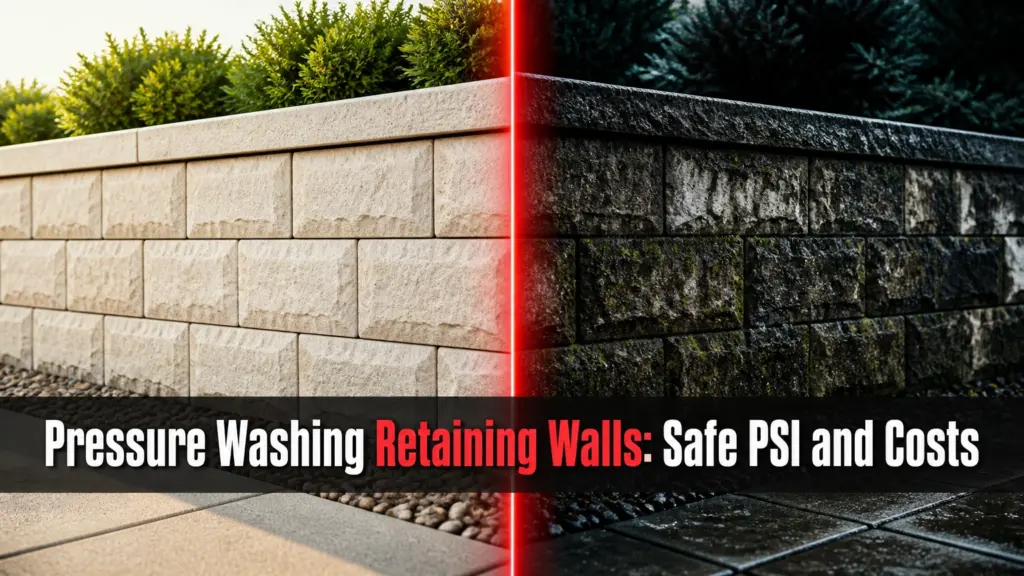
Pressure washing retaining walls removes soil film, algae, mold, lichen, efflorescence, and some stains when the wall is structurally sound and the pressure matches its material. Start with a low-pressure test area, use detergent for organic growth, keep the nozzle moving, and never wash a bowing wall, loose mortar, or exposed drainage system aggressively. Key […]
Pressure Washing Stamped Concrete Safely: Protect Color and Sealer
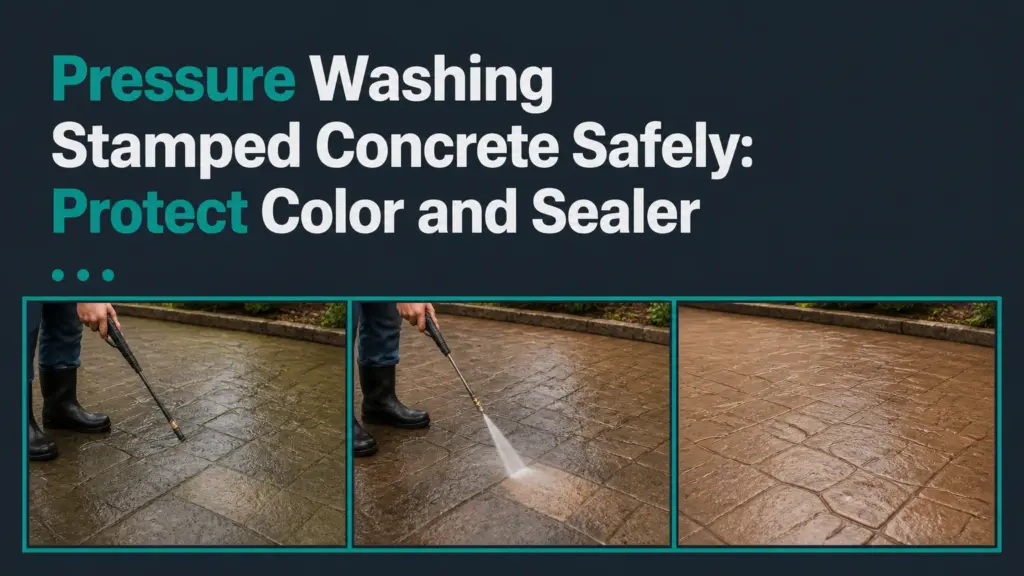
Pressure washing stamped concrete safely requires low, controlled pressure, a wide fan pattern, chemical pretreatment, and continuous wand movement. Start around 1,000-1,500 PSI on an intact sealed surface, test an inconspicuous area, and increase force only when the sealer and decorative color remain undamaged. Key Facts at a Glance What Makes Stamped Concrete Different? Stamped […]
How Concrete Age Affects Pressure Washing: Safe PSI Rules
Concrete age affects pressure washing by changing the hardness, cohesion, moisture condition, and defect risk of the cement-paste surface. Concrete younger than 28 days should not receive pressure washing, while older slabs still require inspection because scaling, weak paste, decorative finishes, and freeze-thaw damage can make aged concrete vulnerable to erosion. Key Facts at a […]
Pressure Washing Before Paver Sealing: Do It Right
Pressure washing before paver sealing removes loose dirt, organic growth, contaminated joint sand, efflorescence, and compatible remnants of old sealer. Clean pavers provide a better bonding surface, but pressure alone cannot repair unstable joints, remove every oil stain, or make damp masonry ready for sealing. The correct sequence is clean, treat, rinse, dry, resand, and […]
Why Concrete Stays Dirty After Pressure Washing: Fixes
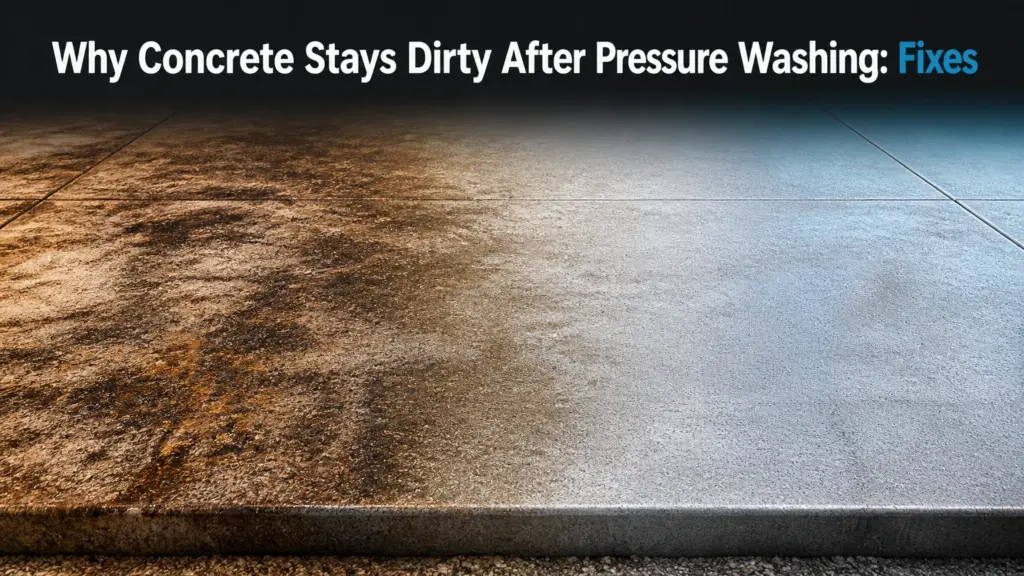
Concrete stays dirty after pressure washing because water pressure removes loose surface soil more readily than absorbed oil, rust, organic discoloration, mineral deposits, or embedded carbon film. Concrete pores, surface texture, uneven cleaning technique, and recurring moisture can all leave discoloration behind, so the correct remedy depends on the stain’s color, chemistry, and depth. Key […]
Pressure Washing Concrete With Expansion Joints Safely
Pressure washing concrete with expansion joints is safe when the joints are inspected first, organic growth is chemically loosened, and water pressure is kept moving across sound concrete rather than concentrated into the gaps. Use a surface cleaner for broad areas, a wider fan tip near joints, and stop immediately if sealant lifts or water […]
Pressure Washing Before Driveway Sealing: Avoid Peeling
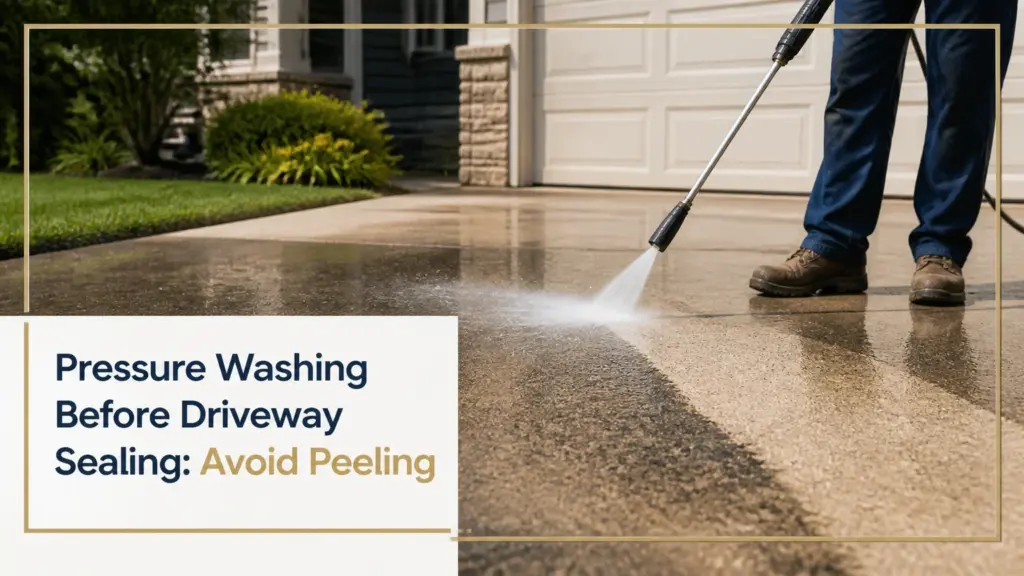
Pressure washing before driveway sealing removes dirt, oil, biological growth, and loose material so the sealer can bond to the actual concrete, asphalt, or paver surface. Clean the driveway, rinse away detergent and residue, then let the substrate dry completely. The most important success factors are correct pressure, complete stain removal, and moisture-free pavement. Key […]
Why Pavers Look White After Pressure Washing: Safe Fixes
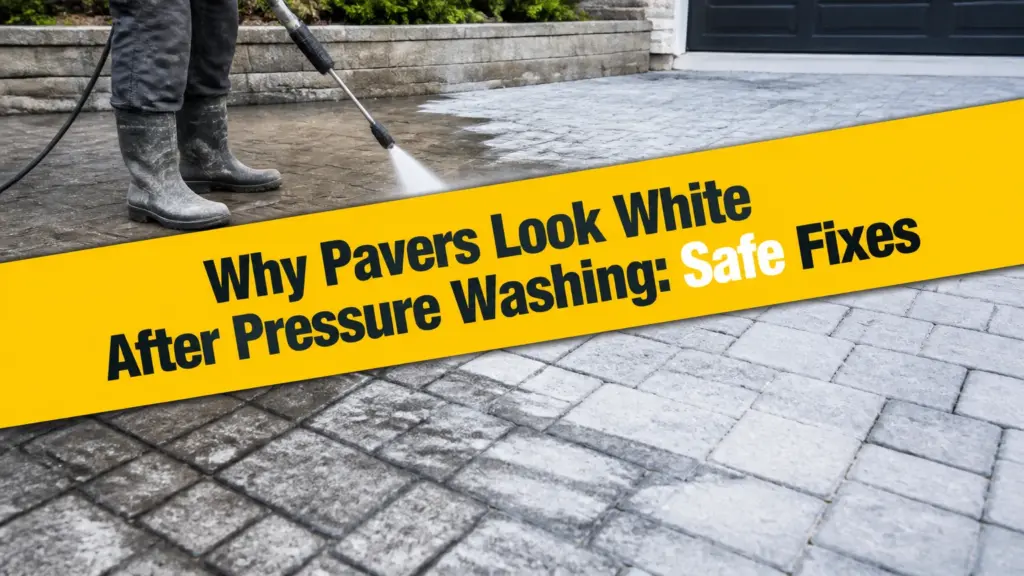
Pavers look white after pressure washing because water mobilizes mineral salts, activates polymeric-sand residue, clouds a damaged sealer, or erodes the colored cement surface. Efflorescence is usually removable or weatherable, while sealer failure and pressure-induced etching can require stripping or resurfacing. The residue’s texture, wet behavior, location, and timing identify the cause. Key Facts at […]