Solar Panel Cleaning Before Performance Testing: A Field Guide
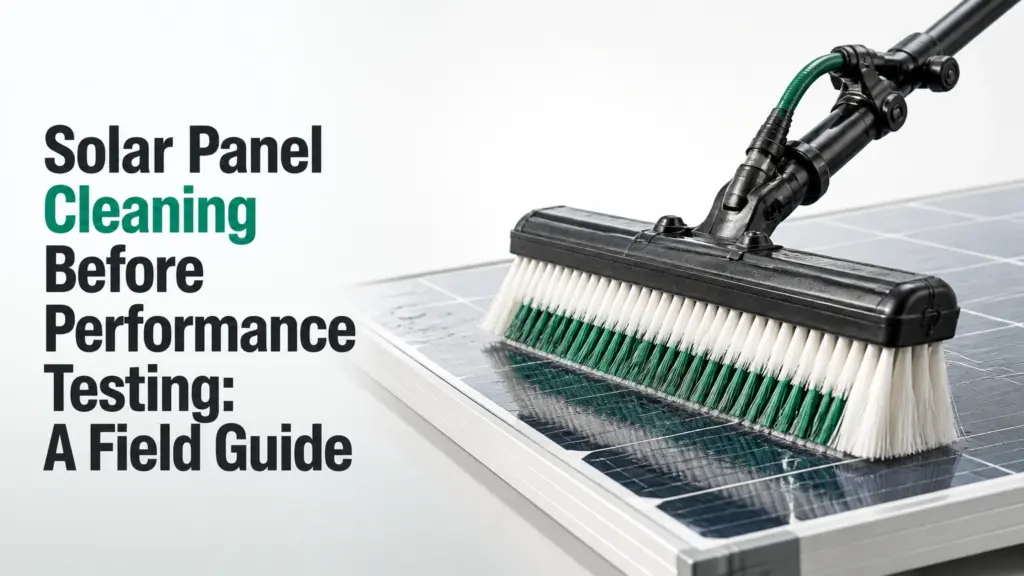
Solar panel cleaning before performance testing removes temporary surface soiling so measured power, efficiency, performance ratio, or I-V results represent the PV system rather than dust and residue. The correct process combines electrical isolation, dry debris removal, purified-water washing, careful inspection, and documented test conditions; cleaning alone does not recreate laboratory STC conditions. Key Facts […]
Window Cleaning After Pressure Washing a House: Prevent Spots
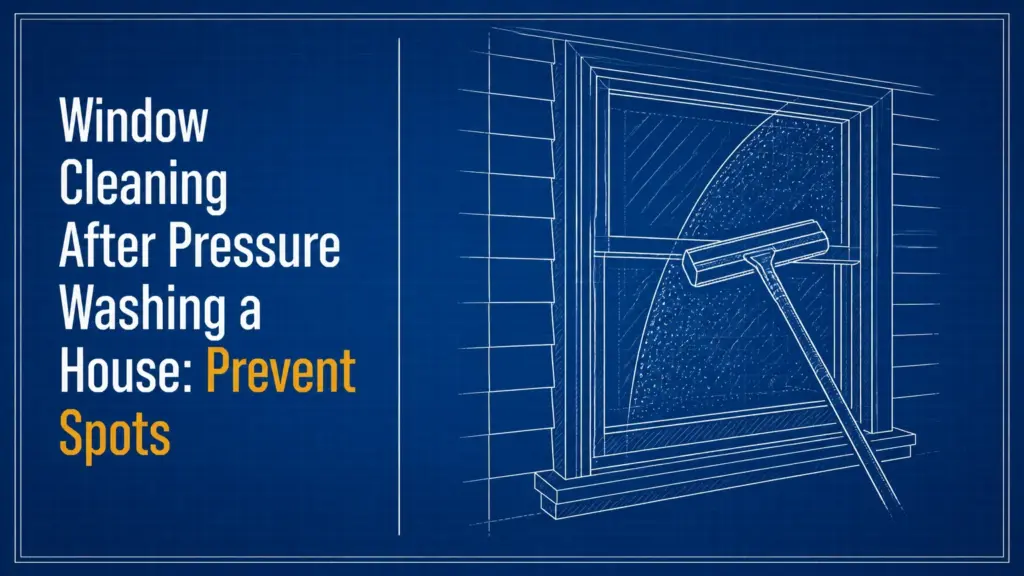
Window cleaning after pressure washing a house should happen after dirty runoff has stopped and the exterior has been thoroughly rinsed. Clean the glass, frames, screens, sills, and tracks with a heavy water rinse followed by controlled agitation and either a squeegee or 0-10 ppm pure-water rinse. The method matters less than preventing residue from […]
Why Windows Streak After Drying: Causes and Fixes
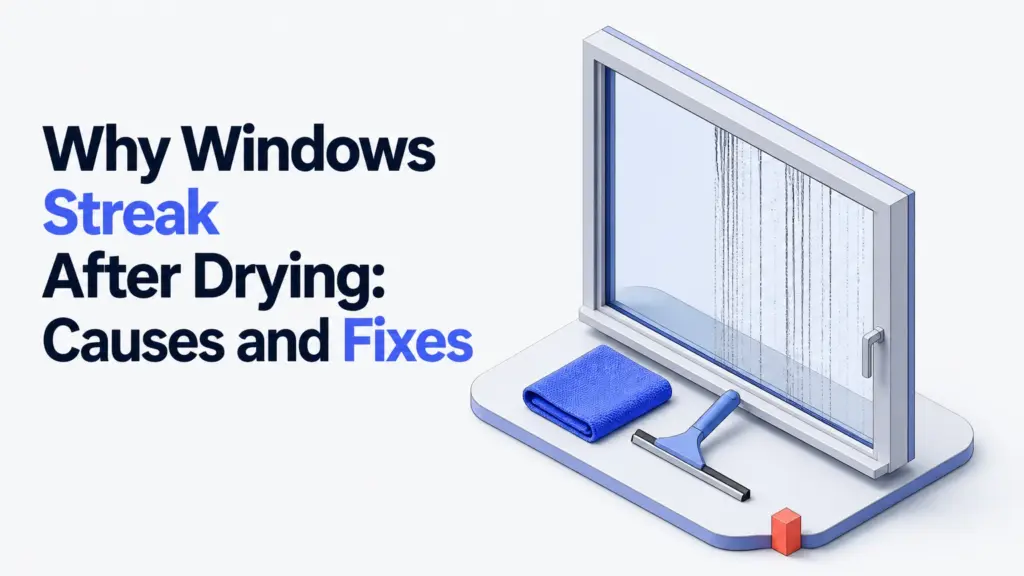
Windows streak after drying because water evaporates while detergent, minerals, oils, dust, or cloth residue remain on the glass. The wet surface temporarily hides uneven deposits, but evaporation concentrates nonvolatile material into lines and patches that scatter light. Hot glass, dirty tools, excess cleaner, and worn squeegee rubber make the residue more visible. Key Facts […]
Solar Panel Cleaning After a Dust Storm: Safe Steps
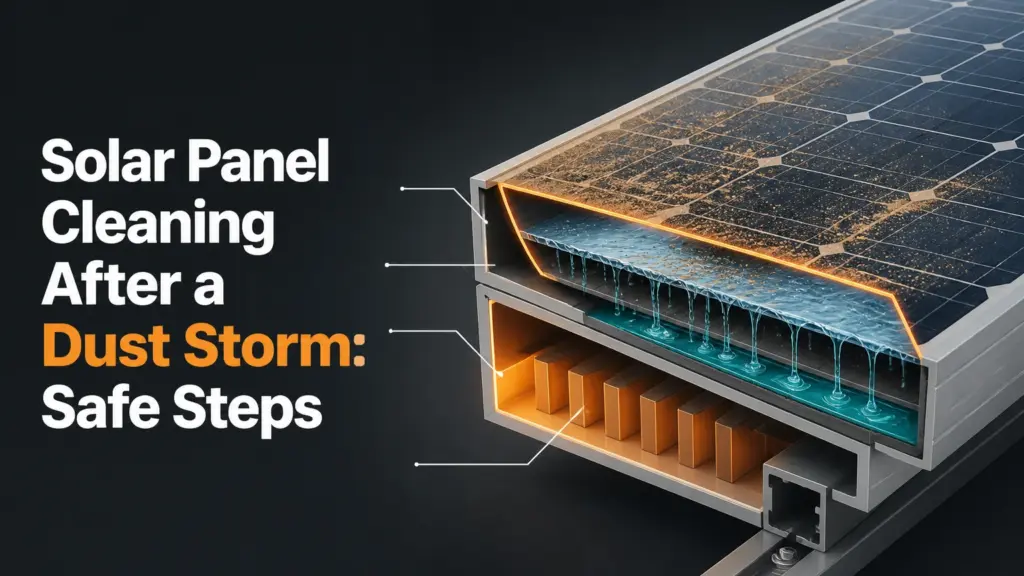
Solar panel cleaning after a dust storm removes loose dust, silica-rich grit, and rain-bonded residue that reduce sunlight reaching photovoltaic cells. Inspect the array first, clean only when modules are cool and undamaged, and use a low-pressure rinse with a soft nonabrasive tool; roof access and electrical damage determine whether a professional should do the […]
What Causes Efflorescence on Pavers? Salt, Water, and Pores
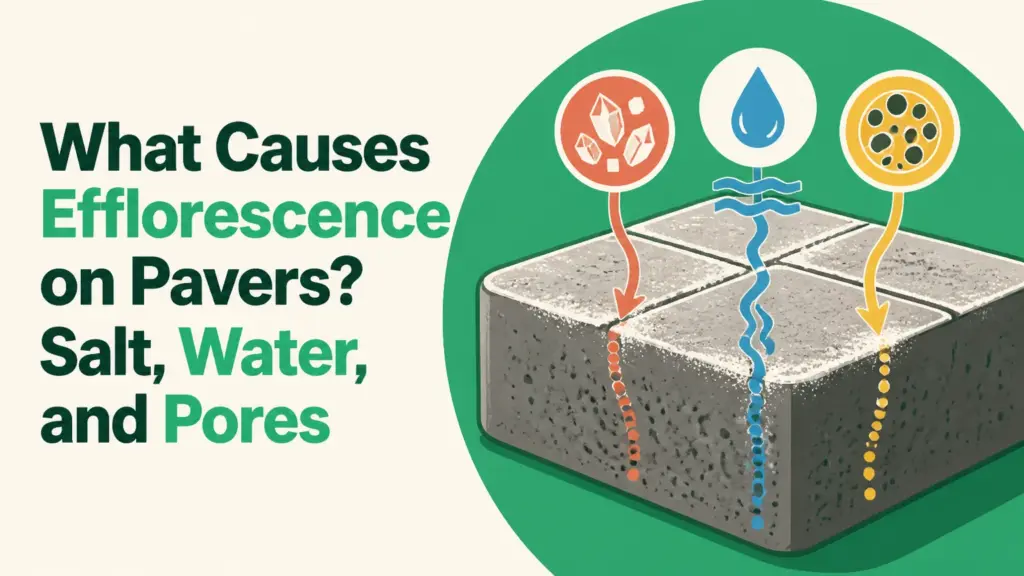
Efflorescence on pavers is caused by soluble salts, moisture, and connected pores acting together. Water dissolves salts inside concrete, bedding sand, joints, or the base, then carries them through capillary paths to the surface as the installation dries. Evaporation leaves a white powder, haze, or crystalline crust behind. Key Facts at a Glance What Is […]
Pressure Washing Before Concrete Resurfacing: Bond-Ready Prep
Pressure washing before concrete resurfacing removes dirt, oil residues, biological growth, loose cement paste, and failing surface material so a new overlay can bond to sound concrete. Pressure washing alone does not guarantee adhesion: coatings, structural cracks, weak concrete, trapped moisture, and inadequate surface profile may require chemical stripping, grinding, repairs, or replacement. Key Facts […]
How Often Should Pool Decks Be Cleaned? A Safe Schedule

Pool decks should usually receive a thorough cleaning once or twice a year, with extra cleaning after visible algae, heavy storms, pollen buildup, or prolonged dampness. Concrete and stone commonly need spring or annual cleaning, while wood often needs cleaning twice yearly. Weekly sweeping and prompt rinsing of pool chemicals reduce the need for aggressive […]
How Often Should Sidewalks Be Pressure Washed? A Safe Schedule
Concrete sidewalks should usually be pressure washed once a year at residential properties, one to two times yearly in HOAs, and quarterly or monthly at busy commercial sites. Increase cleaning when shade, algae, oil, food residue, winter salt, or heavy pedestrian traffic creates a slip hazard or visible buildup before the normal interval. Key Facts […]
How Oil Stains Affect Concrete Driveways: What Really Happens
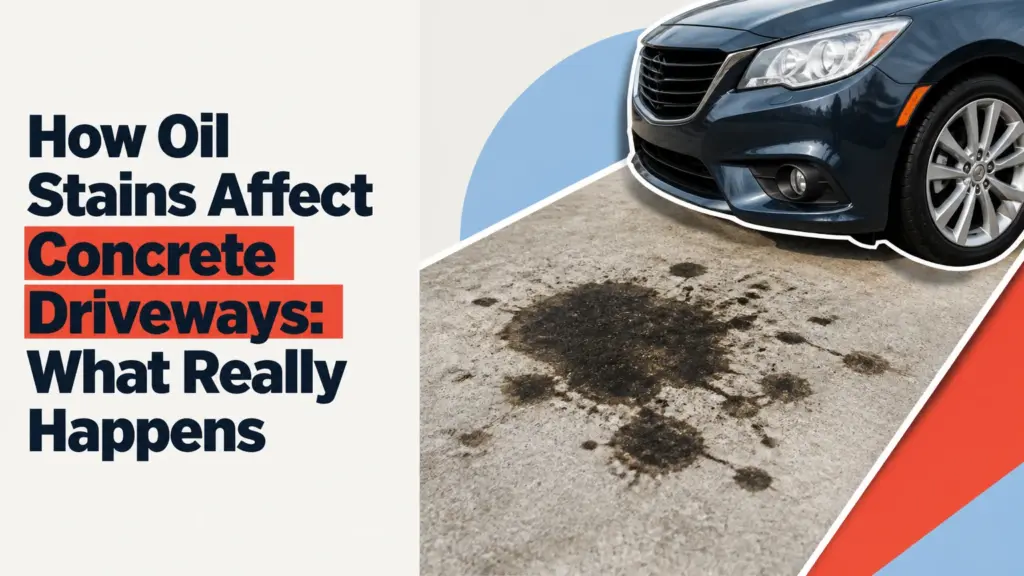
Oil stains affect concrete driveways mainly by penetrating porous surface paste, darkening the slab, attracting abrasive dirt, and interfering with coatings. A small, promptly absorbed motor-oil spill is usually a cosmetic problem, not a structural failure. Repeated leaks, brake-fluid exposure, existing cracks, poor drainage, and neglected contamination can create more serious surface or soil problems. […]
Pressure Washing Exposed Aggregate Concrete Safely
Pressure washing exposed aggregate concrete is safe when the slab is sound, the washer uses the lowest effective pressure, and chemical dwell time does most of the cleaning. Start around 2,000-2,500 PSI, use a 25- or 40-degree spray pattern or correctly matched surface cleaner, keep the nozzle moving, and test an inconspicuous area before washing […]