Solar Panel Soiling Loss Explained: Measure and Reduce It

Solar panel soiling loss is the reduction in photovoltaic energy production caused by dust, pollen, bird droppings, pollution, salt, or other deposits on module glass. The deposits reduce light reaching the cells, lowering current and energy yield; the financial impact depends on contaminant type, tilt, rainfall, cleaning cost, electricity value, and how long the array […]
How Coastal Salt Affects Window Glass: Damage Guide
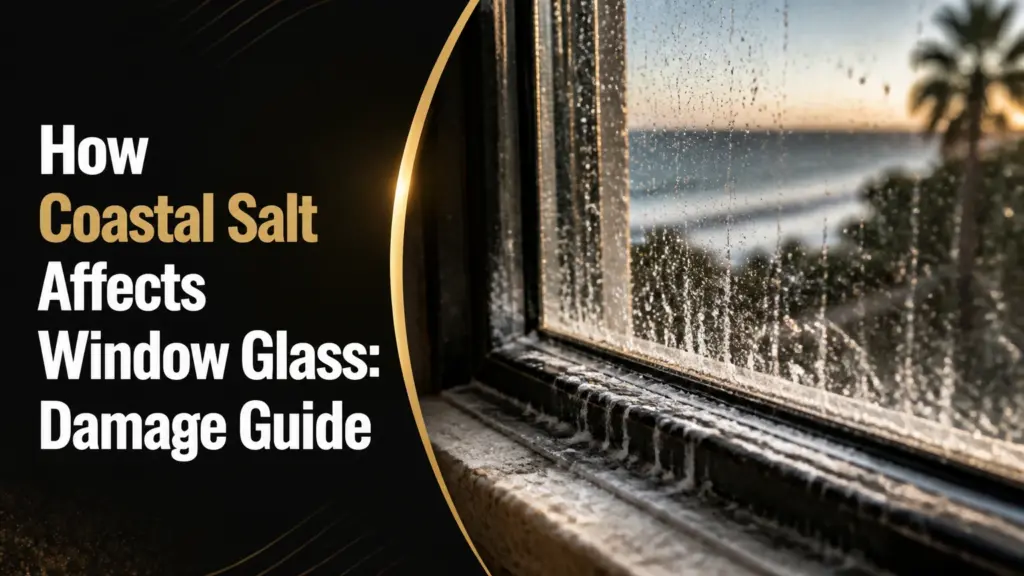
Coastal salt affects window glass mainly by leaving hygroscopic salt and mineral deposits that retain moisture against the pane, while salt-laden water corrodes frames, hardware, coatings, and insulated glass unit seals. The glass surface can become spotted or etched, but many cloudy windows are actually suffering from removable scale or moisture trapped between panes. Key […]
Solar Panel Cleaning for Tilted Roof Systems: Safe DIY Guide

Solar panel cleaning for tilted roof systems removes dust, pollen, bird droppings, salt, and bonded grime from angled photovoltaic modules without damaging glass, seals, frames, or wiring. The safest method uses cool panels, a soft non-abrasive brush, low-pressure water, and a final rinse with water below about 10 ppm total dissolved solids (TDS). Key Facts […]
How Often Should Commercial Windows Be Cleaned? A Practical Guide

Commercial windows should usually be cleaned 2-4 times per year, while retail entrances, restaurants, and street-facing glass often need weekly or biweekly service. Building height, glass exposure, business type, weather, pollution, fingerprints, and water quality can move the correct interval from every 1-2 weeks to once every 12 months. Key Facts at a Glance How […]
Why Exterior Windows Develop Mineral Spots: Causes and Fixes
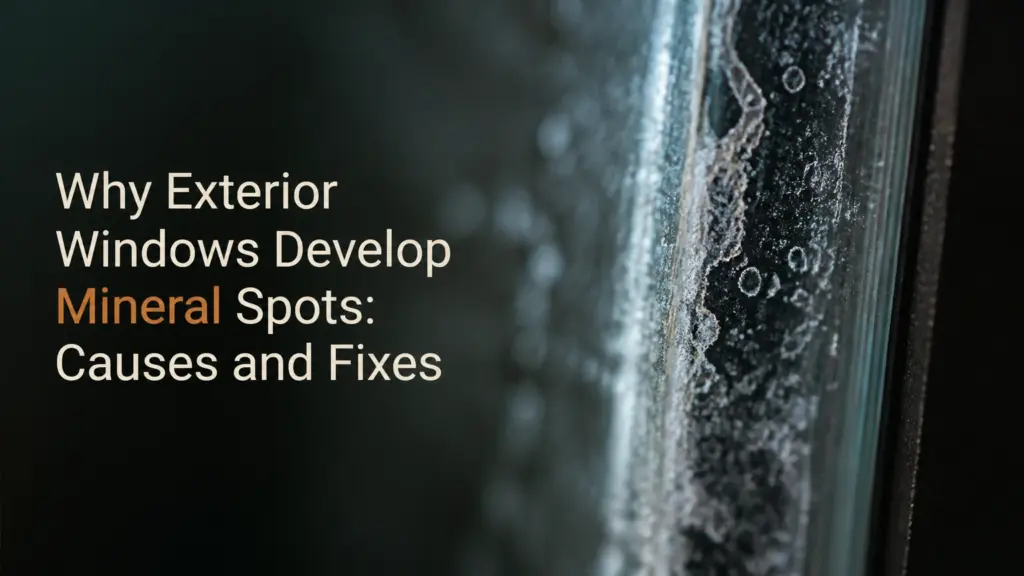
Exterior windows develop mineral spots when water containing dissolved calcium, magnesium, silica, or other salts dries on the glass and leaves those solids behind. Sprinklers, hose water, rainwater running over masonry, and poorly rinsed window-washing water are common sources. Fresh deposits sit on the surface, while repeated exposure can create rough, hazy glass etching. Key […]
How to Tell if Solar Panels Are Dirty: 7 Reliable Checks
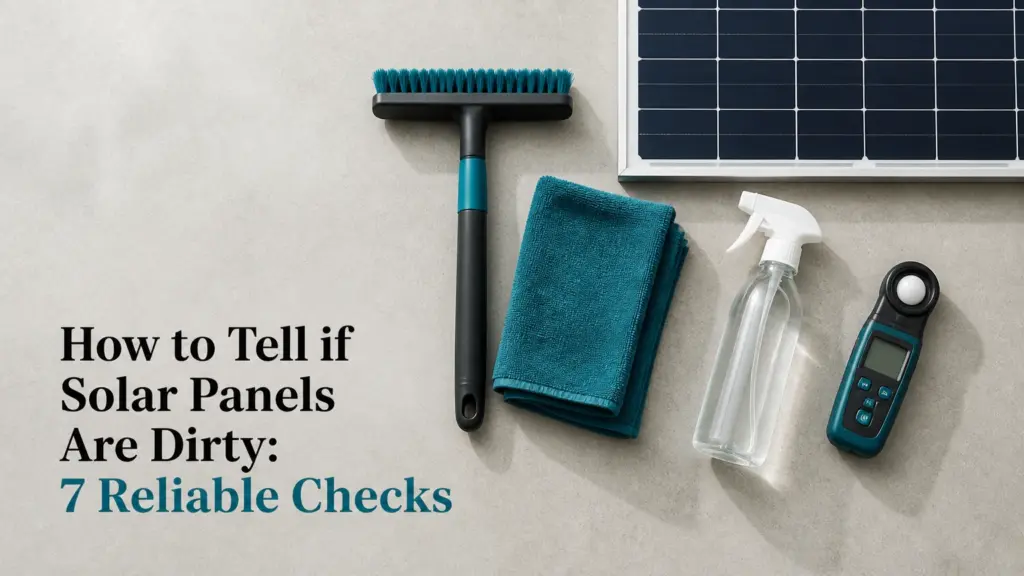
Solar panels are probably dirty when visible dust, pollen, bird droppings, ash, or grime coincides with lower-than-normal production under comparable sunlight. Confirm the diagnosis by combining a safe visual inspection with monitoring data and, when possible, a small surface test. A low output reading alone does not prove soiling because shade, heat, clouds, inverter limits, […]
How Wildfire Ash Affects Solar Panels: Safe Cleaning
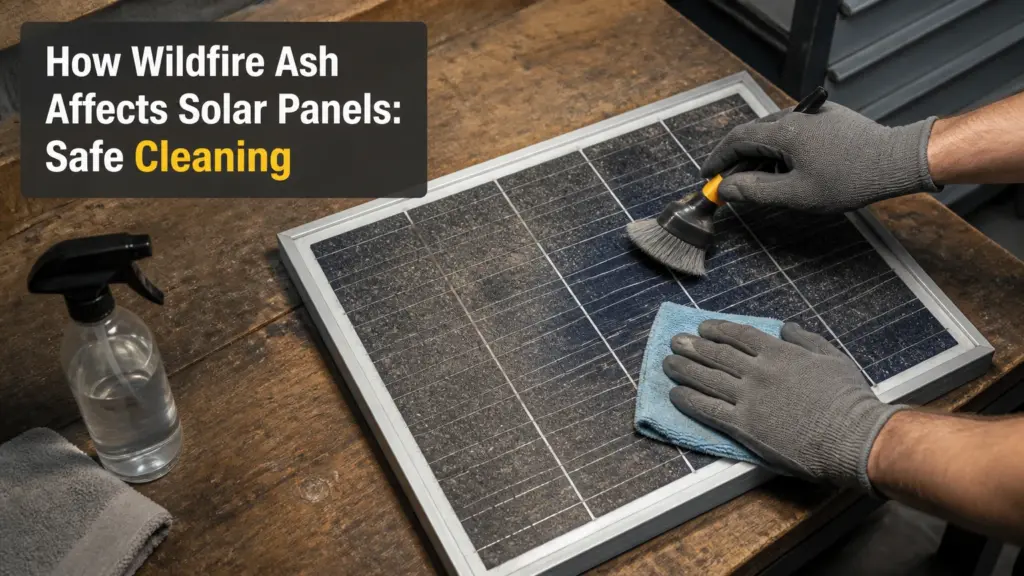
Wildfire ash affects solar panels in two ways: smoke reduces sunlight reaching the array, while settled ash creates a soiling layer that blocks light at the module surface. Dry deposits usually cause a temporary production loss, but ash mixed with dew or light rain can harden into residue that is harder to remove and may […]
How to Clean Exterior Window Tracks Safely
To clean exterior window tracks, remove the screen, vacuum dry debris, loosen residue with a material-safe cleaner, brush the grooves, clear the weep holes, wipe and dry the channel, then lubricate only the moving contact points. Most accessible windows take 15-25 minutes, and dry debris removal determines whether cleaning stays controlled or becomes muddy. Key […]
How Coastal Salt Affects Solar Panels: Causes, Damage, and Fixes
Coastal salt affects solar panels by depositing chloride-rich particles on glass, frames, connectors, and mounting hardware. Humidity turns those deposits into a conductive electrolyte that accelerates corrosion, increases soiling losses, and can eventually damage seals or electrical connections. The severity depends on shoreline distance, wind, humidity, panel design, installation quality, and maintenance. Key Facts at […]
How Water Fed Pole Window Cleaning Works: A Practical Guide
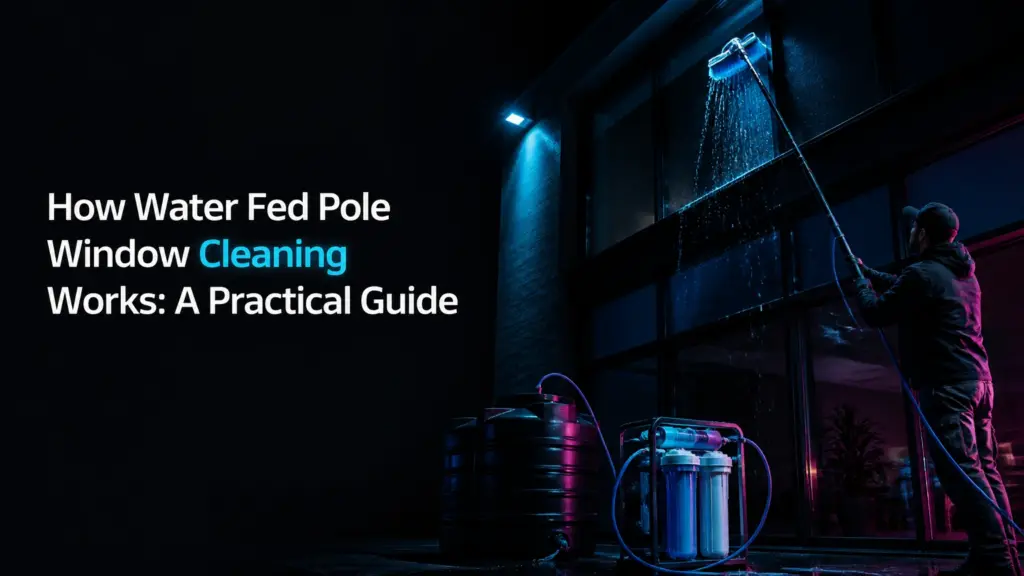
Water-fed pole window cleaning uses a telescopic pole, soft brush, and purified water to scrub and rinse exterior glass from the ground. Reverse osmosis and deionization remove mineral ions that would otherwise dry as spots, while brush agitation releases dirt; the final pure-water rinse leaves the pane to air-dry without a squeegee. Key Facts at […]