How to Remove Insect Residue From Windows Safely

To remove insect residue from windows, soften the dried splatter with water and a glass-safe cleaner, allow 2-5 minutes of dwell time, then lift it with microfiber rather than dry scrubbing. Work on cool glass in the shade, rinse away loosened debris, and identify mineral spots or etching separately from removable organic residue. Key Facts […]
Solar Panel Cleaning in Coastal Areas: Salt-Safe Guide

Solar panel cleaning in coastal areas removes salt film, sea-spray residue, sand, organic deposits, and industrial grime that reduce light transmission and can accelerate corrosion. The safest method is a cool-panel, low-pressure wash with a soft non-abrasive brush, followed by a low-mineral rinse, while roof access and electrical defects should be handled by trained professionals. […]
Why Solar Panels Get Dirty Near Highways: Causes and Fixes

Solar panels get dirty near highways because traffic turbulence, road dust, tire and brake wear particles, exhaust residue, salt, and nearby construction increase the amount of airborne material reaching the module glass. Wind direction, truck traffic, shoulder condition, panel height, tilt, and rainfall determine how quickly deposits accumulate and whether they become difficult to remove. […]
Hard Water Spots vs Etched Glass: Repair or Replace?
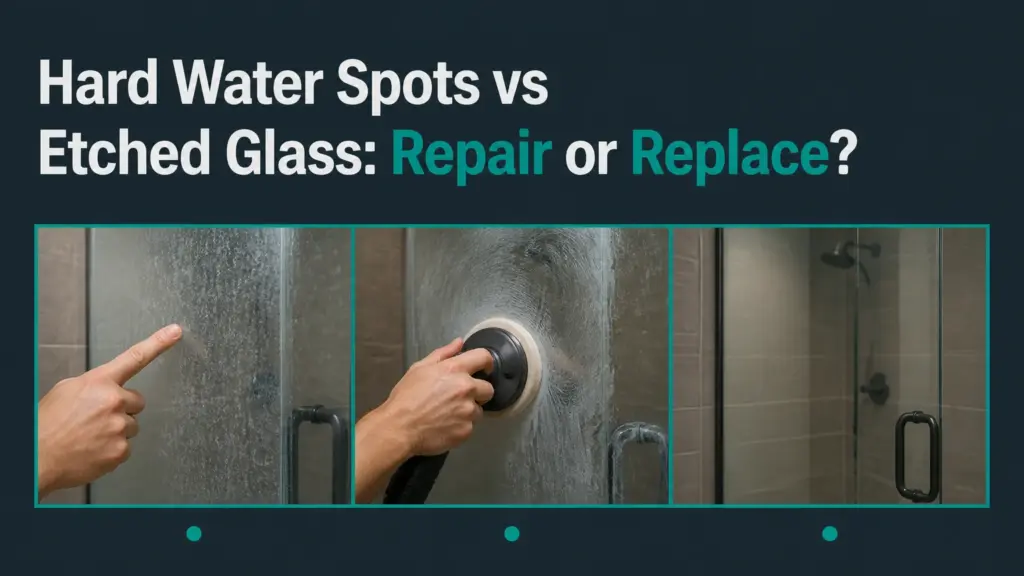
Hard water spots are mineral deposits sitting on glass, while etched glass has a chemically or mechanically altered surface. Raised, crusty residue usually can be removed, but a smooth-looking haze that remains after cleaning may be microscopic surface damage. The correct diagnosis determines whether to clean, polish, professionally restore, or replace the pane. Key Facts […]
Why Solar Panels Develop Water Spots: Fixes That Work
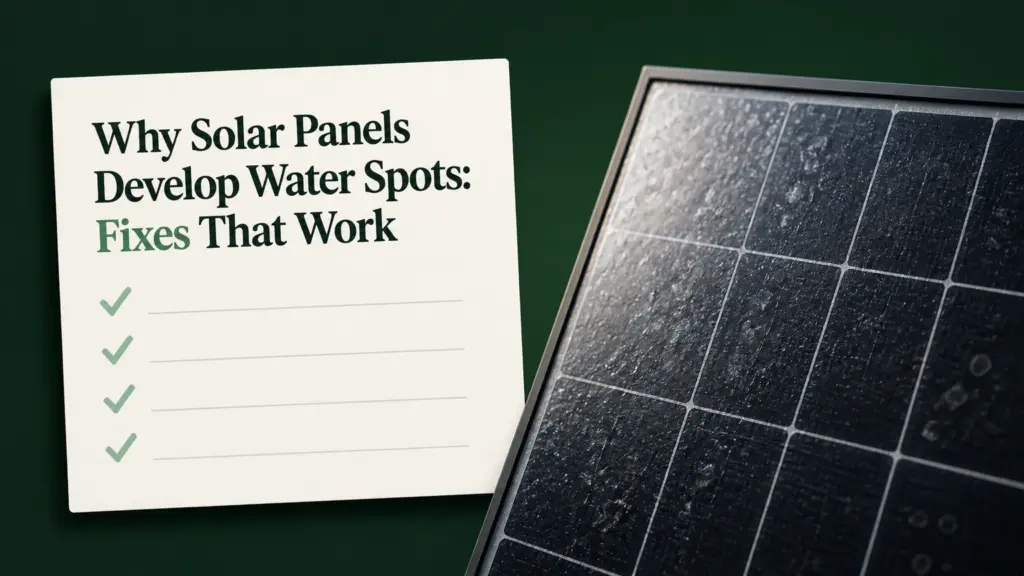
Solar panels develop water spots when rain, dew, irrigation, or cleaning water evaporates from the glass and leaves dissolved minerals, dust, salts, or organic residue behind. Hard-water calcium carbonate creates white rings and scale, while dust, salt spray, pollen, and bird waste create darker films that scatter light and may reduce energy production. Key Facts […]
Pure Water Window Cleaning Explained: A Practical Guide
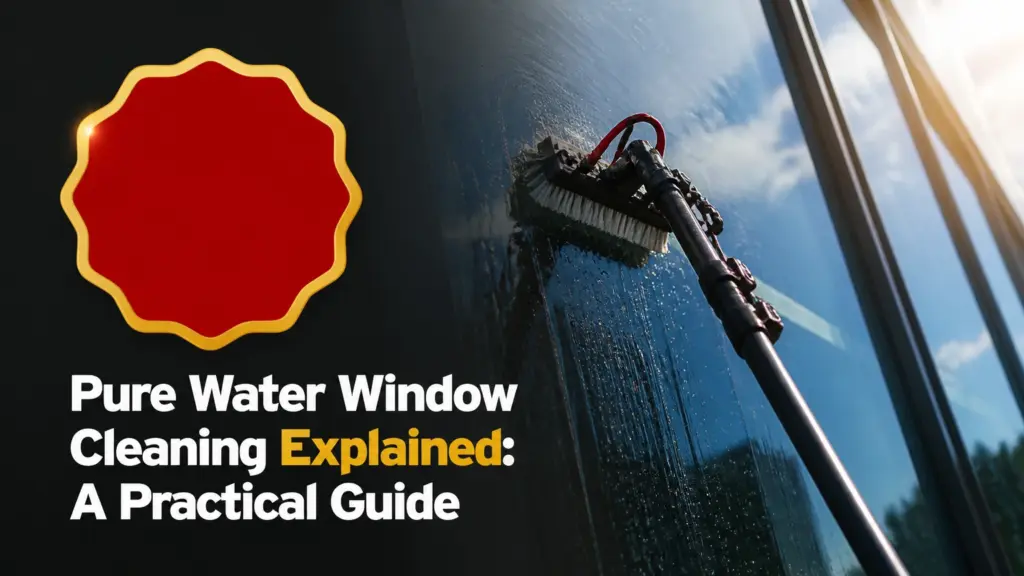
Pure water window cleaning uses water with dissolved minerals removed, usually delivered through a brush on a water-fed pole. The brush agitates glass and frames, while the mineral-free rinse carries loosened soil away and dries without mineral deposits, eliminating the need for a squeegee on suitable exterior windows. Key Facts at a Glance Pure water […]
How Shade and Dirt Affect Solar Panels Differently
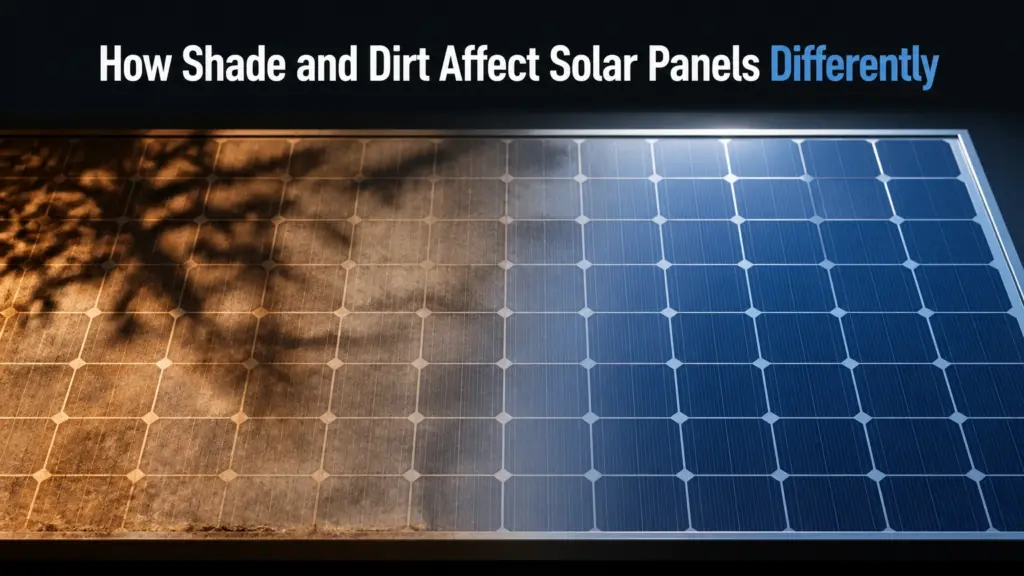
Shade reduces solar-panel output by blocking irradiance over specific cells or substrings, while dirt, technically called soiling, usually reduces the light transmitted across a broader glass area. Shade creates electrical mismatch and can cause bypass-diode operation or localized hotspot stress; uniform dirt mainly lowers photocurrent and energy yield gradually. The remedy differs: redesign or electrical […]
Window Cleaning After Exterior Painting: Safe Removal Guide

Window cleaning after exterior painting removes paint splatters, overspray, caulk, sanding dust, and construction residue from glass, frames, tracks, seals, and screens. The safest process is inspection, dry grit removal, wet chemical softening, controlled residue removal, frame detailing, and a final rinse, with coating identification completed before any blade or solvent touches the window. Key […]
Why Windows Get Dirty After Rain: Causes and Fixes
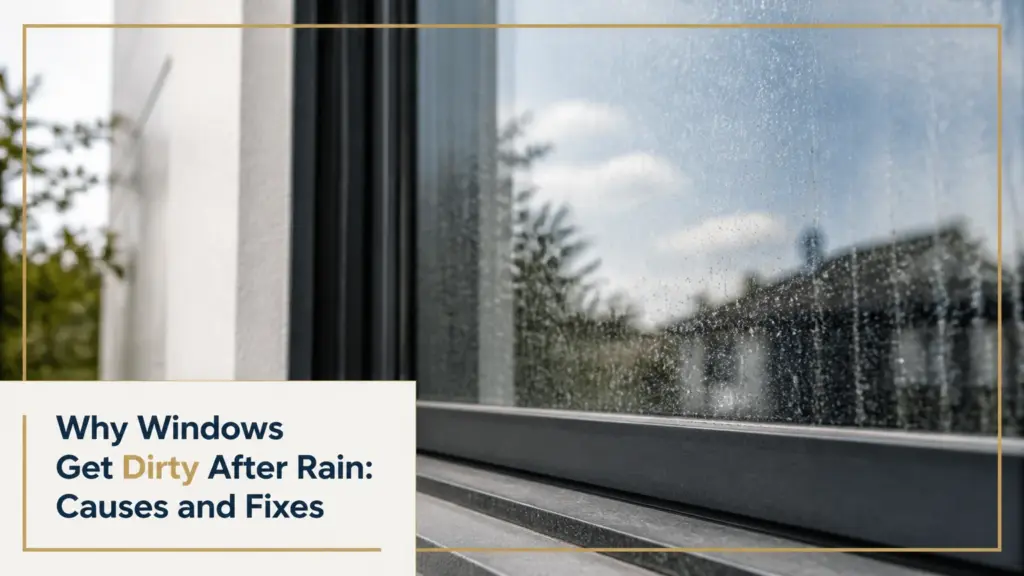
Windows get dirty after rain because raindrops collect airborne dust, pollen, smoke, salt, and pollution while falling, then spread those particles across glass and existing surface soil. When the water evaporates, concentrated contaminants and dissolved minerals remain as spots, streaks, or a dull film. Rainwater is relatively clean, but it is not contaminant-free. Key Facts […]
Solar Panel Cleaning During Pollen Season: Safe DIY Guide

Solar panel cleaning during pollen season is safest when performed on cool panels with loose debris removed first, purified water used for soaking and rinsing, and a soft, nonabrasive brush. Clean only accessible systems, avoid pressure washers and dry scrubbing, and compare measured energy output before and after washing to confirm that cleaning justified the […]