How Long Should Concrete Dry After Washing? 24-72 Hours

Concrete should typically dry for 24-48 hours after washing outdoors before applying a sealer, stain, or paint, with 48-72 hours safer in shade, humidity, or cool weather. Indoor slabs may need 3-7 days. Do not rely on color alone: remove standing water, check the forecast, and test for retained moisture before coating. Key Facts at […]
Algae vs Mold on Concrete Surfaces: Identify and Remove Both
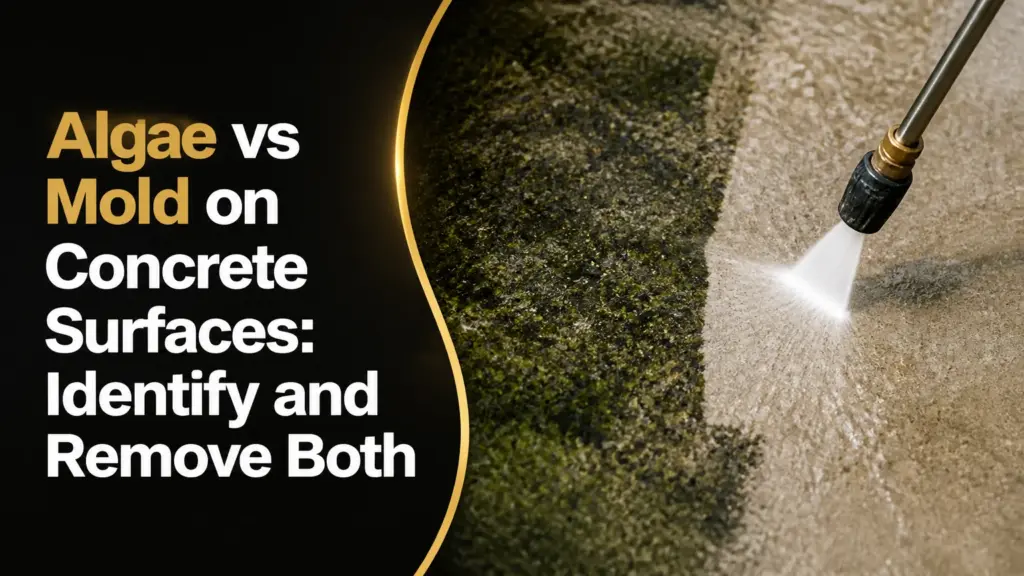
Algae on concrete is usually a photosynthetic surface film that needs light and recurring moisture, while mold is a fungus growing on damp organic residue. Green, slippery growth outdoors is more likely algae, but dark staining alone cannot identify mold. Texture, moisture pattern, location, and a controlled cleaning test provide a better diagnosis. Key Facts […]
How to Clean Textured Concrete Surfaces Without Damage
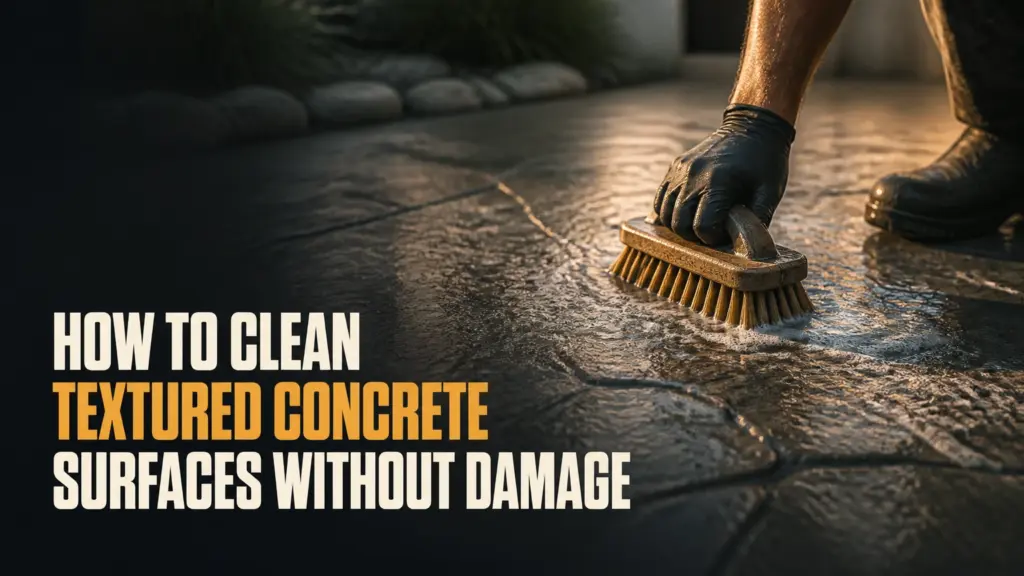
To clean textured concrete surfaces, remove loose debris, pre-wet the slab, apply a compatible cleaner, agitate recessed areas with nylon bristles, and rinse evenly with moderate pressure. Match the chemistry to the stain, test a hidden area first, and avoid acid or high pressure on sealed, stamped, or fragile finishes. Key facts A 25-40 degree […]
How Often Should Patio Pavers Be Cleaned? Build a Safe Schedule

Patio pavers should be swept weekly, rinsed monthly when dirt or pollen accumulates, and deep-cleaned once or twice a year. Shade, rainfall, tree debris, traffic, food spills, and paver material can shorten that interval. Inspect the joints and surface each season, because visible algae, weeds, oil, or standing dirt requires prompt spot cleaning. Key Facts […]
Why North Facing Siding Turns Green: Causes and Fixes
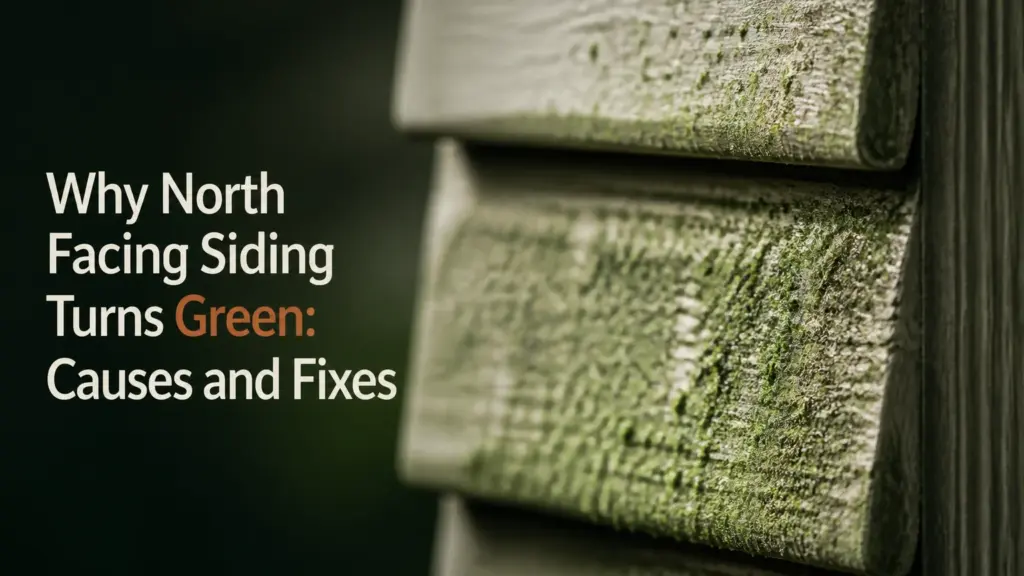
North-facing siding turns green because limited direct sunlight leaves the wall cooler and wet for longer, allowing algae to colonize its surface. Moss, mildew, and some molds can join the growth when moisture persists, but green discoloration can also come from copper runoff, dirt, or mineral staining rather than biology. Key Facts at a Glance […]
Why Does Vinyl Siding Get Chalky? Causes and Fixes
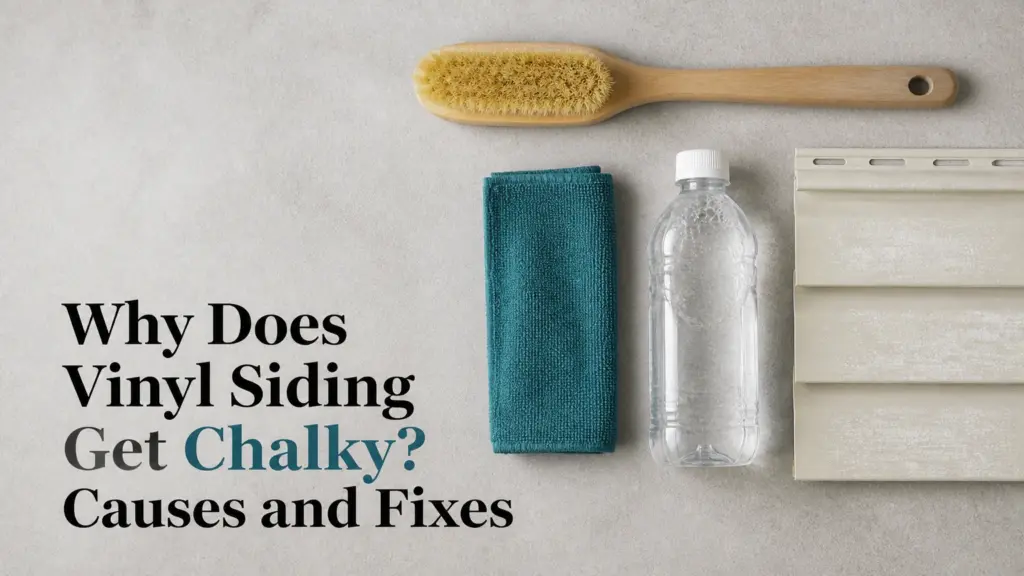
Vinyl siding gets chalky because ultraviolet radiation and oxygen gradually weather the thin, pigmented PVC surface, releasing fine particles that remain as a white or gray powder. Heat, strong sun exposure, dark colors, age, and inferior weathering protection can accelerate the process, while dirt or mildew can create a similar-looking film that requires a different […]
How Pollen Builds Up on House Siding, Explained
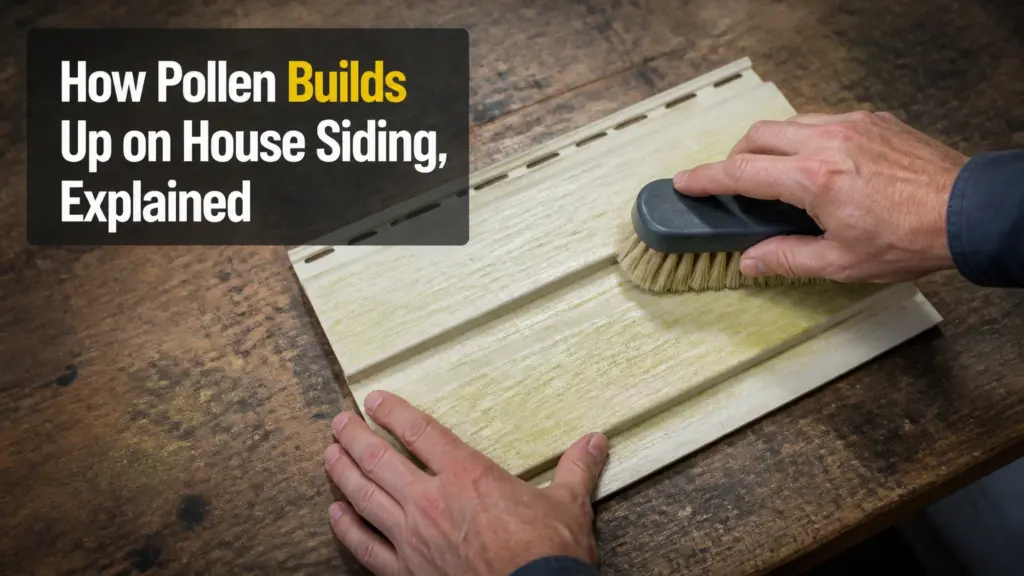
Pollen builds up on house siding when airborne grains settle on a surface and remain attached because of grain texture, resinous coatings, surface roughness, moisture, and trapped dust. Repeated pollen release creates thicker deposits, while dew and humidity turn loose grains into a film that can support algae or mildew on shaded, dirty siding. Key […]
How Shade Affects Algae Growth on Siding: Moisture Fixes
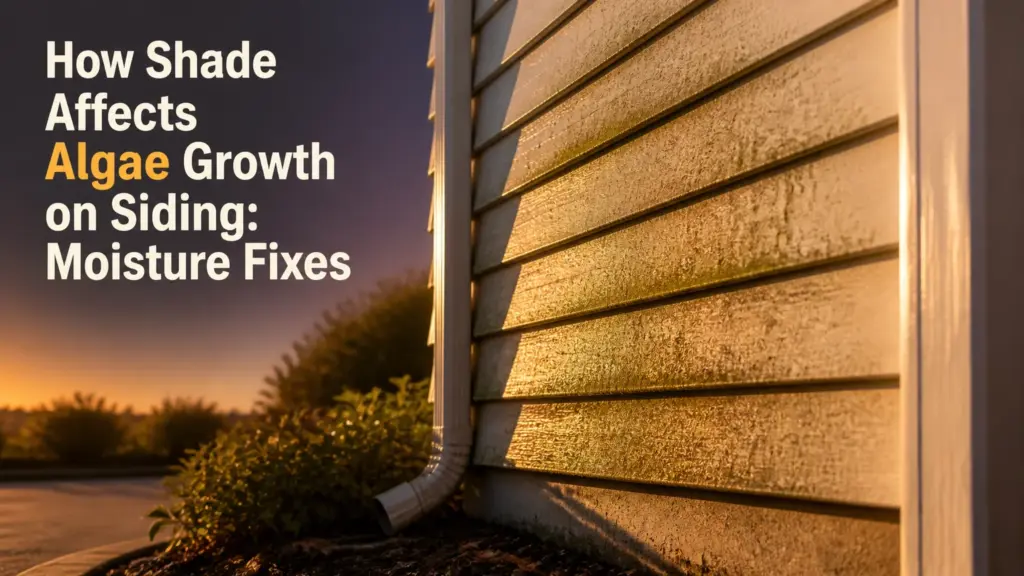
Shade usually increases algae growth on siding because it reduces solar heating and slows evaporation, leaving the surface damp for longer periods. Algae still need light for photosynthesis, so shade does not create algae by itself; the strongest growth occurs where shade combines with repeated wetting, humid air, poor airflow, surface dust, and a textured […]
How Often Should Stucco Exterior Be Cleaned? Safe Schedule
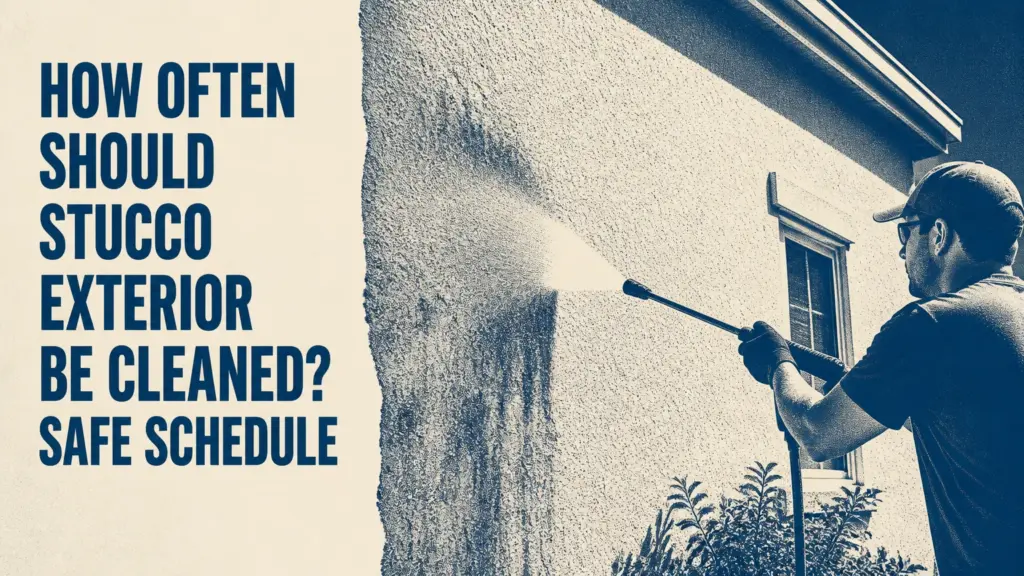
Exterior stucco should usually be cleaned once every 12 months, but the correct interval depends on moisture, shade, pollution, salt, dust, irrigation, and the stucco system’s condition. Homes with persistent algae, coastal deposits, or heavy dust may need cleaning every 6-9 months, while clean, dry properties may safely extend to 18-24 months after inspection. Key […]
House Washing for Homes Near the Ocean: Safe Steps
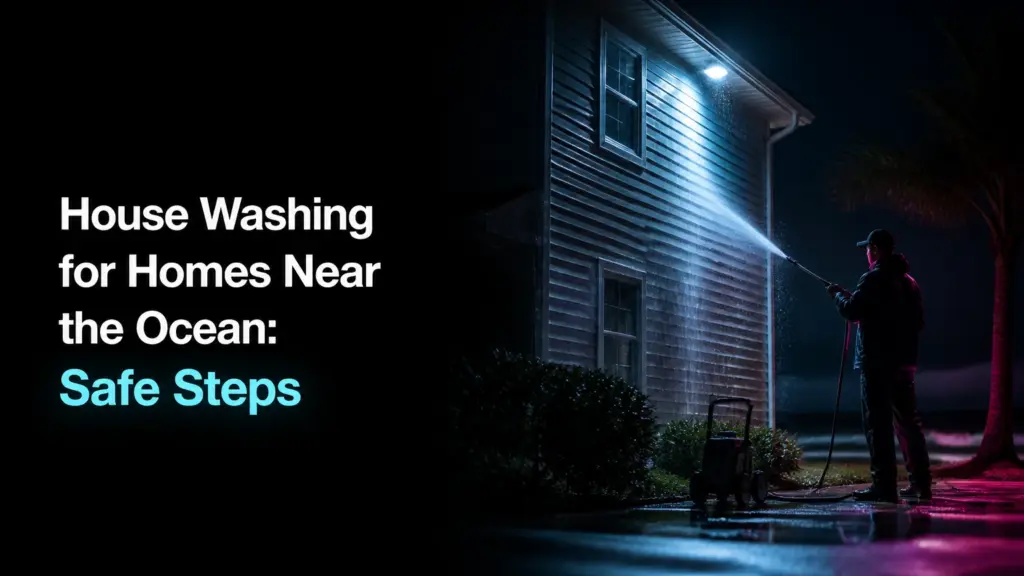
House washing for homes near the ocean removes salt film, sand, algae, mildew, and wind-driven residue with controlled water pressure, compatible cleaners, and thorough freshwater rinsing. The safest approach protects siding, windows, metals, landscaping, and storm drains while matching the process to the home’s material and exposure to surf. Key Facts at a Glance Coastal […]