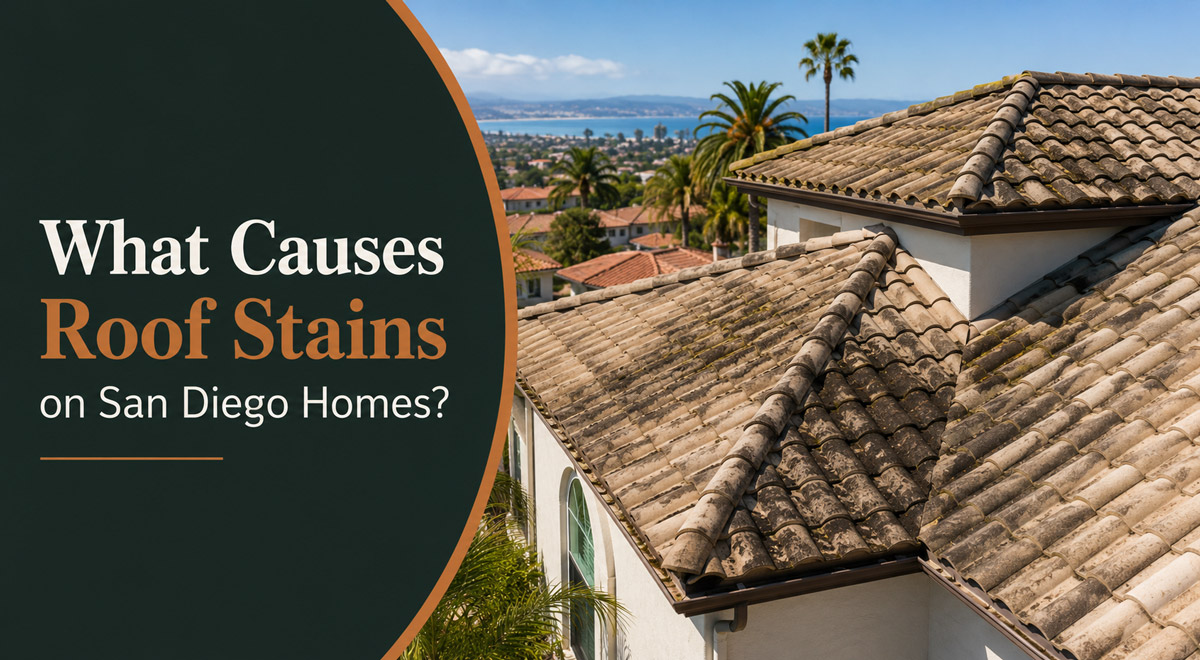
Algae, mold, mildew, moss, and lichen can contribute to visible roof staining where moisture and shade support growth. Patterns may be stronger below trees, on slower-drying slopes, near valleys, or where runoff concentrates. Appearance alone does not confirm the exact organism, so a property review matters.
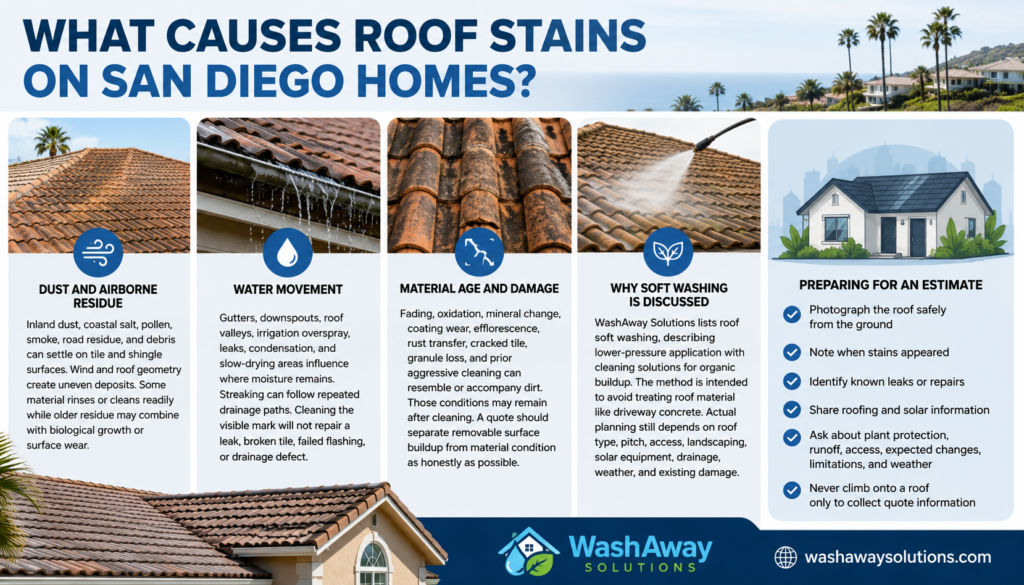
Dust and airborne residue
Inland dust, coastal salt, pollen, smoke, road residue, and debris can settle on tile and shingle surfaces. Wind and roof geometry create uneven deposits. Some material rinses or cleans readily while older residue may combine with biological growth or surface wear.
Water movement
Gutters, downspouts, roof valleys, irrigation overspray, leaks, condensation, and slow-drying areas influence where moisture remains. Streaking can follow repeated drainage paths. Cleaning the visible mark will not repair a leak, broken tile, failed flashing, or drainage defect.
Material age and damage
Fading, oxidation, mineral change, coating wear, efflorescence, rust transfer, cracked tile, granule loss, and prior aggressive cleaning can resemble or accompany dirt. Those conditions may remain after cleaning. A quote should separate removable surface buildup from material condition as honestly as possible.
Why soft washing is discussed
WashAway Solutions lists roof soft washing, describing lower-pressure application with cleaning solutions for organic buildup. The method is intended to avoid treating roof material like driveway concrete. Actual planning still depends on roof type, pitch, access, landscaping, solar equipment, drainage, weather, and existing damage.
Preparing for an estimate
Photograph the roof safely from the ground, note when stains appeared, identify known leaks or repairs, and share roofing and solar information. Ask about plant protection, runoff, access, expected changes, limitations, and weather. Never climb onto a roof only to collect quote information.
Keep a property record
Save the accepted estimate, service date, photographs, surface notes, and preparation instructions. A simple record helps compare how quickly buildup returns and whether changing drainage, irrigation, tree cover, traffic, or maintenance affects the pattern. It also prevents future conversations from relying on memory alone.
Record existing cracks, fading, loose material, damaged seals, roof repairs, coatings, and other conditions before cleaning. Exterior washing addresses compatible surface contamination; it does not repair structural or material defects. Contact the appropriate contractor when the concern is a leak, electrical issue, broken component, or failed finish rather than removable buildup.
Review the property again after surfaces have dried. Lighting and moisture can temporarily change appearance, so compare the completed area with the accepted scope rather than judging only one wet section. Contact the business promptly with a clear photograph and project details if an included area needs discussion.
Requesting a WashAway estimate
WashAway Solutions serves San Diego County and lists online estimates with appointments required. Share the property location privately through the official process, include useful photos, describe access and surfaces, and identify time constraints. Confirm included areas, method, preparation, price, scheduling, and limitations before work begins. Call (619) 347-0762 for current information.