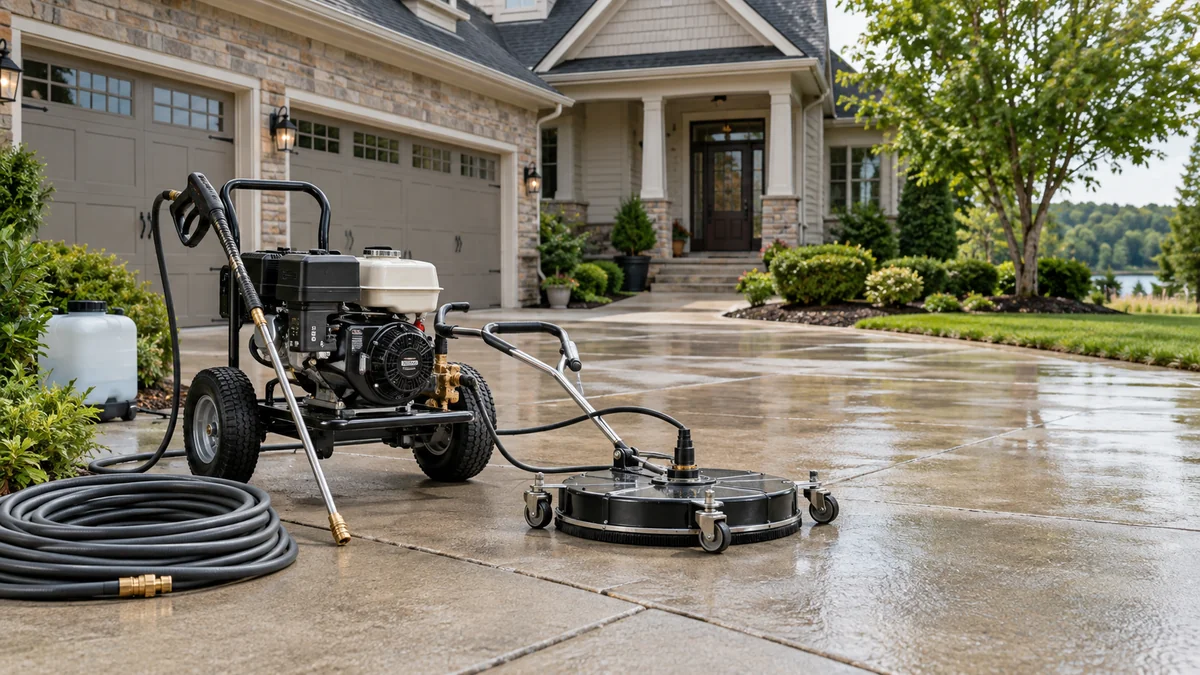
Water runoff from pressure washing can carry detergents, oils, metals, paint particles, sediment, and biological waste into soil, storm drains, streams, and lakes. The environmental effect depends on the surface cleaned, chemicals used, wastewater volume, and discharge route, but untreated runoff can harm aquatic life, degrade habitat, contaminate soil, and violate local stormwater rules.
Key Facts at a Glance
- Pressure-washing wastewater is contaminated wash water, not ordinary clean rainwater.
- A pressure washer flowing at 2-4 gallons per minute can produce 60-240 gallons during 30 minutes of trigger time.
- Storm drains commonly discharge to surface waters without sanitary wastewater treatment.
- Sediment filters capture suspended solids, but they do not reliably remove dissolved detergents, chlorine, metals, or emulsified oil.
- Biodegradable soap can still harm aquatic organisms when discharged in a concentrated stream.
- The correct disposal method depends on local sewer authority, pollutant type, pH, and permission to discharge.
What Is Pressure-Washing Runoff?
Pressure-washing runoff is the wastewater produced when pressurized water removes material from a building, vehicle area, roof, driveway, sidewalk, deck, or industrial surface. The wastewater may contain suspended dirt, dissolved chemicals, oil, grease, paint chips, metals, microorganisms, and organic debris.
The pressure washer is not automatically the pollutant. The cleaned surface and the cleaning formula determine the contaminant profile. A low-pressure rinse of a lightly soiled patio creates a different waste stream from a degreased parking garage, a roof treated with sodium hypochlorite, or a building coated in deteriorating lead paint.
The U.S. Environmental Protection Agency describes stormwater pollution as pollution carried by runoff from developed land, where water can pick up sediment, nutrients, bacteria, oil, and toxic substances before reaching a water body. Pressure washing concentrates that transport process into a short, forceful discharge.
Why does pressure make the problem worse?
Pressure increases the rate at which contaminants are dislodged, while flow rate determines how much wastewater is created. A 4,000-PSI machine operating at 4 gallons per minute can mobilize material quickly, but a lower-pressure system can create the same disposal problem if it runs for longer.
A useful field calculation is:
Wastewater volume = flow rate × actual trigger time
For example, a 3-GPM washer used for 25 minutes produces approximately 75 gallons before accounting for water lost to splash, evaporation, or absorption. Surface cleaners may reduce overspray, but they do not eliminate wastewater.
How Does Runoff Reach the Environment?
Pressure-washing wastewater reaches the environment through four common routes: storm drains, direct surface flow, soil infiltration, and accidental overflow from containment. The route determines whether pollutants enter a waterway immediately, remain in soil, or receive treatment through an authorized wastewater system.
1. Surface contaminants are dislodged
High-pressure water removes loose sediment, algae, moss, tire residue, oil films, rust, paint fragments, bird droppings, and decaying organic matter. Roofs and painted structures can add zinc, copper, lead, or coating particles.
2. Chemicals keep particles mobile
Surfactants reduce water’s surface tension and can emulsify oils, allowing contaminants to remain suspended rather than separating quickly. Acids, alkaline degreasers, chlorine products, and biocides can also change pH or increase toxicity.
3. Gravity moves the wash water
The stream follows sloped concrete, asphalt, gutters, curb lines, and paved loading areas. A drain that appears to lead to a treatment plant may instead be part of a municipal separate storm sewer system, commonly called an MS4.
4. Stormwater infrastructure may bypass treatment
Sanitary sewers carry wastewater to a treatment plant. Storm drains often carry rainwater directly to a creek, river, lake, wetland, or coastal outlet. The exact arrangement varies by community, so a contractor should verify the drainage system rather than assume that a nearby cleanout is authorized for discharge.
What Environmental Damage Can Pressure-Washing Runoff Cause?
Pressure-washing runoff can cause acute toxicity within hours and longer-term sediment, nutrient, and metal contamination over weeks or years. The most serious effects occur when concentrated wastewater enters a small stream, shallow pond, wetland, or enclosed drainage channel with little dilution.
Aquatic toxicity
Detergents and disinfectants can irritate fish gills, damage aquatic invertebrates, and disrupt the surface-tension conditions used by insects such as water striders. Sodium hypochlorite is particularly reactive because chlorine compounds can harm aquatic organisms at concentrations far below those used for cleaning.
Quaternary ammonium compounds, or quats, are also toxic to aquatic life and can persist on surfaces or in sediments. “Plant-based,” “green,” and “biodegradable” labels do not prove that a product is safe for direct discharge into a stream.
Oxygen depletion
Organic debris, detergents, and wastewater from heavily soiled surfaces can increase biochemical oxygen demand, or BOD. Microorganisms consume dissolved oxygen while breaking down biodegradable material, leaving less oxygen for fish, insects, and other aquatic organisms.
Oxygen depletion is most severe in slow-moving or enclosed water. A large river may dilute a small discharge, while a shallow ditch or pond can experience a sharp local decline in oxygen.
Turbidity and sedimentation
Suspended dirt and fine particles make water cloudy. Turbidity blocks light needed by submerged plants and algae, transports attached pollutants, and can settle over gravel used by fish for spawning.
Sediment also fills the spaces between streambed stones. That reduces habitat for aquatic insect larvae and can cover eggs that require flowing, oxygenated water.
Metals and persistent pollutants
Roof runoff may contain zinc and copper. Vehicle and parking areas can contribute copper, zinc, petroleum hydrocarbons, and tire-derived particles. Older painted structures may release lead-containing chips or dust.
Metals do not biodegrade. They can attach to sediment, accumulate in bottom deposits, and remain available to organisms that feed or burrow there. The U.S. EPA’s Renovation, Repair and Painting program requires lead-safe work practices for covered renovation activities in pre-1978 homes and child-occupied facilities. Pressure washing deteriorated lead paint without containment can spread contaminated water and paint debris.
Nutrient enrichment and algal growth
Some detergents contain phosphorus, although many modern products are phosphate-restricted or phosphate-free. Where phosphorus is present, repeated discharges can contribute to nutrient enrichment in freshwater.
Excess nutrients can stimulate algal growth. Dense algae reduce light, alter oxygen conditions as they decompose, and may contribute to harmful cyanobacterial blooms. A single small residential wash is unlikely to create a regional bloom, but repeated commercial discharges into a confined water body can add to the load.
Soil, vegetation, and groundwater effects
Concentrated wastewater can injure grass, ornamental plants, soil organisms, and tree roots. Chlorine, highly alkaline or acidic cleaners, petroleum, salts, and metal particles can damage vegetation or alter soil chemistry.
Infiltration is not automatically pollution control. Soil can retain some sediment and degrade some organic compounds, but it may not remove dissolved metals, solvents, surfactants, or biocides before they reach groundwater or a nearby drainage feature.
Which Pollutants Are Usually Present?
The pollutant mix depends on the surface, cleaning method, and age of the property. The following table provides typical examples, not a laboratory analysis of every job.
| Surface or activity | Likely pollutants | Main environmental concern | Preferred control |
|---|---|---|---|
| Residential driveway | Sediment, tire residue, small oil deposits | Turbidity and hydrocarbons | Dry sweep, berm, landscape infiltration if permitted |
| Parking lot degreasing | Oil, grease, detergents, metals | Aquatic toxicity and oxygen demand | Full capture and authorized disposal |
| Roof washing | Zinc, copper, algae, chlorine, surfactant | Metals, biocide toxicity, plant injury | Downspout isolation and capture |
| Painted masonry | Paint chips, lead or other metals, sediment | Persistent contamination | Containment, filtration, hazardous-material assessment |
| Dumpster pad | Food waste, grease, bacteria, detergents | BOD, pathogens, odors | Capture and sanitary disposal with approval |
| Industrial machinery | Petroleum, solvents, metals, process residues | Toxicity and worker exposure | Closed-loop recovery and waste profiling |
How Much Wastewater Does Pressure Washing Produce?
A typical pressure washer produces 2-10 gallons per minute, although consumer machines may operate below that range and commercial equipment may exceed it. Actual wastewater volume depends on trigger time, rinse duration, surface absorption, recovery efficiency, and whether the operator continuously sprays.
| Flow rate | 15 minutes | 30 minutes | 60 minutes |
|---|---|---|---|
| 2 GPM | 30 gallons | 60 gallons | 120 gallons |
| 3 GPM | 45 gallons | 90 gallons | 180 gallons |
| 5 GPM | 75 gallons | 150 gallons | 300 gallons |
| 8 GPM | 120 gallons | 240 gallons | 480 gallons |
A 20-40 gallon estimate for a short driveway wash can be reasonable when the operator uses a low-flow machine for a brief period, but it is not a universal quantity. A 30-minute job at 5 GPM creates 150 gallons before losses.
Is Pressure-Washing Runoff Illegal?
Discharging pressure-washing wastewater into a storm drain, street gutter, creek, or other waterway may be prohibited, but the legal result depends on federal, state, provincial, municipal, sewer, and environmental-health requirements. The U.S. Clean Water Act does not create one identical pressure-washing rule for every property and every discharge.
Many municipalities classify wash water as non-stormwater and prohibit it from entering the MS4. Some sewer authorities permit controlled discharge to a sanitary sewer after approval, screening, pH control, or pretreatment. Others prohibit it entirely.
The often-repeated claim that every violation automatically carries a $50,000-per-day fine is misleading. Civil penalty amounts change by statute and inflation adjustments, and agencies consider the violation, discharge, culpability, duration, environmental harm, and enforcement authority. Obtain local instructions before starting work.
What should a contractor verify?
- Identify every storm drain, curb inlet, drywell, ditch, and surface-water connection.
- Ask the municipality or sewer utility whether sanitary discharge is allowed.
- Confirm limits for pH, oil and grease, solids, temperature, and prohibited chemicals.
- Obtain written property-owner or utility permission where required.
- Record the location, volume, control method, and disposal destination.
- Use a licensed waste hauler when the wastewater is hazardous, highly contaminated, or rejected by the utility.
Which Runoff Control Method Works Best?
Full containment and recovery provide the strongest protection for chemically treated or heavily contaminated surfaces. Infiltration can be appropriate for lightly soiled, chemical-free residential wash water only when local rules allow it and the receiving soil can absorb the volume without reaching a drain or watercourse.
| Control method | Captures sediment | Captures dissolved chemicals | Typical setup cost | Appropriate use |
|---|---|---|---|---|
| Landscape diversion | Low to moderate | Low | $10-$75 | Light residential rinse, no chemicals |
| Filter sock or inlet insert | Moderate | Very low | $40-$150 | Coarse solids in controlled flow |
| Rubber drain mat and berm | Prevents discharge | Does not treat water | $100-$600 | Containment before pumping |
| Wet vacuum recovery | High with proper screening | Captures liquid for disposal | $500-$4,000 | Small commercial sites |
| Trailer reclaim system | High, with treatment stages | Moderate to high, system-dependent | $3,500-$12,000+ | Repeated commercial work |
| Licensed liquid-waste hauling | Disposal, not treatment | Depends on receiving facility | Site-specific | Contaminated or rejected waste |
Why are filter socks limited?
Filter socks and fabric barriers are designed mainly for sediment and coarse particles. They do not reliably remove dissolved detergent, chlorine, quaternary ammonium compounds, dissolved metals, or emulsified oil.
A bypass can also occur when flow exceeds the filter’s capacity, the sock clogs, or water travels around the inlet. A sediment filter is therefore a component of a control system, not a universal discharge permit.
When is vacuum recovery necessary?
Vacuum recovery is the safer choice for parking garages, fuel or oil areas, dumpster pads, fleet yards, heavily stained concrete, roofs treated with chemicals, and any site where runoff could reach a storm drain. Recovery equipment collects the liquid so the operator can screen, test, reuse, or dispose of it through an approved route.
Closed-loop systems may use sediment screens, oil-water separation, coalescing filters, carbon media, and recirculation tanks. Treatment performance varies by equipment and contaminant. A reclaim system does not make hazardous wastewater automatically safe for discharge.
How Should a Homeowner Manage Driveway Runoff?
A homeowner should dry-clean the driveway, avoid unnecessary chemicals, block the route to storm drains, and direct small volumes toward an absorbent landscaped area only when local rules and site conditions permit. The receiving area must not erode, flood, cross a property line, or drain to surface water.
A practical residential procedure
- Inspect the drainage path. Locate street inlets, neighboring drains, low spots, and exposed soil.
- Dry sweep first. Collect leaves, sand, oil-soaked absorbent, paint chips, and loose debris for proper disposal.
- Avoid chemical cleaners. Use plain water for light soil whenever possible.
- Install a temporary berm. Use reusable water barriers or sandbags to keep wash water away from the street.
- Control the flow. Work in small sections and keep the spray directed toward the approved receiving area.
- Stop before overflow. Pause if water ponds, reaches pavement edges, or begins moving toward a drain.
- Remove collected solids. Do not sweep captured sludge into the gutter.
A lawn is not a treatment plant. Do not use landscape infiltration for wastewater containing degreaser, solvent, roof biocide, concentrated chlorine, lead paint, or visible oil.
How Can Contractors Reduce Environmental Impact?
Contractors reduce pollution most effectively by preventing contact between wastewater and stormwater infrastructure. Recovery should be included in the job plan before the first spray, not improvised after contaminated water begins moving downhill.
Commercial controls
Use drain mats, foam or polyurethane berms, sump plugs where appropriate, wet vacuums, pump screens, storage tanks, and secondary containment. Keep absorbent pads available for floating oil, but do not rely on absorbent material to remove all dissolved contamination.
A written reclaim protocol should specify the flow path, drain locations, equipment, maximum storage volume, disposal destination, and emergency shutdown procedure. Commercial clients should receive records showing where wastewater went.
Industrial controls
Industrial operators should characterize wastewater before choosing treatment. Laboratory analysis may be necessary for pH, oil and grease, metals, solvents, chemical oxygen demand, BOD, and specific process contaminants.
Dry ice blasting, abrasive media recovery, low-moisture cleaning, and closed-loop washing can reduce liquid waste. Dry methods still create solid waste that may require characterization and controlled disposal.
What Common Mistakes Make Runoff Worse?
Mistake 1: Trusting the word biodegradable
Biodegradable describes breakdown under suitable biological conditions. It does not mean instant aquatic safety, zero oxygen demand, or permission to discharge into a storm drain.
Correction: read the safety data sheet, avoid direct discharge, and follow the sewer authority’s requirements.
Mistake 2: Washing immediately before rain
Rain can exceed the capacity of berms, filters, and receiving soil. It also spreads residue left on the surface after the job.
Correction: postpone work when precipitation is likely, and allow enough drying time for cleanup and inspection.
Mistake 3: Filtering oil with a sediment sock
Oil can blind filter media, bypass the barrier, or remain dissolved and emulsified in the wastewater.
Correction: stop the flow, contain the area, use compatible oil-absorbent materials, and recover the wastewater for approved disposal.
Mistake 4: Pumping to a sanitary cleanout without permission
A sanitary sewer connection does not prove that the discharge is authorized. Untreated chemicals can damage plumbing, disrupt biological treatment, or violate pretreatment rules.
Correction: obtain utility approval, meet specified limits, and retain the approval record.
Mistake 5: Washing lead-painted surfaces without assessment
Pressure can spread paint chips and contaminated sediment over a much wider area than the original peeling coating.
Correction: follow EPA lead-safe requirements where applicable and use a qualified professional when lead is suspected.
What If Runoff Has Already Reached a Storm Drain?
Stop the washing immediately, prevent additional flow, and notify the responsible municipal or environmental authority when chemicals, oil, paint, or visible contamination entered a drain. Rapid reporting can reduce the affected area and demonstrate responsible response.
Use the following sequence:
- Shut off the washer and chemical feed.
- Block upstream flow with berms or drain covers if safe.
- Prevent workers from entering contaminated water without appropriate protection.
- Recover pooled wastewater with a wet vacuum or pump into labeled containers.
- Do not flush the drain with clean water.
- Photograph the site, record the estimated volume and product used, and preserve labels or safety data sheets.
- Contact the stormwater department, sewer authority, property owner, or emergency spill line for instructions.
Never mix acids, chlorine products, ammonia, or unknown cleaners during an emergency response. Chemical reactions can create toxic gases.
How Does Pressure Washing Compare With Alternatives?
Wet pressure washing is efficient for large hard surfaces, but it creates liquid waste. Dry sweeping, low-moisture cleaning, steam, and dry ice blasting reduce or change the waste stream rather than eliminating environmental responsibility.
| Method | Water use | Main waste stream | Best application | Main limitation |
|---|---|---|---|---|
| Pressure washing | 2-10 GPM typical | Liquid wastewater and sediment | Concrete, siding, equipment | Runoff control required |
| Low-pressure washing | 0.5-3 GPM typical | Dilute liquid wastewater | Delicate siding and roofs | Slower soil removal |
| Steam cleaning | 0.5-2 GPM typical | Hot condensate and solids | Grease and equipment | Heat can damage surfaces |
| Dry sweeping and vacuuming | Near-zero water | Bagged solids | Loose dirt and debris | Does not remove bonded stains |
| Dry ice blasting | Little to no process water | Removed coating and sublimated media | Machinery and electrical areas | Equipment and waste containment costs |
| Closed-loop washing | Variable, often recycled | Concentrated filter waste | Industrial or repeat commercial work | High capital and maintenance |
A Cost and Time Planning Guide
The following are typical practitioner ranges, not universal prices. Region, access, wastewater classification, and disposal facility requirements can change the total substantially.
| Control or disposal activity | Typical time | Typical direct cost | Main cost driver |
|---|---|---|---|
| Dry sweep and light residential diversion | 10-25 minutes | $0-$40 | Labor and absorbent area |
| Drain mat and berm deployment | 15-40 minutes | $100-$600 equipment | Number of inlets |
| Small wet-vac recovery | 20-60 minutes | $25-$150 per job | Volume and labor |
| Commercial reclaim setup | 30-90 minutes | $3,500-$12,000+ equipment | System capacity |
| Liquid-waste hauling | 1-4 hours scheduling | $0.10-$0.30 per gallon plus fees, where locally available | Contaminant profile and haul distance |
| Wastewater testing | 1-14 days | $75-$500+ per panel | Required parameters |
The cheapest method is not always the lowest-cost method. A $40 filter that fails at a storm inlet can lead to cleanup, reporting, disposal, lost work, and enforcement expenses that exceed the price of proper containment.
FAQ
Can rainwater dilute pressure-washing pollution enough to make it harmless?
No. Rain may reduce concentration at one location, but it also increases the total flow and transports pollutants farther. Dilution does not remove metals, oil, paint particles, or persistent biocides, and a small stream or pond may receive a damaging local concentration before mixing occurs.
Is bleach safe for pressure washing if the product is diluted?
Diluted bleach can still harm fish, aquatic invertebrates, vegetation, and soil organisms if it reaches a drain or waterway. The environmental risk depends on concentration, contact time, organic demand, receiving-water volume, and discharge route. Keep bleach wash water contained and follow local disposal instructions.
Can I discharge pressure-washing water into my lawn?
Sometimes, but only for lightly soiled, chemical-free water when local rules allow it and the soil can absorb the volume. Do not use a lawn for oily, metallic, solvent-containing, strongly acidic, strongly alkaline, or biocide-treated wastewater. Stop if ponding or off-site flow begins.
Does a surface cleaner prevent pollution?
A surface cleaner reduces overspray and may make recovery easier, but it does not remove pollutants from wastewater. The tool improves control at the cleaning head; it does not authorize discharge. Containment, recovery, treatment, or approved disposal is still required.
How long do pressure-washing pollutants remain in the environment?
Sediment can settle within hours, while organic residues may change oxygen conditions over days. Chlorine can react relatively quickly, but metals, petroleum residues, paint particles, and some biocides can remain in soil or sediment for months or years. Persistence depends on chemistry and site conditions.
What is the safest choice for a commercial parking lot?
Capture and recover the wastewater, then route it to an approved sanitary or waste-management destination after confirming local requirements. Sediment socks alone are inadequate for oil, detergent, metals, and emulsified contaminants commonly found on parking lots.
The Bottom Line
How water runoff from pressure washing affects the environment depends on what the water contacts and where the wastewater goes. Plain-water rinsing of a lightly soiled surface may be manageable with careful diversion, but chemical washing, oil removal, roof treatment, painted surfaces, and industrial cleaning require containment and an approved disposal route. Prevent storm-drain entry, verify local sewer rules, and treat every discharge as wastewater rather than harmless rain.