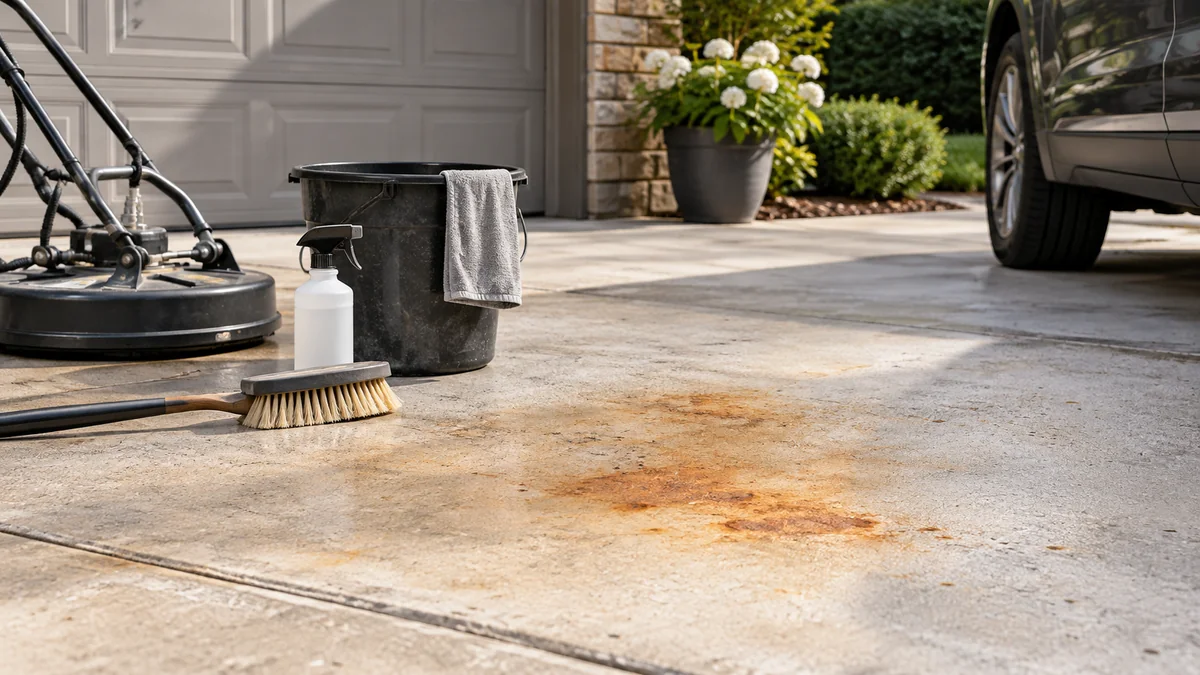
To remove rust stains from a concrete driveway, apply a rust-specific acidic cleaner, keep it wet for the label-directed dwell time, scrub with a nylon brush, and rinse thoroughly. Oxalic-acid concrete cleaners usually work best for moderate stains, while vinegar may handle fresh surface marks. Pressure washing alone rarely removes chemically bonded iron oxide.
Key facts
Oxalic acid is typically the most reliable DIY choice for moderate rust stains on standard gray concrete.
Vinegar or lemon juice may lighten small, recent stains but usually cannot remove deep discoloration.
A nylon-bristle brush is safer than a steel wire brush, which can leave rust-producing metal fragments.
Test every chemical on an inconspicuous area before treating colored, stamped, painted, or sealed concrete.
Typical DIY treatment takes 1-3 hours, including preparation, dwell time, rinsing, and drying.
Never mix rust removers with bleach, ammonia, chlorine products, or other cleaners.
Why Rust Stains Appear on Concrete
Rust stains form when iron or steel oxidizes and deposits iron oxides in the porous surface of concrete. Common sources include metal furniture, vehicle parts, tools, rusty downspouts, lawn fertilizer, irrigation from an iron-rich well, and exposed reinforcing steel.
Concrete absorbs water through capillaries. Dissolved iron travels with that water, then oxidizes when oxygen reaches the surface. A rusty object sitting on a driveway can create a concentrated orange-brown mark, while well water or fertilizer can produce broad orange haze across several square metres.
The source matters because cleaning alone may not solve recurring discoloration. A metal planter that remains on the slab can create a new ring within days. Irrigation water with dissolved iron can recreate stains after every watering cycle.
How Rust Removers Work
Rust is primarily iron oxide, which does not rinse away with water alone. An acidic cleaner reacts with the iron oxide and forms a more soluble iron compound that can be loosened, scrubbed, and flushed from the concrete pores.
Oxalic acid is widely used in commercial rust removers because it binds iron and can remove discoloration without the aggressive surface etching associated with strong mineral acids. Vinegar contains weaker acetic acid, so it is more suitable for thin surface deposits than old, deeply absorbed stains.
The chemistry has limits. If rust comes from corroding reinforcement inside cracked concrete, surface cleaner may improve the appearance temporarily but cannot stop the internal source.
Which Rust Removal Method Should You Choose?
For most homeowners, choose an oxalic-acid concrete or masonry cleaner for moderate stains on unsealed gray concrete. Use vinegar only for small, fresh marks, sodium hydrosulfite for some broad surface deposits when the product label permits concrete use, and avoid muriatic acid unless a trained professional accepts the etching and runoff risks.
| Method | Best application | Typical dwell time | Typical DIY cost |
|---|---|---|---|
| White vinegar, undiluted | Small, recent surface mark | 10-20 minutes | $2-$6 |
| Lemon juice or citric acid | Light orange discoloration | 10-20 minutes | $3-$10 |
| Oxalic-acid cleaner | Moderate or older rust | 10-30 minutes | $15-$40 |
| Sodium hydrosulfite product | Broad surface staining | 10-30 minutes | $10-$25 |
| Muriatic acid | Severe industrial contamination | 1-5 minutes only | $15-$30 |
These figures are typical retail ranges, not guaranteed prices. Product concentration, coverage rate, local availability, and stain size change the final cost.
Is TSP a Rust Remover?
Trisodium phosphate is primarily a heavy-duty alkaline cleaner, not a dedicated rust remover. TSP can remove grease, soil, and organic residue that conceal a rust stain, but it generally does not dissolve iron oxide as effectively as an acid-based rust product.
Use a concrete degreaser or TSP-compatible cleaner before rust treatment when the driveway has oil, fertilizer residue, mud, or vehicle grime. Rinse away the alkaline cleaner completely and allow the surface to drain before applying an acid. Never combine the products in the same container.
Can Pressure Washing Remove Rust?
Pressure washing can remove loose dirt and spent chemical residue, but pressure alone usually cannot remove rust that has penetrated concrete pores. Excessive pressure may strip weak paste from the surrounding concrete, leaving a rough halo that makes the remaining stain more visible.
Use a garden hose for most rinsing. If a pressure washer is necessary, start with a broad fan nozzle, moderate pressure, and a moving spray pattern. Do not hold the nozzle close to one point, especially on aged, cracked, stamped, or surface-treated concrete.
Before You Start
Prepare the driveway, surrounding vegetation, equipment, and chemical handling plan before opening a rust remover. The safest workflow uses the mildest product likely to work, a hidden test patch, controlled application, and complete rinsing.
| Requirement | Typical specification |
|---|---|
| Project time | 1-3 hours, excluding overnight drying |
| Difficulty | Moderate for unsealed gray concrete |
| Weather | Dry forecast for 6-12 hours |
| Surface temperature | Approximately 10-32°C |
| Brush | Stiff nylon, 15-30 cm head |
| Rinse equipment | Garden hose with adjustable nozzle |
| Protection | Chemical-resistant gloves, goggles, long sleeves |
| Product amount | Label coverage, commonly 1-4 L solution per 10 m² |
| Waste control | Absorbent material, drain protection, plant shielding |
Do not work immediately before rain. Rain can spread dissolved iron and cleaning chemicals onto lawns, soil, storm drains, neighboring surfaces, and painted masonry.
Identify the Stain Source
Inspect the area before cleaning. Rust directly beneath a metal object usually indicates surface transfer. Parallel orange marks near a garage may come from a steel threshold or wheel stop. A broad stain along a watering path suggests iron-rich irrigation water.
A stain that returns from a crack, spalled patch, or exposed reinforcing bar requires concrete repair after cleaning. Repeated chemical treatment without source repair wastes time and can gradually alter the surrounding surface.
Step 1: Remove Objects and Dry Debris
Move vehicles, furniture, planters, tools, hoses, and fertilizer bags away from the stained area. Sweep leaves, gravel, dust, and loose flakes from the driveway using a stiff broom.
Remove oil and heavy grime separately with a concrete degreaser or a small amount of detergent. Rust remover must contact the concrete directly; a film of grease can produce uneven treatment and patchy color.
You will know this step is complete when the stain outline is visible and loose dirt no longer collects under the brush. The common mistake is treating a dirty surface and then assuming the acid failed.
Step 2: Protect Plants and Test the Surface
Wet nearby grass and shrubs with clean water, cover sensitive plants with plastic temporarily, and block runoff from entering storm drains. Keep plastic off foliage for long periods because trapped heat can damage leaves.
Apply a small amount of the chosen product to a hidden section. Follow the product label for dilution, ventilation, and contact time, then rinse and let the patch dry fully. Decorative aggregate, colored concrete, paint, acrylic sealer, and stamped finishes can change shade after chemical cleaning.
You will know the test succeeded when the treated patch has no lighter halo, rough texture, tacky residue, or unexpected color shift after drying. The common mistake is judging the result while the concrete is still wet.
Step 3: Apply the Mildest Suitable Cleaner
For a light stain, pour undiluted white vinegar over the mark or apply lemon juice to the affected area. Keep the surface wet for 10-20 minutes, then proceed to scrubbing.
For moderate staining, mix or dilute an oxalic-acid product exactly as its label specifies. Product strength varies, so a universal powder-to-water formula can create an unsafe or ineffective concentration. Commercial labels should control dilution, coverage, ventilation, and disposal.
For a broad stain, a sodium hydrosulfite product may work when the label specifically permits use on concrete. Follow its instructions rather than copying a formula intended for laundry, plumbing, or another material.
Apply enough solution to wet the entire stain evenly without creating uncontrolled runoff. Do not allow the product to dry on the surface.
Step 4: Maintain the Correct Dwell Time
Keep the cleaner damp for the recommended contact period, normally 10-30 minutes for mild acids and commercial rust removers. Work in small sections if sunlight or wind causes rapid drying.
Do not extend dwell time in the hope of improving the result. Stronger or longer contact can lighten the cement paste, etch the surface, damage a sealer, or create a visible treatment boundary.
You will know the chemistry is working when the orange-brown color visibly fades or loosens during contact. The common mistake is scrubbing immediately, before the product has had time to react, or leaving it unattended until it dries.
Step 5: Scrub With Nylon
Scrub the wet area using firm, overlapping strokes with a stiff nylon brush. Circular motions can loosen isolated spots, while straight overlapping passes help maintain even coverage across broad discoloration.
Use moderate pressure. Chemical action should do most of the work, and excessive force can roughen weak concrete without removing iron embedded below the surface.
You will know the step is effective when the rinse water carries orange or brown residue away and the stain becomes lighter across its full outline. The common mistake is using a steel wire brush. Steel fragments can lodge in concrete pores and oxidize later.
Step 6: Rinse Until Residue Is Gone
Flush the treated area with a garden hose, directing the water away from plants, finished walls, vehicles, and storm drains where possible. Rinse beyond the visible edge because dissolved cleaner and iron can migrate outside the original stain.
Use a pressure washer only at a controlled, moderate setting with a wide spray pattern. Never concentrate high pressure on one spot to force out a stain that chemistry has not loosened.
You will know rinsing is complete when the water runs clear, no powder or slippery film remains, and the dry surface has no sharp treatment boundary. Allow the driveway to dry completely before deciding whether a second application is necessary.
What Works Best for Different Stain Situations?
The best method depends on stain age, surface type, area, and source. A fresh orange ring on unsealed gray concrete can respond to vinegar, while fertilizer haze over a large driveway usually needs a labeled commercial product and careful runoff control.
| Situation | Recommended first choice | Avoid first | Expected result |
|---|---|---|---|
| Fresh mark under metal chair | Vinegar or citric acid | Muriatic acid | Often lighter after one treatment |
| Old dark patch on gray concrete | Oxalic-acid cleaner | Pressure alone | Usually needs one or two applications |
| Broad irrigation discoloration | Labeled commercial rust remover | Uncontrolled acid runoff | Improvement after source correction |
| Rust mixed with oil | Degreaser, then rust remover | Applying acid over grease | More even treatment |
| Colored or stamped concrete | Manufacturer-approved cleaner | Unverified acid | Variable, test-dependent |
| Exposed reinforcing steel | Surface cleaning plus concrete repair | Repeated acid applications | Temporary cosmetic improvement only |
How Do You Remove Fertilizer Rust?
Fertilizer rust usually comes from iron-containing granules that become wet and leave orange spots or streaks. Sweep dry granules away immediately, clean the residue, and use a tested oxalic-acid product for stains that remain.
Do not scrub fertilizer granules into the concrete. Water can carry iron deeper into the pores, especially where the slab is worn or porous. Prevention requires keeping fertilizer off hard surfaces and removing accidental deposits before irrigation or rain.
How Do You Treat Well-Water Rust?
Iron-rich well water can create a widespread orange film rather than a single spot. Clean a small section first, then address the irrigation source with filtration, treatment, or changed sprinkler coverage.
A driveway may re-stain after successful cleaning if the water continues depositing iron. Cleaning the concrete without correcting the water source treats the symptom only.
What About Colored, Stamped, or Sealed Concrete?
Colored, stamped, painted, and sealed concrete requires a product approved for that finish and a larger test area than plain gray concrete. Acid can remove pigment, dull an acrylic sealer, expose aggregate, or leave a lighter patch.
For decorative concrete, contact the installer or sealer manufacturer before using vinegar, oxalic acid, sodium hydrosulfite, or muriatic acid. A professional may recommend a pH-neutral cleaner, sealer repair, or controlled poultice treatment instead.
Common Mistakes and How to Fix Them
Using Bleach
Bleach is an oxidizing chemical, not a reliable rust remover. It can worsen iron discoloration or create a darker, more persistent mark. Rinse the area thoroughly, allow it to dry, and switch to a concrete-compatible rust remover after confirming product compatibility.
Using Muriatic Acid Too Quickly
Muriatic acid can etch cement paste, damage adjacent masonry, harm vegetation, and create hazardous runoff. If a professional approves it for severe contamination, the product must be diluted and timed according to the specific job, with immediate controlled rinsing and neutralization procedures.
Homeowners should usually choose oxalic acid instead. Muriatic acid removes material from the concrete surface; it does not selectively remove rust.
Letting Cleaner Dry
Dried cleaner can leave residue, uneven bleaching, and a visible edge. Work during moderate conditions, divide large areas into manageable sections, and keep the applied product damp for the label-directed dwell period.
Applying Acid Over Oil
Oil blocks chemical contact and can produce a blotchy result. Degrease first, rinse completely, and wait until the surface no longer repels water before applying rust remover.
Repeating Applications Too Soon
A wet driveway can make a stain appear lighter than it will look when dry. Wait until the concrete has dried, often overnight, before deciding whether another application is needed.
How Much Does Driveway Rust Removal Cost?
A small DIY treatment typically costs $10-$40 for cleaner and basic supplies. A large driveway, decorative finish, severe runoff risk, or repeated treatment can raise DIY costs to approximately $40-$100, while professional service commonly ranges from $150-$500 or more.
| Project type | Typical area | Typical DIY cost | Typical professional cost |
|---|---|---|---|
| Small spot | 0.2-1 m² | $5-$20 | $150-$250 minimum service |
| Several stains | 1-5 m² | $15-$50 | $200-$400 |
| Broad fertilizer or well-water stain | 5-20 m² | $30-$100 | $300-$700 |
| Decorative or sealed driveway | 10-50 m² | $30-$120 | $400-$1,000+ |
Prices vary by region, access, surface condition, minimum contractor charges, and whether sealing or concrete repair is included.
When Should You Hire a Professional?
Hire a professional when rust covers most of the driveway, the surface is decorative or sealed, runoff cannot be controlled, the stain returns from a crack, or previous chemicals have already altered the finish.
Professional help is also sensible when exposed steel, spalling, structural cracking, or embedded metal is involved. A cleaner can remove surface discoloration, but it cannot repair reinforcing steel corrosion or restore concrete that has already lost its surface paste.
Ask for the proposed chemical, test-patch procedure, runoff controls, pressure settings, and whether the quote includes resealing. A contractor who proposes maximum-pressure washing without chemical testing may damage the slab while leaving the underlying rust.
How Can You Prevent Rust From Returning?
Prevent recurrence by removing the iron source, keeping fertilizer granules off the slab, correcting iron-rich irrigation, and sealing clean, dry concrete with a compatible penetrating sealer. Sealers reduce water entry but do not correct rust already trapped beneath the surface.
Apply sealer only after the driveway is fully dry and free of chemical residue. Typical reapplication intervals range from 2-5 years, depending on the product, traffic, climate, and water exposure; the manufacturer’s maintenance schedule controls.
Do not place bare steel furniture directly on damp concrete. Use non-rusting feet, protective pads, galvanized hardware, or stainless-steel components where practical.
Troubleshooting Persistent or Discolored Stains
A stain that lightens but remains visible usually contains iron below the immediate surface. Let the driveway dry fully, repeat the tested product application, and stop if the surface begins to change texture or color.
A blue, yellow, or unusually dark residue indicates a chemical or finish reaction rather than ordinary rust removal. Rinse thoroughly, stop using the product, and contact the manufacturer or a concrete professional before applying another chemical.
A stain that returns after several cleanings points to an active source. Inspect nearby metal, irrigation, fertilizer practices, expansion joints, cracks, and exposed reinforcement instead of escalating immediately to a stronger acid.
Frequently Asked Questions
Will baking soda remove rust from concrete?
Baking soda is not a strong rust remover because it is mildly alkaline and does not dissolve iron oxide effectively. It can help neutralize certain acidic residues when used according to a product or professional procedure, but it should not replace a concrete-compatible rust treatment.
Can Coca-Cola remove driveway rust?
Coca-Cola contains phosphoric acid, but its low concentration, sugar, and additives make it an inefficient driveway cleaner. It may slightly affect a tiny surface mark, yet it can leave sticky residue and does not provide predictable coverage or contact time.
How long should I wait before sealing concrete after rust removal?
Wait until the concrete is completely dry, chemically clean, and free of visible residue, typically at least 24-48 hours after the final rinse. Follow the sealer manufacturer’s moisture and temperature requirements, because sealing damp concrete can trap water and create whitening.
Can rust stains damage the concrete driveway?
Surface rust discoloration is usually cosmetic, but prolonged moisture and corrosion from embedded steel can cause cracking, spalling, and delamination. A stain accompanied by cracking, lifted concrete, or exposed metal requires inspection and repair rather than repeated surface cleaning.
Is oxalic acid safe for plants?
Oxalic acid can injure plants and soil organisms if concentrated solution reaches roots or foliage. Wet surrounding vegetation first, shield sensitive plants, control runoff, and rinse according to the product label. Never assume a diluted cleaner is harmless because it is sold for household use.
Should I use a wire brush on concrete rust?
Do not use a steel wire brush for rust removal on concrete. Embedded steel fragments can oxidize and produce new spots. Use a stiff nylon brush, which provides mechanical agitation without adding iron to the porous surface.
The Bottom Line
The most dependable way to remove rust stains from a concrete driveway is to identify the source, test a small area, apply a labeled oxalic-acid or equivalent concrete rust remover, keep it wet for 10-30 minutes, scrub with nylon, and rinse completely. Vinegar suits only light stains, while muriatic acid is an unnecessary risk for most homeowners. Correct the iron source and seal the clean, dry surface to prevent the exact keyword problem, how to remove rust stains from concrete driveway, from returning.