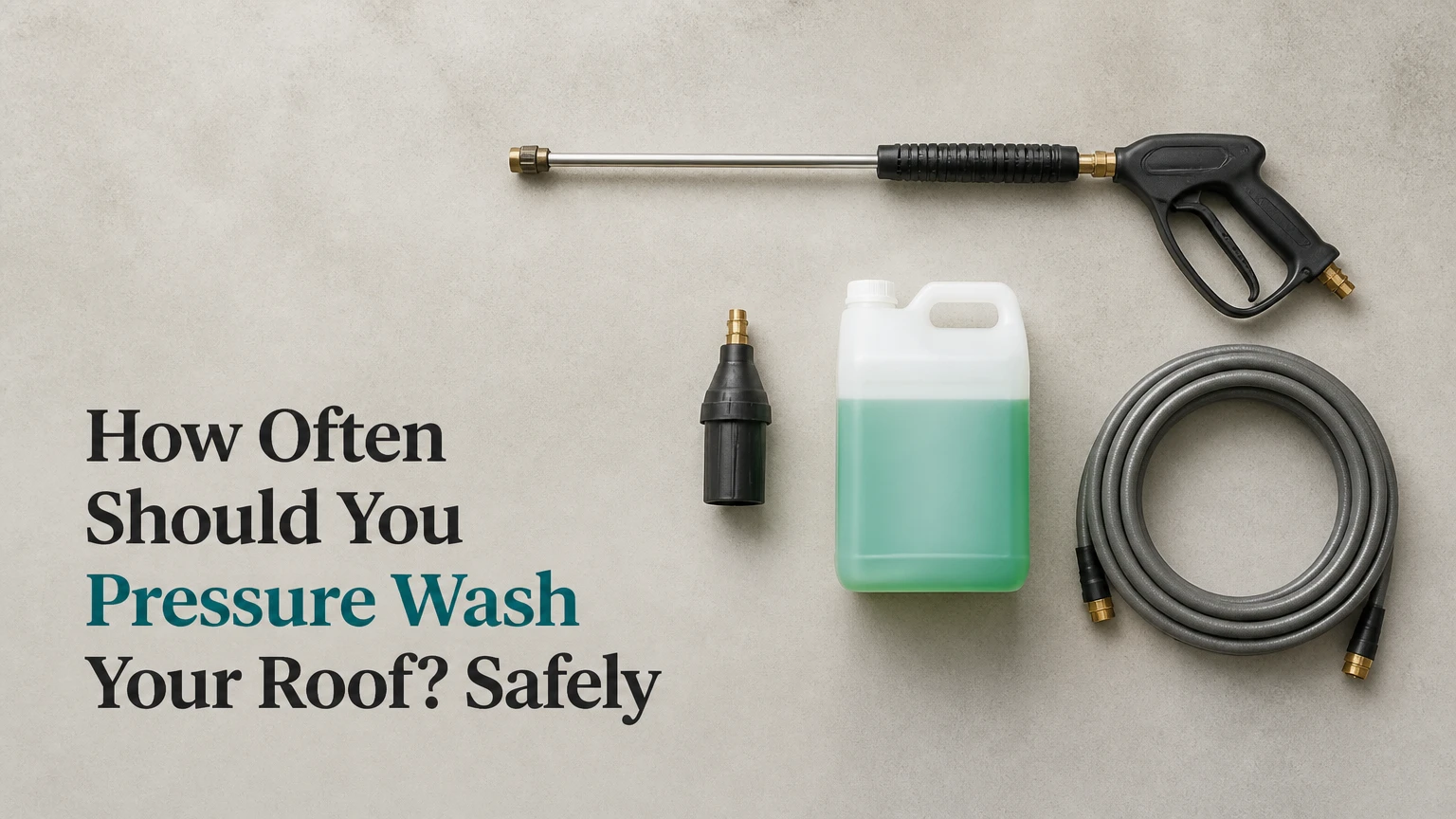
You should generally have a roof professionally soft washed every 1-3 years, but standard residential roofs should not receive high-pressure washing. Inspect the roof twice a year and clean sooner when shade, damp weather, tree debris, algae, moss, lichen, salt, or material-specific staining accelerates buildup.
Key Facts at a Glance
- Asphalt shingle roofs commonly need soft washing every 1-3 years when algae or moss returns.
- Dense shade, frequent rain, and overhanging trees can reduce the interval to 12-24 months.
- High-pressure washing can remove asphalt shingle granules and force water beneath roof components.
- Metal roofs in mild, open conditions may go 3-5 years between cleanings.
- Roof cleaning does not repair leaks, rotten decking, failed flashing, or end-of-life shingles.
- A twice-yearly visual inspection is separate from the less frequent cleaning schedule.
How Often Should You Pressure Wash Your Roof?
Most homeowners should schedule roof cleaning every 1-3 years, using a low-pressure soft-wash method rather than a conventional pressure washer. A shaded asphalt shingle roof in a wet climate may need annual treatment, while a clean, sun-exposed metal roof may remain acceptable for 3-5 years.
The calendar is only a starting point. Roof cleaning frequency depends on biological growth, moisture retention, roof material, tree canopy, nearby construction dust, coastal salt, and whether the roof drains and dries quickly. Black streaks alone are usually cosmetic algae, while moss and lichen can create more serious moisture and adhesion problems.
Inspect the roof from the ground or hire a professional in spring and autumn. Do not climb a wet, steep, brittle, or moss-covered roof to confirm its condition.
A Practical Cleaning Schedule by Condition
| Roof condition | Typical cleaning interval | Recommended action | Main reason |
|---|---|---|---|
| Sunny asphalt shingles, low tree cover | 2-3 years | Soft-wash inspection | Algae dries quickly |
| Shaded asphalt shingles, frequent rain | 12-24 months | Annual visual check plus treatment as needed | Persistent moisture supports growth |
| Moss or lichen already established | Treat promptly, often within weeks | Professional assessment | Roots and moisture can lift materials |
| Standing-seam metal roof, open exposure | 3-5 years | Low-pressure cleaning when staining appears | Metal does not absorb water like shingles |
| Coastal roof with salt and wind exposure | 12-24 months | Rinse and inspect more often | Salt deposits and windborne debris accumulate |
| Roof near mature deciduous trees | 1-2 years | Clear debris several times yearly | Leaves retain moisture in valleys and gutters |
These intervals are typical planning ranges, not universal manufacturer requirements. The roof’s warranty documents and material supplier instructions control the permitted cleaning method.
Is High-Pressure Washing Safe for a Roof?
High-pressure washing is generally unsafe for asphalt shingles, many clay or concrete tiles, slate, and older wood shakes. A pressure washer operating at 1,500-3,000 PSI can dislodge shingle granules, damage tile surfaces, open vulnerable seams, and drive water beneath flashings or laps.
The term “pressure washing” creates a practical problem because contractors use it loosely. A soft-wash pump may apply chemical solution at garden-hose-like pressure, while a pressure washer uses a high-volume mechanical stream. Safety depends on pressure at the surface, nozzle type, distance, water volume, chemistry, and roof material.
The Asphalt Roofing Manufacturers Association recommends avoiding power washing asphalt shingles because the force can remove granules and shorten roof life. The U.S. Occupational Safety and Health Administration states, “Falls are the leading cause of death in construction,” which is also why roof cleaning should not be treated as ordinary exterior washing.
How High Pressure Damages Common Roof Materials
| Material | High-pressure risk | Likely consequence | Safer general approach |
|---|---|---|---|
| Asphalt shingle | Granule loss at 1,500+ PSI | Exposed asphalt, faster ultraviolet aging | Manufacturer-approved soft wash |
| Clay tile | Cracking or surface erosion | Broken tiles and water entry | Low-pressure chemical treatment |
| Concrete tile | Coating and edge damage | Porosity, chips, displaced tiles | Controlled low-pressure rinse |
| Slate | Delamination or breakage | Cracked slate and damaged fasteners | Specialist inspection and gentle cleaning |
| Wood shake | Raised grain and forced water | Rot, splitting, wet underlayment | Material-specific low-pressure method |
| Standing-seam metal | Paint or seal damage near joints | Corrosion or finish failure | Low-pressure detergent rinse |
A roof that appears dirty may have loose granules, failed sealant, cracked tiles, or exposed underlayment. Mechanical cleaning can turn a manageable inspection finding into an active leak.
How Does Soft Washing Work?
Soft washing combines a low-pressure application with a roof-compatible cleaning solution that breaks down algae, moss, lichen, and surface dirt. The chemical solution does most of the biological work, so increasing water pressure is usually the wrong response when staining does not disappear immediately.
Professional systems commonly use a pump, wide-angle nozzle, surfactant, and a diluted biocide such as sodium hypochlorite. Solution strength varies by product, roof material, growth severity, temperature, and local regulations; a contractor should identify the product and dilution rather than promise one universal percentage.
A typical treatment involves inspection, plant protection, controlled application, a monitored dwell period, and a low-pressure rinse or natural weathering. Dead lichen can remain attached for days or weeks. A clean-looking roof is not always the immediate result of a biologically effective treatment.
Soft Washing Versus High-Pressure Washing
| Criterion | Soft washing | High-pressure washing |
|---|---|---|
| Typical surface pressure | Under 100-300 PSI | About 1,500-3,000+ PSI |
| Primary cleaning force | Biocide and surfactant | Mechanical water impact |
| Asphalt shingle suitability | Commonly preferred when manufacturer-approved | Commonly unsafe |
| Moss and lichen result | Kills growth, removal may take time | Removes visible growth but may leave viable material |
| Main roof risk | Chemical overspray or runoff | Granule loss and driven water |
| Landscape requirement | Pre-wet, protect, and flush plants | Still requires runoff control |
| Best use | Delicate roof substrates | Durable ground surfaces such as concrete |
The lower pressure number does not automatically make a process safe. A careless operator can damage shingles with a concentrated nozzle, excessive solution, poor runoff control, or foot traffic even when the pump is labeled “soft wash.”
How Do Climate and Shade Change the Schedule?
Climate and shade can reduce roof-cleaning intervals from three years to approximately 12-24 months because moisture allows algae, moss, and lichen to remain active longer. Sun exposure, wind, roof pitch, ventilation, and drainage determine how quickly a roof dries after rain.
Dense evergreen branches create persistent shade and deposit needles that collect in valleys. A low-pitch roof drains more slowly than a steep roof, and blocked gutters can keep fascia, eaves, and lower shingles damp. Coastal homes add salt and airborne organic material to the maintenance burden.
Seasonal timing matters. In freeze-prone regions, complete cleaning early enough for the roof and surrounding surfaces to dry before repeated freezing. In hot climates, avoid allowing chemical solutions to dry on sun-heated materials. Wind is a stop-work condition when it can carry mist onto vehicles, neighboring properties, HVAC equipment, or plants.
Environmental Factors That Change Frequency
| Factor | Effect on roof | Typical response |
|---|---|---|
| North-facing or tree-shaded slope | Slower drying and more moss | Inspect every 6-12 months |
| Rainfall above frequent seasonal storms | More biological activity | Consider 12-24 month treatment |
| Overhanging trees | Leaf and needle accumulation | Clear debris several times yearly |
| Coastal salt exposure | Deposits and accelerated finish wear | Rinse and inspect annually |
| Dry, sunny, open site | Faster drying | Cleaning may remain at 2-3 years |
| Poor attic ventilation | Warm, moist roof assembly | Correct ventilation before repeat cleaning |
Cleaning cannot compensate for a roof assembly that stays wet because of blocked gutters, inadequate ventilation, plumbing leaks, or a failed flashing detail.
Which Roofing Materials Need Different Treatment?
Asphalt shingles usually require the most conservative cleaning technique because their weather-resistant surface includes embedded mineral granules. Metal, tile, slate, and wood each tolerate different combinations of pressure, chemistry, access, and rinsing.
Read the manufacturer’s maintenance instructions before choosing a contractor. Some warranties restrict chemicals, prohibit power washing, or require a specific cleaning method. An invoice that merely says “pressure washed” does not prove compliance.
| Roof material | Common visible problem | Preferred starting point | Important limitation |
|---|---|---|---|
| Fiberglass asphalt shingle | Black algae streaks | Approved low-pressure treatment | Avoid granule-disturbing spray |
| Cedar shake | Algae, moss, gray weathering | Wood-roof specialist assessment | Avoid soaking joints and forcing water |
| Clay tile | Dirt, lichen, rust stains | Low-pressure material-safe cleaning | Walking can crack tiles |
| Concrete tile | Algae, efflorescence, coating wear | Manufacturer-compatible treatment | Do not assume all tile coatings match |
| Natural slate | Lichen, leaf debris | Slate roofer or specialist | Fasteners and brittle pieces need inspection |
| Painted metal | Oxidation, algae, salt | Low-pressure detergent rinse | Harsh chemicals may alter coatings |
| Standing-seam metal | Dirt and bird deposits | Controlled low-pressure cleaning | Protect seams, sealants, and finishes |
A roofing professional should inspect brittle shingles, loose tiles, exposed fasteners, deteriorated ridge caps, and cracked flashing before cleaning. If the roof is near the end of its expected service life, cleaning may improve appearance without improving remaining performance.
What Happens During Professional Roof Cleaning?
A typical residential soft wash takes approximately 1-3 hours for setup, treatment, rinsing, and cleanup, although roof size, access, growth, weather, and plant protection can extend the visit. The contractor should explain the method before spraying begins.
Step 1: Inspect the Roof and Property
The technician checks roof age, material, pitch, visible damage, gutters, skylights, vents, flashing, electrical equipment, and landscaping. Photograph pre-existing damage so cleaning is not confused with repair.
Success checkpoint: The written quote identifies the roof material, method, areas excluded, and visible defects.
Common mistake: Treating a leak or rotten decking as a cleaning problem.
Step 2: Protect Plants, Vehicles, and Water Paths
Plants should be thoroughly pre-wet, sensitive vegetation shielded with breathable protection, and outdoor furniture or vehicles moved away from the work area. Contractors should identify where runoff will travel.
Success checkpoint: The crew can explain how it will dilute, redirect, collect, or flush runoff.
Common mistake: Covering plants with impermeable plastic in direct sun, which can trap heat and cause separate damage.
Step 3: Apply the Roof-Compatible Solution
The operator applies a controlled solution with a wide-angle nozzle and avoids directing spray beneath shingle edges, flashing, vents, and ridge details. The correct mix depends on the product label and roof condition.
Success checkpoint: Growth changes color or begins releasing without aggressive blasting.
Common mistake: Increasing chemical strength or pressure without checking the material and label.
Step 4: Monitor Dwell Time
The solution remains wet for a product-specific period, often approximately 10-20 minutes in typical professional workflows. Hot sun, wind, and porous materials may require shorter working sections or additional wetting.
Success checkpoint: The solution does not dry into a concentrated residue.
Common mistake: Applying more roof than the crew can monitor safely.
Step 5: Rinse or Allow Approved Weathering
Some treatments receive a controlled low-pressure rinse, while others allow dead organic material to weather away through rain. Lichen commonly takes longer to detach than surface algae.
Success checkpoint: No concentrated chemical residue remains on windows, siding, metal trim, or plants.
Common mistake: Using high pressure to produce instant cosmetic results.
Step 6: Flush, Clear, and Document
The crew flushes affected landscaping, checks gutters and downspouts, removes debris, and records the completed method. Ask for aftercare instructions and the solution product used.
Success checkpoint: Downspouts drain freely and the property shows no chemical spotting or plant stress.
Common mistake: Leaving loosened moss in gutters, where it can block drainage.
How Much Does Roof Cleaning Cost?
Typical professional roof cleaning costs range from $250-$1,100, with many 1,700-square-foot homes falling around $560-$900 for soft washing. Actual pricing changes with roof pitch, stories, access, material, growth severity, regional labor rates, plant protection, and whether gutter cleaning is included.
Online cost guides provide broad consumer estimates rather than guaranteed local prices. A low quote may exclude setup, runoff control, steep-roof safety equipment, treatment of detached structures, or a second visit for lichen.
| Service or roof size | Typical price range | Typical duration | Main price driver |
|---|---|---|---|
| Small, single-story roof under 1,200 sq. ft. | $250-$500 | 1-2 hours | Access and minimum service charge |
| 1,700 sq. ft. asphalt roof | $560-$900 | 1-3 hours | Growth, pitch, and landscaping |
| Large roof, 2,500-3,500 sq. ft. | $800-$1,500 | 2-5 hours | Area and setup complexity |
| Tile or slate specialist cleaning | $700-$1,500+ | 3-6 hours | Fragility and access |
| Treatment-only preventive visit | $250-$450 | 1-2 hours | Product and travel |
| Roof cleaning plus gutters | $650-$1,300 | 2-4 hours | Roof height and gutter length |
Request a written scope that names the cleaning method, pressure approach, chemical category, plant protections, warranty limitations, cleanup, insurance, and expected result. “Pressure wash roof” is too vague to evaluate.
When Is Cleaning Better Than Replacement?
Roof cleaning is appropriate when the roof remains structurally sound and the main problem is surface algae, moss, lichen, or debris. Cleaning is not appropriate as a substitute for replacement when shingles are brittle, widely cracked, curling, losing granules, or repeatedly leaking.
A roof inspection should take priority when the roof is approximately 15-25 years old, depending on material and local exposure, or when visible damage exists. Asphalt shingle service life varies widely, so age alone cannot determine replacement.
Cleaning Is Usually Reasonable When
- Black algae streaks cover otherwise intact shingles.
- Moss is limited and the roof deck shows no sagging or rot.
- Gutters and flashing remain functional.
- The roof has adequate remaining service life.
- The manufacturer permits the proposed method.
Repair or Replacement May Be Better When
- Granules collect heavily in gutters.
- Shingles are brittle, curling, cracked, or missing.
- Flashing has failed around chimneys or skylights.
- The attic shows damp insulation, daylight, or fungal decay.
- Tiles are fractured or slate fasteners have deteriorated.
A clean roof can still leak. Cleaning improves surface condition and appearance, but it does not restore waterproof membranes, replace failed flashing, or rebuild damaged decking.
What Should You Do About Moss and Lichen?
Moss and lichen should be treated promptly but removed without scraping, prying, or blasting. Moss holds moisture against the roof surface, while lichen attaches tightly to granules and can pull them away when removed mechanically.
Do not expect every dark patch to vanish during the visit. A properly treated lichen colony may remain visibly attached while its biological activity has stopped, then detach through rain and normal weathering. Aggressive immediate removal often causes more substrate damage than patient treatment.
After cleaning, reduce recurrence by trimming branches, clearing valleys, improving gutter flow, and correcting persistent shade where practical. Zinc or copper strips may reduce new growth below the strip, but they do not repair existing roof damage and their use should follow material and runoff guidance.
Should You DIY Roof Cleaning?
Most homeowners should limit DIY roof maintenance to ground-level debris removal, gutter observation, branch trimming, and visual inspection. Roof access introduces fall, chemical, electrical, and material-damage risks that increase sharply on steep, wet, brittle, or multistory roofs.
A homeowner who chooses a shallow one-story project should first verify the roof material, product label, local runoff rules, manufacturer instructions, and weather forecast. A garden sprayer is not a substitute for a complete safety plan, and walking on asphalt shingles can dislodge granules even without a machine.
Professional cleaning is the safer choice when the roof is steep, moss-covered, more than one story high, near power lines, adjacent to delicate landscaping, or visibly deteriorated. Never use a pressure washer on asphalt shingles because a short cosmetic job can create a long-lived warranty or leak problem.
How Can You Extend the Cleaning Interval?
You can often extend roof-cleaning intervals by keeping the roof dry, clear, and well drained between treatments. Remove leaves and branches from valleys, clean gutters before rainy seasons, trim shade-producing limbs, and inspect roof penetrations twice yearly.
Ventilation also matters. Excess attic moisture can keep roof surfaces damp and accelerate biological growth, although attic ventilation problems require a qualified building professional rather than more chemical treatment.
Use these maintenance actions:
- Inspect from the ground in spring and autumn.
- Clear roof debris with a safe ground-based tool when possible.
- Keep gutters and downspouts flowing.
- Trim branches that touch or shade the roof.
- Photograph new stains, moss, missing granules, or damaged flashing.
- Schedule cleaning before growth becomes thick enough to retain water.
- Keep the cleaning invoice and method for warranty records.
What If Stains Remain After Cleaning?
Persistent stains after roof cleaning do not automatically mean the treatment failed. Dead lichen, oxidized material, rust, tannin deposits, and permanent discoloration can remain after algae and moss are no longer active.
Wait for the product’s stated weathering period before requesting stronger treatment. If growth returns within weeks, ask the contractor to verify solution coverage, dwell time, runoff, roof moisture sources, and whether the stain was biological in the first place.
Stop and reassess when shingles lose granules, plants show chemical injury, interior leaks appear, or runoff enters a neighbor’s property. A second high-pressure pass is not a safe correction.
Which Schedule Fits Your Situation?
Shaded Asphalt Roof
Schedule a visual inspection every 6-12 months and expect cleaning approximately every 12-24 months when moss or algae recurs. Trim branches and keep valleys clear because chemical treatment alone will not remove the moisture source.
Coastal or High-Rainfall Home
Plan an evaluation every 12-24 months. Salt, windborne debris, and frequent rain can shorten the interval, while low-pressure rinsing may be appropriate for deposits that do not require biocidal treatment.
Metal Roof in a Dry, Open Area
A 3-5 year cleaning interval may be reasonable when the finish remains intact and no heavy deposits are present. Inspect fasteners, seams, coatings, and areas beneath trees before selecting detergents.
HOA or Sale Preparation
Use a documented professional treatment when appearance is the immediate concern. Ask for before-and-after photographs, the method used, and a statement that the roof was inspected for damage rather than cosmetically treated without review.
Frequently Asked Questions
Can roof cleaning damage shingles?
Roof cleaning can damage shingles when a contractor uses high pressure, walks carelessly, applies incompatible chemicals, or lets concentrated solution dry. Manufacturer-approved low-pressure treatment reduces those risks, but it cannot make brittle, failing shingles safe to clean. Inspect roof age and granule condition first.
What month is best for roof cleaning?
The best month is a mild, dry period with low wind and enough time for the roof and landscaping to dry afterward. Avoid freezing conditions, intense midday heat, and rain that prevents controlled dwell time. Local weather matters more than a universal month.
Does roof cleaning extend roof life?
Roof cleaning may help preserve a sound roof by reducing moisture-retaining moss and lichen, but published service-life extension is not a guaranteed number. Cleaning cannot reverse ultraviolet aging, granule loss, cracked shingles, failed flashing, or deteriorated decking.
How long does a soft wash last?
A soft-wash result commonly lasts 1-3 years, while some open, sunny roofs remain acceptable for 3-5 years. Shade, rainfall, tree debris, roof pitch, material, and nearby biological growth determine the actual interval. Treatment does not prevent new spores from arriving.
Should gutters be cleaned before or after the roof?
Gutters should be checked before cleaning and cleared after roof treatment removes loosened debris. Cleaning gutters first prevents blockage during runoff, while a final clearing ensures moss, lichen, and leaves released from the roof do not obstruct downspouts.
Can bleach be used on every roof?
Bleach-based products should not be assumed safe for every roof, coating, plant, or drainage system. Product labels, manufacturer instructions, dilution, dwell time, and runoff controls determine suitability. A qualified contractor should identify the chemical and protect landscaping before application.
The Bottom Line
How often should you pressure wash your roof? Most roofs should never receive high-pressure washing. Plan a professional soft-wash evaluation every 1-3 years, inspect twice annually, and shorten the interval to 12-24 months when shade, rain, moss, lichen, salt, or tree debris keeps the roof wet. Always match the method to the roofing material, warranty, weather, and actual condition rather than cleaning by calendar alone.