How to Connect Pressure Washer to Hose Safely
Connecting a pressure washer to a hose means supplying the pump with clean, steady water through its inlet before attaching the high-pressure gun and wand. For most residential machines, use a 5/8-inch or larger garden hose, provide about 1.5-2.5 GPM, remove air, then start the motor only after water flows freely. Key Facts / Quick […]
Pressure Washer Surface Cleaner Rental: Costs and Sizing
A pressure washer surface cleaner rental is a flat, guarded attachment that uses rotating high-pressure nozzles to wash concrete, brick, or stone evenly. The correct cleaner must match the pressure washer’s usable gallons per minute (GPM), pressure, hose connection, and cleaning area. Most residential jobs need a 12-20 inch attachment and a 2.5-4 GPM gas […]
How to Remove Food Oil Stains From Clothes Safely
Food oil stains are oily lipid deposits that repel water and cling to textile fibers, so ordinary washing may leave a dark ring behind. To remove one, lift excess oil, apply an oil-cutting surfactant such as liquid dish soap or heavy-duty laundry detergent, wait 10-60 minutes, rinse from the back, and wash at the warmest […]
How to Use a Gas Pressure Washer Safely
A gas pressure washer is a gasoline-powered cleaning machine that drives water through a high-pressure pump, hose, spray gun, and nozzle. To use one safely, verify oil, fuel, water supply, and connections, purge air before starting, select a suitable nozzle, keep moving, and shut down without leaving the pump bypassing for long periods. Key facts […]
How to Remove Green Algae From Screen Enclosure Safely
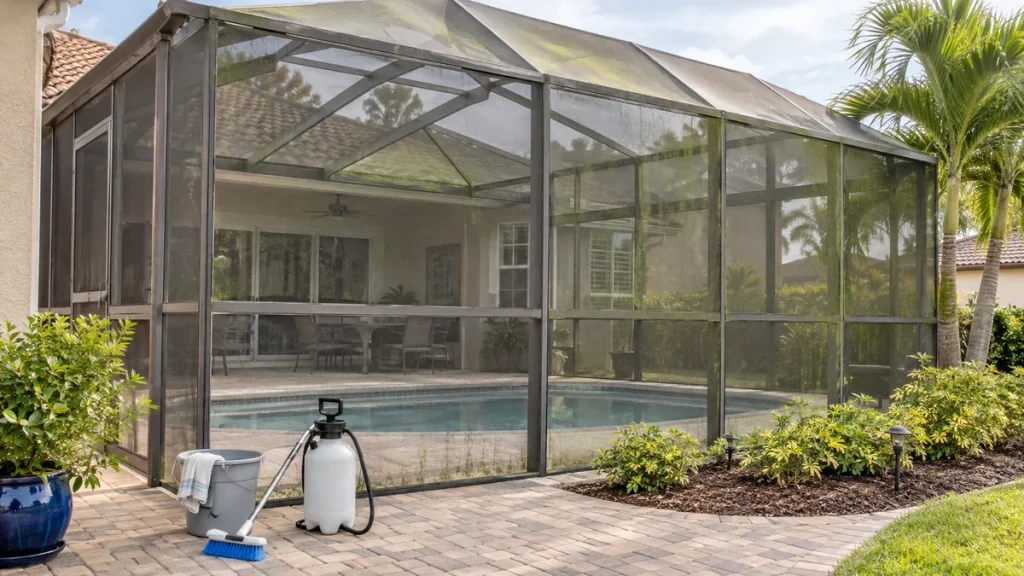
To remove green algae from a screen enclosure, loosen the growth with a compatible cleaner, keep the mesh wet for 5-10 minutes, gently brush heavy deposits, and rinse with low pressure. A garden hose is usually safer than a pressure washer. The most important factors are chemical dilution, plant protection, and preventing cleaner from drying […]
How to Remove Old Oil Stains From Colored Clothes Safely
How to remove old oil stains from colored clothes depends on the oil, fabric, dye, and exposure to dryer heat. The safest effective method is to loosen the residue with liquid dish detergent or laundry detergent, allow 10-15 minutes of contact, gently work it through the fibers, and wash at the hottest temperature permitted by […]
How to Protect Plants From Power Washing Safely
How to protect plants from power washing means combining clean-water saturation, physical shielding, controlled runoff, and immediate rinsing. The method reduces two separate hazards: high-velocity water can tear foliage and stems, while bleach, surfactants, and dirty runoff can burn leaves or injure roots. Protection must continue before, during, and after cleaning. Key Facts / Quick […]
How to Remove Rust Stains From Concrete Pavers Safely
How to remove rust stains from concrete pavers depends on stain depth, paver composition, and the iron source. For most light or moderate stains, use a concrete-safe oxalic or citric acid cleaner, agitate with nylon, and rinse before the product dries. Test first because acid can alter colored surfaces and exposed aggregate. Key Facts / […]
How to Clean Mold Without Spreading Spores Safely
How to clean mold without spreading spores means removing contamination while controlling air movement, dust, moisture, and waste. The safe sequence is to fix the water source, isolate the work area, wear suitable PPE, remove or clean affected materials, and use HEPA filtration rather than ordinary vacuuming. Large, hidden, sewage-related, or HVAC contamination needs professional […]
How to Remove an Oil Stain From the Driveway Safely
How to remove an oil stain from the driveway depends on the paving material, the fluid’s age, and how deeply it has penetrated. Cover a fresh spill with absorbent granules, then use a compatible degreaser and nylon brush for residue. Old marks may need repeated treatments or a drying poultice rather than one aggressive wash. […]