How to Remove Mold From Shower Caulk Without Bleach
How to remove mold from shower caulk without bleach requires a compatible cleaner, enough dwell time, and complete drying afterward. White vinegar, 3% hydrogen peroxide, baking soda, and diluted tea tree oil can reduce surface mold, but deeply stained or repeatedly affected silicone usually needs removal and replacement rather than repeated scrubbing. Key Facts / […]
How to Get Rid of Mould in Bathroom Permanently
Bathroom mould is fungal growth caused by persistent moisture, inadequate drying, leaks, or cold surfaces that collect condensation. To get rid of mould in bathroom permanently, remove the contaminated material where necessary, clean suitable surfaces safely, and control humidity so the environment no longer supports regrowth. Key Facts / Quick Answer Keep bathroom relative humidity […]
How to Clean Unfinished Wood Furniture Safely
Unfinished wood furniture is sanded raw wood without paint, stain, oil, wax, varnish, lacquer, or polyurethane sealing its pores. To clean it safely, remove dry debris first, use almost no water, dissolve grease with odorless mineral spirits, and sand only penetrated stains with the grain. Key Facts / Quick Answer A dry microfiber cloth and […]
How to Get Urine Smell Out of Leather Car Seats Safely
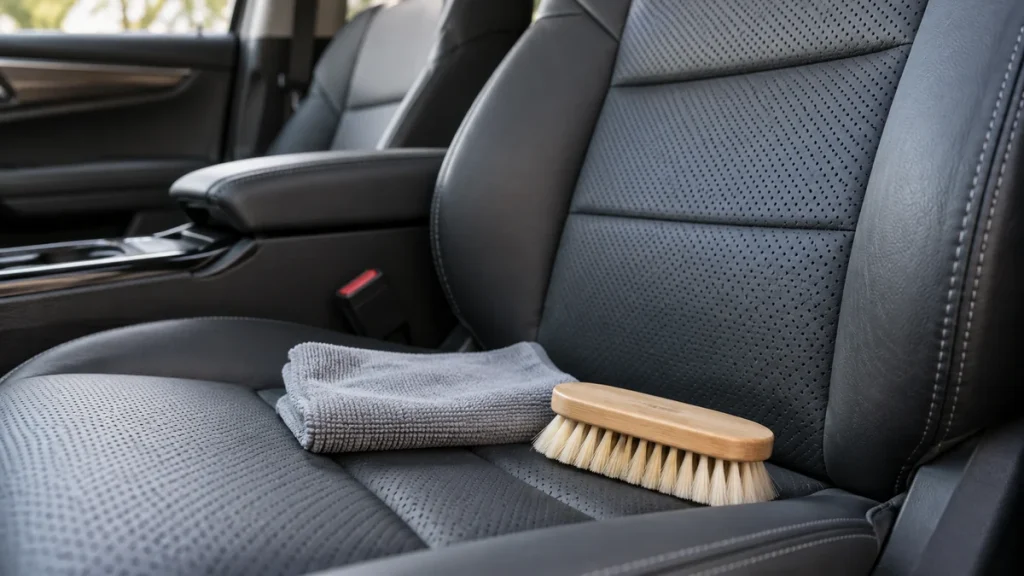
To get urine smell out of leather car seats, remove the liquid from the surface, clean the contaminated leather with a compatible product, and treat the seams or foam where urine may have soaked through. Use minimal moisture on perforated seats, allow 24-72 hours for deep drying, and escalate to professional extraction when odor returns […]
How to Remove Mold From Wood Furniture After Staining
How to remove mold from wood furniture after staining safely depends on the finish, moisture level, and depth of growth. The practical method is to isolate the piece, test a mild low-moisture cleaner, wipe rather than flood, dry the wood completely, and repair or recoat only after mold and its moisture source are controlled. Key […]
How to Remove Mold From Shower Caulking Reddit Guide
How to remove mold from shower caulking reddit discussions usually point to two different jobs: cleaning superficial staining or replacing silicone that has mold beneath its surface. Surface growth may lighten after a controlled disinfecting treatment, but black discoloration inside, behind, or throughout the bead normally requires complete removal, drying, and new 100% silicone caulk. […]
How to Clean Unsealed Concrete Floors Indoors Safely
How to clean unsealed concrete floors indoors involves removing dry soil, dissolving bonded contamination, scrubbing the porous slab, and extracting dirty liquid before it dries. Unsealed concrete absorbs water and oil through open pores, so controlled moisture, pH-appropriate cleaners, nylon agitation, and forced drying produce better results than ordinary mopping. Key facts Vacuum first with […]
How to Remove Mold From Silicone in Shower Safely
Mold in shower silicone is fungal growth or staining within and beneath an aging flexible sealant joint. Clean the surface with detergent first, apply a compatible disinfecting product for its full dwell time, and replace the silicone when dark discoloration remains, the joint has gaps, or mold returns quickly. Key Facts / Quick Answer Surface […]
How to Remove Mold From Walls: Home Remedy Guide
Title tag: how to remove mold from walls home remedy: 10-Sq-Ft Rule Meta description: Remove small wall mold safely with 3% peroxide, HEPA cleanup, and 30%-50% humidity control. Know when drywall needs replacement. Mold removal from walls is a small-area cleaning and moisture-control job when growth covers less than about 10 square feet, the wall […]
How to Clean Outdoor Wood Before Staining Correctly
How to clean outdoor wood before staining means removing dirt, mildew, dead gray fibers, mill glaze, and incompatible finishes without damaging the grain. The reliable sequence is cleaner, controlled agitation, thorough rinsing, optional brightener, complete drying, and a moisture check below the stain manufacturer’s limit, commonly 12-15%. Key facts Sodium percarbonate is the usual first […]