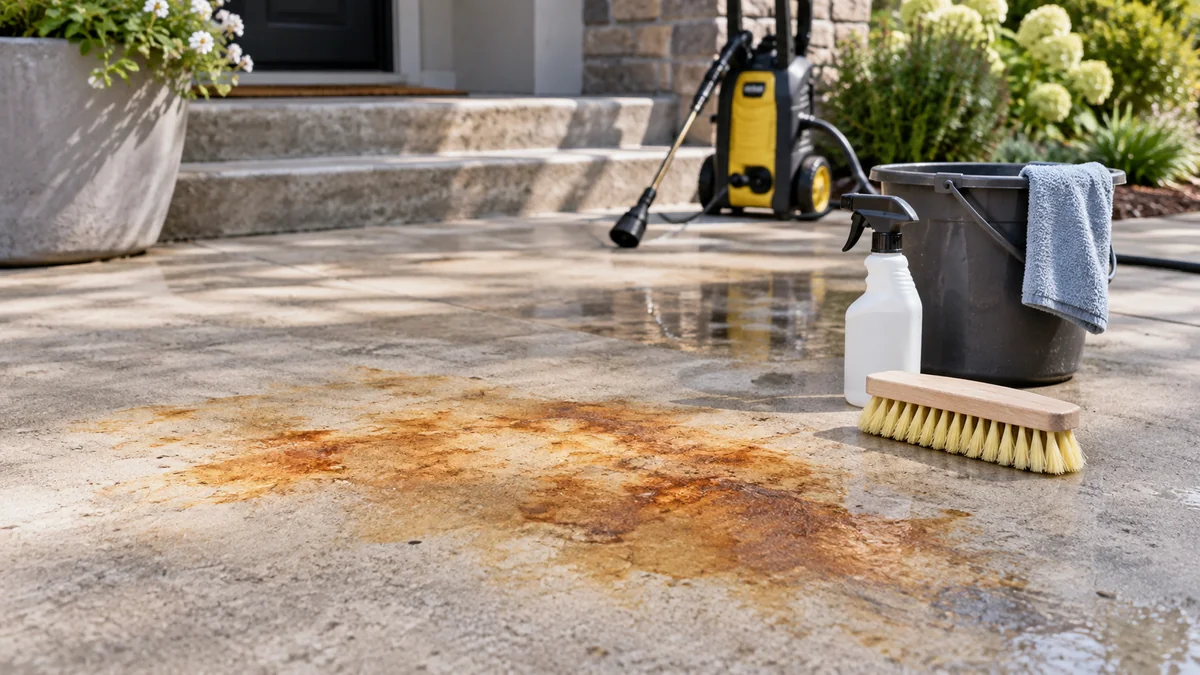
Home remedies to remove rust stains from concrete work best when the stain is superficial and the treatment stays wet for 10-30 minutes. Start with white vinegar or lemon juice, scrub with a nylon brush, and rinse thoroughly; use a commercial oxalic-acid product or professional treatment when rust comes from embedded rebar, deep corrosion, or a large mineral source.
Key Facts at a Glance
- White vinegar contains acetic acid that can dissolve light iron oxide on unsealed concrete.
- Lemon juice contains citric acid and is usually suitable for small, fresh rust marks.
- Baking soda neutralizes acid, so mixing it with vinegar reduces the vinegar’s chemical cleaning power.
- Chlorine bleach does not dissolve rust and may darken or set iron staining.
- Metal brushes can leave iron particles in porous concrete and create new orange marks.
- A hidden test patch is necessary on colored, stamped, polished, painted, or sealed concrete.
Why Does Rust Stain Concrete?
Rust stains form when iron, water, and oxygen produce iron oxides that lodge in concrete pores. Common sources include steel furniture feet, rusty tools, irrigation water, fertilizer containing iron, corroding fasteners, and reinforcing steel beneath a crack.
Concrete is alkaline, while rust responds to acids. Acetic acid in vinegar and citric acid in lemon juice can convert some insoluble iron oxide into more soluble iron compounds that water can carry away. The reaction is surface-dependent: a fresh transfer mark usually responds better than rust that has migrated below the surface.
Concrete porosity changes the treatment. Smooth, dense, sealed concrete may release a stain quickly, while broom-finished slabs and old pavers can retain iron below their visible surface. Acid also reacts with cement paste, so stronger or longer treatments can lighten, roughen, or etch the surrounding concrete.
Diagnose the Stain Before Cleaning
Rust is usually orange, reddish brown, or yellow brown and often appears below metal objects or along irrigation paths. White powder suggests efflorescence, black or greasy discoloration suggests oil, and green staining commonly indicates algae or copper compounds.
Identify the source before repeating treatment. If a steel leg, sprinkler fitting, rebar crack, or fertilizer granule remains above the slab, the stain will return after cleaning.
Which Home Remedy Removes Rust Best?
White vinegar is the best first treatment for a small, fresh rust stain because it is inexpensive, available, and less aggressive than mineral acids. Lemon juice is a comparable option, while cream of tartar with hydrogen peroxide is a limited spot treatment; WD-40 is useful mainly for fresh metal-transfer marks, not embedded rust.
| Remedy | Best use | Typical amount per 1 sq. ft. | Dwell time | Main limitation |
|---|---|---|---|---|
| White vinegar | Fresh, light rust | 120-240 mL | 10-20 minutes | May not reach deep pores |
| Lemon juice | Small decorative spots | 60-120 mL | 10-15 minutes | Higher cost and limited coverage |
| Cream of tartar paste | Tiny light-colored spots | 30-60 g paste | 20-30 minutes | Expensive and slow to scrub |
| WD-40 | Recent metal transfer | 15-30 mL spray | 5-10 minutes | Leaves oily residue |
| Commercial oxalic-acid cleaner | Old, dark stains | Label-directed | Usually 5-15 minutes | Requires stricter safety control |
The amounts are typical working quantities, not manufacturer specifications. Rough concrete may require more liquid because the surface absorbs it quickly.
Does Vinegar Remove Rust From Concrete?
White vinegar can remove light rust from unsealed concrete when the surface remains wet during a 10-20 minute dwell period. Vinegar is less reliable on old stains, deeply porous slabs, rust caused by embedded steel, and surfaces protected by a resistant sealer.
Use plain distilled white vinegar rather than a colored or flavored vinegar. Do not mix vinegar with chlorine bleach, ammonia, or commercial cleaners. Those mixtures can release hazardous vapors or create unwanted chemical reactions.
Is Baking Soda and Vinegar Paste Effective?
Baking soda and vinegar are not an especially efficient rust-removal combination because baking soda neutralizes the acetic acid that dissolves iron oxide. The fizz provides agitation, but the mixture is chemically weaker than undiluted vinegar.
For a vertical surface, a better home approach is to use vinegar with a small amount of cellulose-based thickener, or apply vinegar-soaked paper towels and cover them with plastic film. If baking soda is used, apply it after the acid treatment to absorb residue, then rinse it away rather than neutralizing the acid at the start.
Can Hydrogen Peroxide and Cream of Tartar Help?
Cream of tartar and hydrogen peroxide can lighten a tiny rust spot, but the method is not a dependable treatment for deep concrete staining. Cream of tartar supplies mild acidity, while peroxide can alter the appearance of discoloration; neither reliably extracts rust from several millimeters of porous concrete.
Make a paste with approximately 30 g of cream of tartar and enough 3% hydrogen peroxide to spread it. Test first, limit contact to 20-30 minutes, prevent drying, scrub with nylon, and rinse. Avoid this method on dark decorative concrete unless a hidden test shows no bleaching.
Does WD-40 Remove Rust From Concrete?
WD-40 can loosen very recent rust transferred from a tool, bicycle part, or furniture foot, but it is not a strong treatment for rust that has chemically penetrated concrete. The product’s oily solvents can separate loose residue from the surface; they do not replace an acid rust remover.
Apply a small amount for 5-10 minutes, scrub with nylon, then wash with dish detergent and warm water. Repeat detergent washing if a dark halo remains. Keep WD-40 away from drains, plants, and surfaces where the oily film could create a slip hazard.
How Do You Remove a Rust Stain From Concrete?
Remove a rust stain from concrete by identifying the source, cleaning loose soil, testing an acid, keeping the treatment wet, scrubbing with nylon, and rinsing until runoff is clear. A small stain normally takes 25-45 minutes, including preparation and cleanup, while a deep stain may need two or three treatments.
Before You Start
| Requirement | Typical specification |
|---|---|
| Time | 25-45 minutes per treatment |
| Difficulty | Easy for flat, unsealed concrete |
| Cost | $1-$6 for household ingredients |
| Cleaning solution | 120-240 mL white vinegar per sq. ft. |
| Tools | Broom, gloves, eye protection, nylon brush, hose |
| Protection | Plastic sheeting for plants and nearby metal |
| Weather | 10-30°C, no direct hot sun if possible |
Step 1: Remove the Rust Source
Move rusty furniture, tools, planters, fasteners, or metal edging away from the concrete. Repair leaking irrigation fittings and remove iron-rich soil or fertilizer granules.
You’ll know it worked when: no rusty object or recurring water path remains above the stain.
Common mistake: treating the mark while the source continues depositing iron.
Step 2: Clean and Test the Surface
Sweep away grit, wash with a small amount of dish soap, and rinse. Allow the concrete to become visibly dry, then place a few drops of vinegar in a hidden area for 10 minutes.
You’ll know it worked when: the test area shows no unacceptable whitening, color loss, or roughness after rinsing.
Common mistake: skipping the test on stamped, colored, painted, or sealed concrete.
Step 3: Apply White Vinegar
Pour enough undiluted white vinegar to wet the stain completely, usually 120-240 mL per square foot. Keep the liquid on the mark for 10-20 minutes, adding more before the surface dries.
You’ll know it worked when: the orange color begins to fade and the liquid becomes yellow or brown.
Common mistake: letting the acid dry, which can leave dissolved iron concentrated at the surface.
Step 4: Scrub With Nylon
Use a stiff nylon deck brush or hand brush with overlapping strokes. Scrub the stain while the vinegar remains wet, applying firm pressure without grinding the surrounding concrete.
You’ll know it worked when: loosened residue lifts into the liquid rather than remaining as a sharp-edged orange outline.
Common mistake: using a steel brush, which can shed iron and scratch cement paste.
Step 5: Rinse and Inspect
Flush the area with plenty of clean water, directing runoff away from plants, metal, and storm drains where local rules require capture. Inspect only after the surface dries because wet concrete can temporarily hide a remaining shadow.
You’ll know it worked when: the dry stain is substantially lighter and no slippery or oily residue remains.
Common mistake: judging success before the concrete has dried completely.
Step 6: Repeat or Escalate
Repeat one vinegar treatment after the surface dries if the stain faded but remains visible. Do not keep extending dwell time indefinitely; two or three short treatments are generally safer than one prolonged acid exposure.
You’ll know it worked when: each treatment produces less visible staining without whitening the surrounding concrete.
Common mistake: escalating to a stronger acid before confirming that the stain is actually rust.
What Should You Avoid When Removing Concrete Rust?
Avoid chlorine bleach, muriatic acid, metal brushes, pressure-washing alone, and mixed household chemicals. Chlorine bleach oxidizes iron rather than dissolving it, muriatic acid can etch concrete aggressively, metal tools can deposit iron, and pressure washing may spread dissolved rust into adjacent pores.
| Product or method | Why people use it | Concrete risk or weakness | Safer decision |
|---|---|---|---|
| Chlorine bleach | Removes mold and organic stains | Can darken or set iron staining | Use only for compatible organic growth |
| Muriatic acid | Strong mineral acid | Rapid etching and hazardous fumes | Use trained professionals only |
| Wire brush | Cuts stubborn residue | Leaves iron and scratches cement paste | Use stiff nylon |
| Pressure washer alone | Removes loose dirt | Does not chemically dissolve rust | Use after treatment, at moderate pressure |
| Vinegar plus bleach | Perceived stronger cleaner | Can release chlorine gas | Never combine |
| Vinegar plus ammonia | Household cleaning mixture | Can create irritating vapors | Keep cleaners separate |
Expert rule: rust treatment should become more targeted before it becomes more aggressive. A stronger chemical applied to the wrong stain can create permanent damage without removing the discoloration.
How Should You Treat Different Concrete Situations?
Plain, unsealed concrete can usually tolerate a carefully tested vinegar treatment, while decorative, painted, sealed, and polished surfaces require shorter exposure and immediate rinsing. Pavers need joint protection, and stains linked to rebar or irrigation require source correction before cosmetic cleaning.
Stamped or Colored Concrete
Use a hidden test because acid can dull color or alter the appearance of the cement surface. Apply vinegar with a cloth or small brush rather than flooding a broad area, and rinse within 5-10 minutes if the finish changes.
Sealed or Painted Concrete
A rust stain may sit on the coating rather than inside the concrete. Start with detergent and water, then follow the coating manufacturer’s cleaner guidance; vinegar can cloud some finishes, and aggressive scrubbing can remove paint.
Concrete Pavers
Treat one paver first and protect nearby joints from runoff. If the stain is on a removable paver, taking it out and treating it over a washable work surface gives better control than allowing acidic liquid to migrate through the bedding sand.
Rust From Irrigation Water
Hard-water irrigation can distribute iron across a large zone, producing repeated orange bands rather than one contact mark. Adjust sprinkler coverage, test well water if staining recurs, and consider filtration or an irrigation-compatible iron treatment.
Rust From Embedded Rebar
A crack that repeatedly produces rust indicates possible reinforcement corrosion. Cleaning the surface will not stop the source; repair requires crack assessment, water exclusion, and sometimes concrete removal and steel treatment by a qualified contractor.
Why Did the Rust Stain Not Come Out?
A rust stain may resist home remedies because iron oxide is deep, the surface is sealed, the stain is not rust, or corroding metal remains beneath the concrete. Fading after one treatment indicates partial removal; no change suggests diagnosis, access, or chemical compatibility problems.
| Result after treatment | Likely cause | Correct response |
|---|---|---|
| Orange color fades 25-75% | Surface rust remains in pores | Repeat once after drying |
| White powder appears | Acid residue or efflorescence | Rinse with clean water and nylon scrub |
| No visible change | Sealer, wrong stain, or deep rust | Test diagnosis and coating compatibility |
| Dark halo remains | WD-40 or oily contamination | Wash with detergent and warm water |
| Rust returns within days | Active metal or iron-rich water | Remove source before cleaning again |
| Surrounding area turns pale | Acid etching | Stop acid use and assess finish damage |
Do not cover an active rust stain with paint or sealer. Coating over continuing corrosion can trap moisture and produce blistering, delamination, or a larger visible failure.
When Should You Use a Commercial Rust Remover?
Use a commercial rust remover when two carefully controlled vinegar treatments produce little improvement, the stain is several months old, or the affected area is large. Many concrete rust removers use oxalic acid or related chelating chemistry, which can work better than vinegar but demands label compliance, gloves, eye protection, runoff control, and a test patch.
Trisodium phosphate is primarily a degreaser and general cleaner, not a specialized rust dissolver. It may help when oil and dirt surround a rust mark, but it should not be treated as a substitute for a dedicated rust product.
Typical professional cleaning costs vary by region, access, surface area, and repair needs. A small isolated treatment may cost roughly $75-$200, while rebar-related repair can exceed $500 because the work includes concrete removal, steel treatment, patching, and water control.
How Can You Prevent Rust Stains From Returning?
Prevent recurring concrete rust by removing bare steel contact, correcting irrigation overspray, sealing compatible concrete, and repairing cracks that expose reinforcement. Prevention works only after the iron source is controlled; sealer alone cannot stop a rusty object or corroding rebar.
- Fit plastic or rubber feet under outdoor steel furniture.
- Replace rusting fasteners with compatible stainless or coated hardware.
- Keep fertilizer granules off concrete and sweep spills promptly.
- Aim sprinklers away from slabs, walls, and metal fixtures.
- Use a breathable concrete sealer only after the surface is clean and dry.
- Photograph a recurring stain before cleaning to track its growth and source.
A counterintuitive practitioner point is that sealing too early can worsen appearance. Residual iron beneath a sealer may remain visible, while trapped moisture can accelerate failure around a crack.
FAQ
Will baking soda alone remove rust from concrete?
Baking soda alone is mildly alkaline and does not dissolve iron oxide effectively. Baking soda can absorb residue, reduce odor, or provide gentle abrasion after an acidic treatment, but white vinegar, lemon juice, or a dedicated rust remover supplies the chemistry needed for meaningful rust reduction.
How long can vinegar stay on concrete?
Keep vinegar wet for about 10-20 minutes on plain, unsealed concrete, then rinse thoroughly. Shorten the exposure to approximately 5-10 minutes on colored, stamped, polished, or coated surfaces, because acid can etch cement paste or alter a decorative finish.
Can I use lemon juice instead of vinegar?
Lemon juice can replace vinegar for small, light stains because citric acid dissolves some iron oxide. Lemon juice usually costs more and covers less area, so white vinegar is the more practical first choice for a patio, walkway, or garage slab.
Is pressure washing enough for concrete rust?
Pressure washing alone usually removes loose dirt but does not dissolve rust embedded in concrete pores. Apply a compatible rust treatment first, scrub with nylon, then rinse with controlled pressure so dissolved iron does not spread across clean concrete.
Can rust stains permanently damage concrete?
Rust staining is usually cosmetic, but corrosion from embedded rebar can cause structural surface damage. Rust expansion can crack, lift, or spall the concrete cover, so a recurring stain along a crack requires source assessment rather than repeated household cleaning.
What is the safest remedy around pets and plants?
A small vinegar treatment with controlled runoff is generally less hazardous than strong mineral acids, but concentrated vinegar can still irritate skin, eyes, and plants. Keep pets away during treatment, protect vegetation, and prevent acidic or iron-rich rinse water from entering ponds or storm drains.
The Bottom Line
Home remedies to remove rust stains from concrete should begin with a tested application of undiluted white vinegar, a 10-20 minute wet dwell, nylon scrubbing, and thorough rinsing. Lemon juice is a suitable small-spot alternative, while WD-40 is limited to fresh metal transfer. Stop when the stain fails to improve, the concrete changes color, or rust returns, then correct the source or use a labeled commercial rust remover.