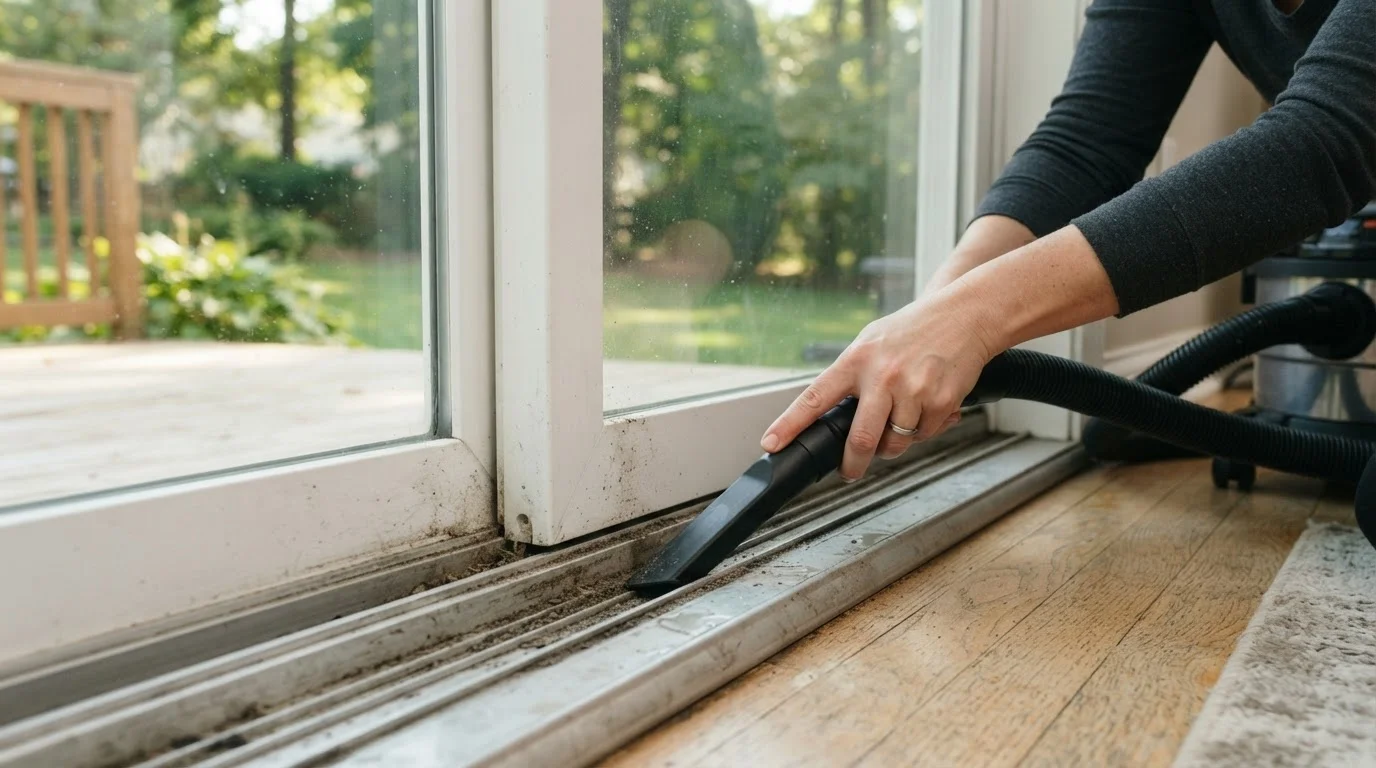
Picture a Saturday morning when the weather finally cooperates. You open the patio door to let the dog out, and instead of gliding smoothly, the door makes a gritty scraping sound. A closer look reveals a little collection of pollen, pet hair, crumbs, and soil in the bottom channel. It is easy to overlook that narrow strip of metal until the door starts fighting back.
Learning how to clean sliding door tracks is straightforward: vacuum the loose debris, loosen stuck dirt with a soft brush and mild soapy water, wipe away the residue, and dry the track. Keep the drainage openings clear and follow the door manufacturer’s instructions before applying any lubricant. You usually do not need to remove the door or purchase a specialized cleaner.
This guide covers typical residential sliding glass patio doors and their screen tracks. If your door uses a concealed or unusual track system, check the care instructions for that specific model before getting started.
What you need to clean sliding door tracks
Gather a vacuum with a narrow crevice attachment, a soft toothbrush or nylon detailing brush, two or three microfiber cloths, a small bowl of warm water, mild dish soap, and a towel to protect the floor. A plastic detailing tool or a cotton swab can help with stubborn debris in accessible corners. A flashlight is useful when the track is deep or shaded.
For most jobs, a few drops of mild dish soap in a bowl of warm water will do. Avoid combining cleaners. Set aside abrasive pads, metal scrapers, strong solvents, and harsh powders unless your door manufacturer explicitly allows them. These products can scratch the rail, damage coatings, or affect vinyl and rubber components.
Plan for roughly 15 to 30 minutes for an ordinary two-panel patio door, allowing extra time if you have several seasons of dirt packed into the channel. Put pets in another room and keep children away from the open doorway while you work.
How to clean sliding door tracks step by step
1. Open the door and inspect the track
Slide the door partway open so you can see the exposed section of the bottom sill. Look for small stones, loose screws, damaged weatherstripping, bent rails, and dark deposits. If the door is difficult to move, do not force it across a damaged track. A loose or unstable glass panel should be checked by a qualified door technician.
Notice which part of the sill the door rides on and which grooves simply collect or drain water. Different patio door systems have different profiles, so a channel that looks like a dirt trap may actually be part of the drainage design. Work only on the areas you can reach without dismantling the door.
2. Vacuum the dry debris
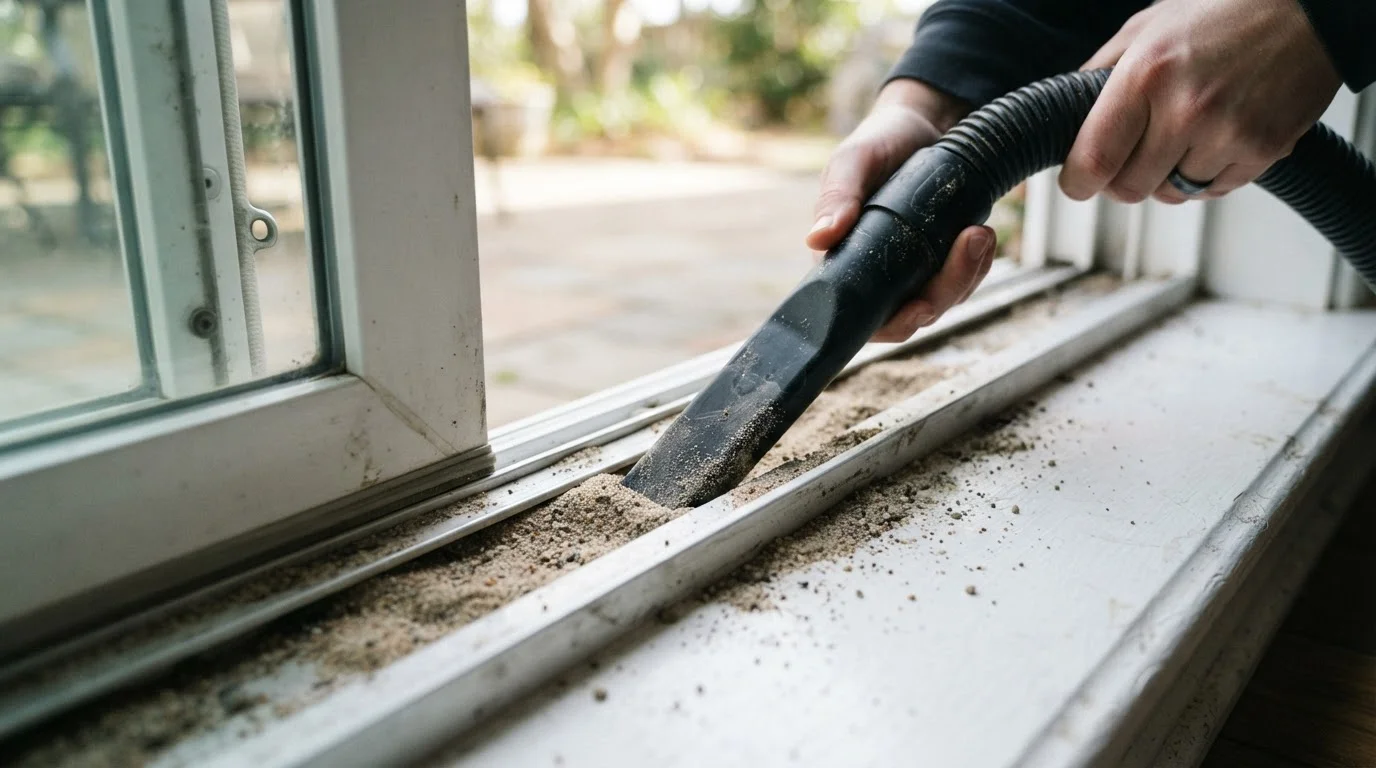
Start with the vacuum before bringing out the water. Run the crevice attachment along each accessible groove, concentrating on corners near the jamb and the meeting point between the stationary and sliding panels. A soft dry brush can loosen particles that the vacuum nozzle cannot pick up on its own.
Move the door to the other side and repeat the process on the newly exposed section. Keep your fingers away from the closing edge and the roller path. Removing dry material first prevents it from turning into a muddy paste when you begin wet cleaning.
3. Scrub with mild soapy water
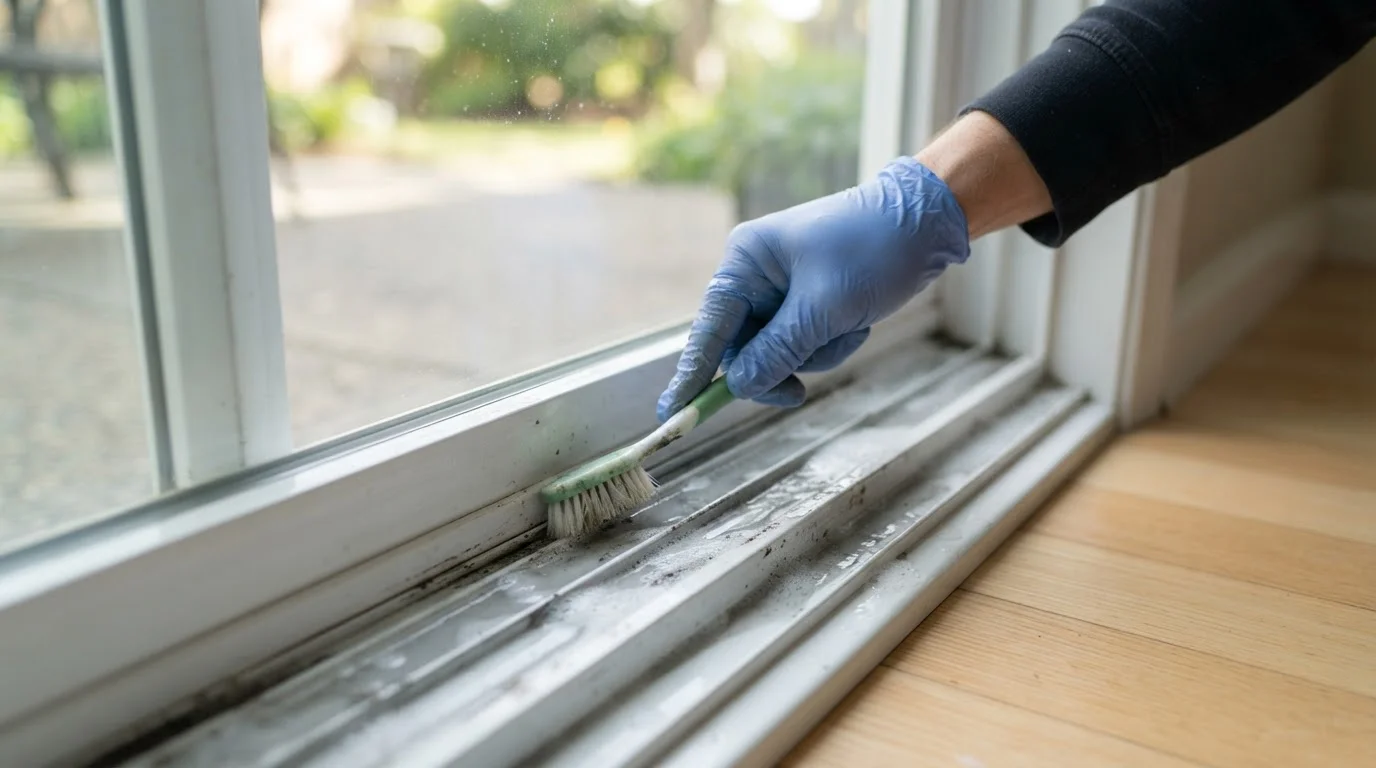
Dip the soft brush into the diluted dish soap, shake off the excess, and gently work along the grooves. Use small strokes around the corners where grime tends to accumulate. Let the damp solution soften stubborn dirt for a minute or two, then brush it again. You are trying to lift the dirt, not grind it against the finish.
Avoid pouring the entire bowl into the sill. Excess water may run toward interior flooring or reach components that are not intended to be soaked. Andersen’s patio door track and roller care instructions provide model-specific guidance on gentle cleaning and suitable lubrication.
4. Wipe, rinse and dry the sill
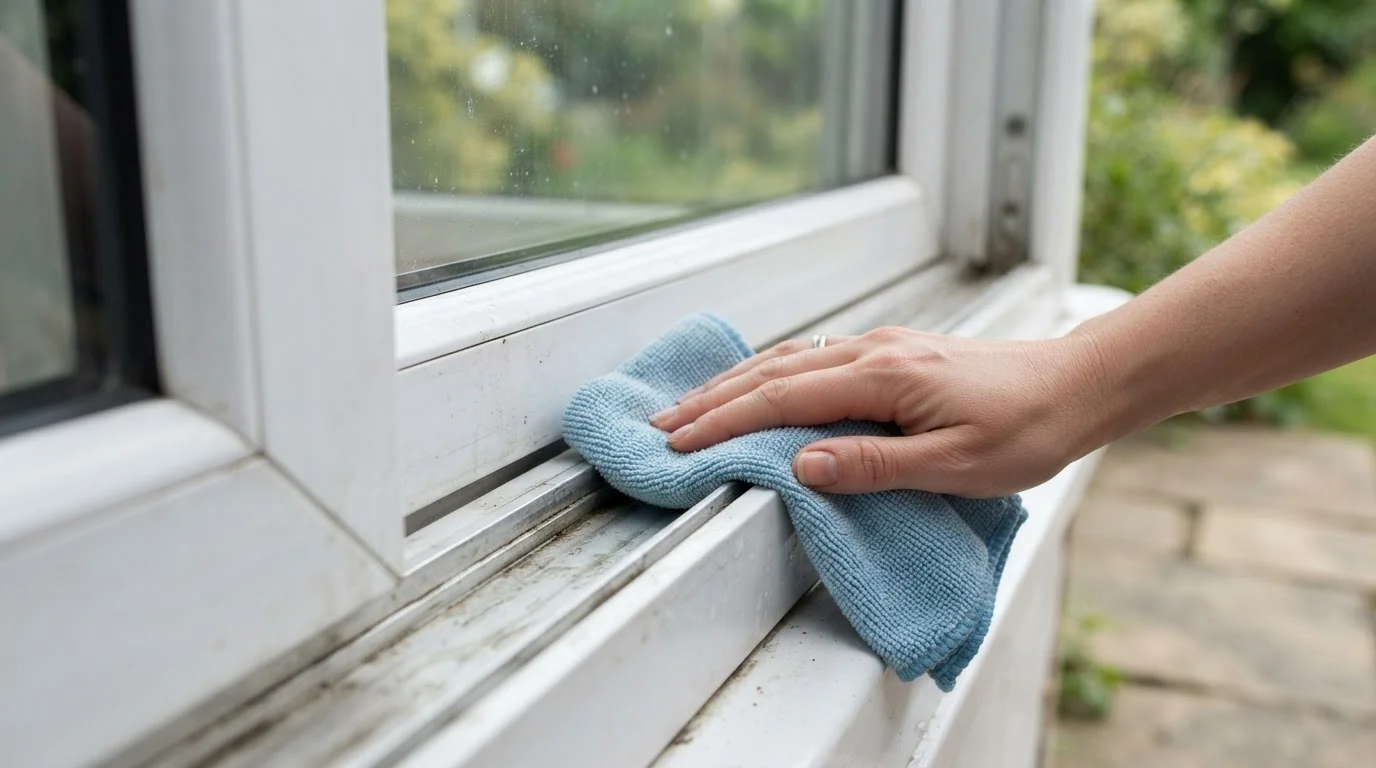
Fold a microfiber cloth into a narrow edge and pull it along the channel to collect loosened dirt. Rinse the cloth regularly or switch to a fresh section when it becomes gritty. Follow with another cloth dampened with plain water to remove soap residue, then use a dry towel to absorb remaining moisture.
Check the rail from different angles. If a patch of residue remains, repeat the gentle brush-and-wipe routine rather than reaching for a sharp tool. Dry the accessible surface completely before moving on to the final check.
5. Check the drainage openings
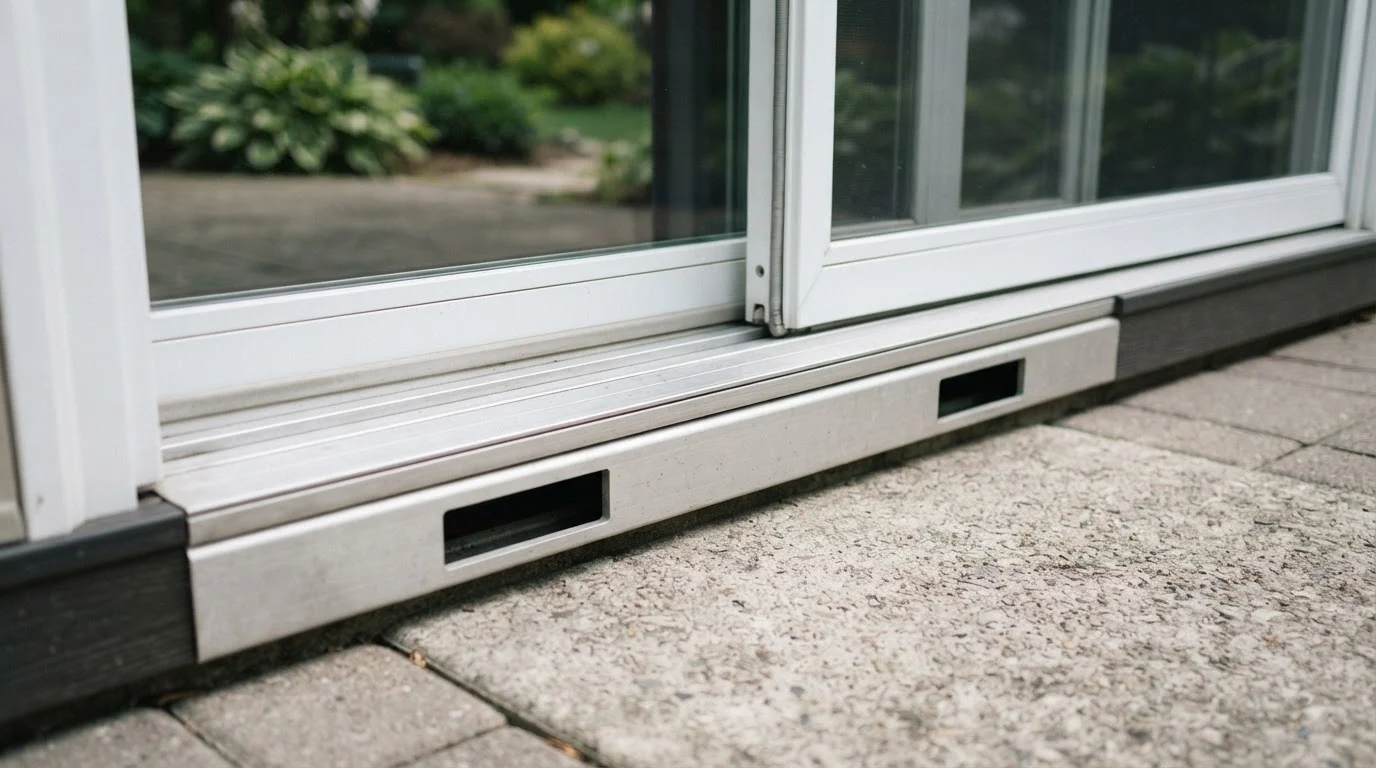
Some exterior sliding door sills have small weep openings that allow collected rainwater to escape outdoors. Look for these on your door if the manufacturer identifies them. Remove visible leaves and loose debris with a soft brush or vacuum. Do not drill new holes or push rigid wire into hidden passages.
The Pella owner’s maintenance manual is a useful reference for identifying care requirements on its door systems. Water that continues entering the house after cleaning may indicate a drainage, sealing, or installation problem rather than a simple dirty track.
6. Test the door before adding any lubricant
Slowly slide the panel open and closed a few times. Listen for scraping, squeaking, or a repeated bump in the same spot. If the door now moves easily, you can stop. A clean track does not automatically need lubrication.
If the door is still stiff, look up the specific model’s lubrication recommendations. Certain manufacturers recommend a dry lubricant for rollers, while others use components designed to operate without added lubricant. Avoid spraying oily products indiscriminately into the track. Sticky residue can attract the very dirt you just removed.
How to deal with stubborn dirt in sliding door tracks
Packed mud, sand and pet hair
When dirt has hardened into the corners, remove loose grit first. Hold a damp cloth against the remaining deposit briefly to soften it, then loosen it with a soft brush. For pet hair, a dry brush and vacuum are often more effective than a wet cloth, which can spread the hair along the sill.
Black marks and sticky residue
A black streak may be soil, rubber transfer, or a mark in the finish itself. Begin with the mild soap solution and a soft cloth. Test any manufacturer-approved specialty cleaner in a hidden spot before treating a larger area. If dark growth returns repeatedly, check for persistent moisture or blocked drainage rather than treating the color alone.
White mineral deposits and corrosion
Hard-water deposits can leave pale spots near the outdoor edge of the track. Aluminum corrosion may look similar but is a different problem. Do not assume vinegar or an acidic descaler is safe on coated or bare metal. Use the manufacturer’s recommended product, or seek advice if the finish is pitted or peeling. Cleaning cannot restore a rail that has lost metal through corrosion.
Can you use baking soda, vinegar or a pressure washer?
Online cleaning tricks often suggest pouring vinegar over baking soda in the grooves. Although the fizz looks impressive, the ingredients react with one another and can leave a residue. Baking soda particles may also be abrasive, while acid can affect certain metals and finishes. Warm water, mild soap, and a soft brush are a more predictable starting point.
A pressure washer is not appropriate for routine cleaning of a sliding door sill. Concentrated water can penetrate seals, overwhelm drainage paths, and damage nearby finishes. If the tracks became dirty during exterior cleaning, read our guide to window cleaning after pressure washing a house for the broader cleanup sequence, but keep water pressure low and controlled around the door itself.
Cleaning aluminum, vinyl and screen tracks
Aluminum rails need gentle tools that will not scratch their protective finish. Vinyl channels can usually be wiped with mild soap, but strong solvents and aggressive rubbing can discolor or damage the surface. On wood-clad doors, keep moisture away from exposed or deteriorated wood and dry the frame promptly.
The screen door may use a separate outer track. Vacuum that groove and wipe it with a damp cloth as well. If you notice insect residue on the adjacent glass while cleaning the screen area, our guide on removing insect residue from windows explains how to soften deposits without aggressive scraping.
How often should you clean sliding door tracks?
A quick vacuum once a month is a reasonable starting point for a frequently used patio door. Deep-clean the accessible sill when you notice grit, visible buildup, or changes in how the door moves. Homes near sandy beaches, dusty roads, or trees that shed heavily may need more frequent attention, especially during pollen season.
Shake out the doormat, sweep the patio near the threshold, and brush off muddy shoes before using the door. These small habits reduce the debris that reaches the track. Check the exterior drainage openings after storms and before wet weather, particularly if leaves tend to gather near the door.
When cleaning is not enough
A clean sill cannot repair worn rollers, a bent rail, a misaligned panel, or a damaged latch. If a door drags in one place, tilts, will not lock, or needs unusual force even after cleaning, stop and consult a door professional. Sliding glass panels are heavy, and removing them without proper support can cause injury or glass damage.
If you find standing water on the indoor side, document when it happens and whether it coincides with wind-driven rain. A technician can help distinguish a blocked drain from failed seals or an installation problem. Avoid applying caulk over unidentified drainage openings.
Frequently asked questions
Can I clean the tracks without removing the sliding door?
Yes. Routine maintenance can generally be done by moving the door to expose each half of the sill. For inaccessible areas beneath the rollers, follow the model’s service instructions or hire a technician rather than lifting the panel yourself.
What is the best cleaner for sliding door tracks?
For typical aluminum or vinyl systems, warm water with a small amount of mild dish soap is a practical first choice. Check the manufacturer’s care guide for coated finishes, specialty materials, or stubborn stains.
Should I use WD-40 on sliding door tracks?
Do not apply standard oil-based penetrating products as a general track treatment. They can leave residue that collects dirt. Use only the lubricant and application points recommended for your door model.
Why is my sliding door still hard to open after cleaning?
Worn rollers, alignment issues, damaged rails, or a problem with the locking hardware may be responsible. If a clean, dry track does not improve movement, have the door inspected.
Can I clean the upper track too?
Yes, if you can safely reach it. Use a soft brush or vacuum to remove dust and wipe accessible surfaces with a slightly damp cloth. Avoid soaking the overhead channel or adjusting structural parts.
Final thoughts
A sliding patio door should not feel like a workout every time you step outside. Start dry, clean gently, remove the soap, dry the sill, and leave the drainage paths open. A few minutes of regular maintenance can help prevent grit buildup and make the doorway easier to use, while persistent mechanical problems deserve professional attention.