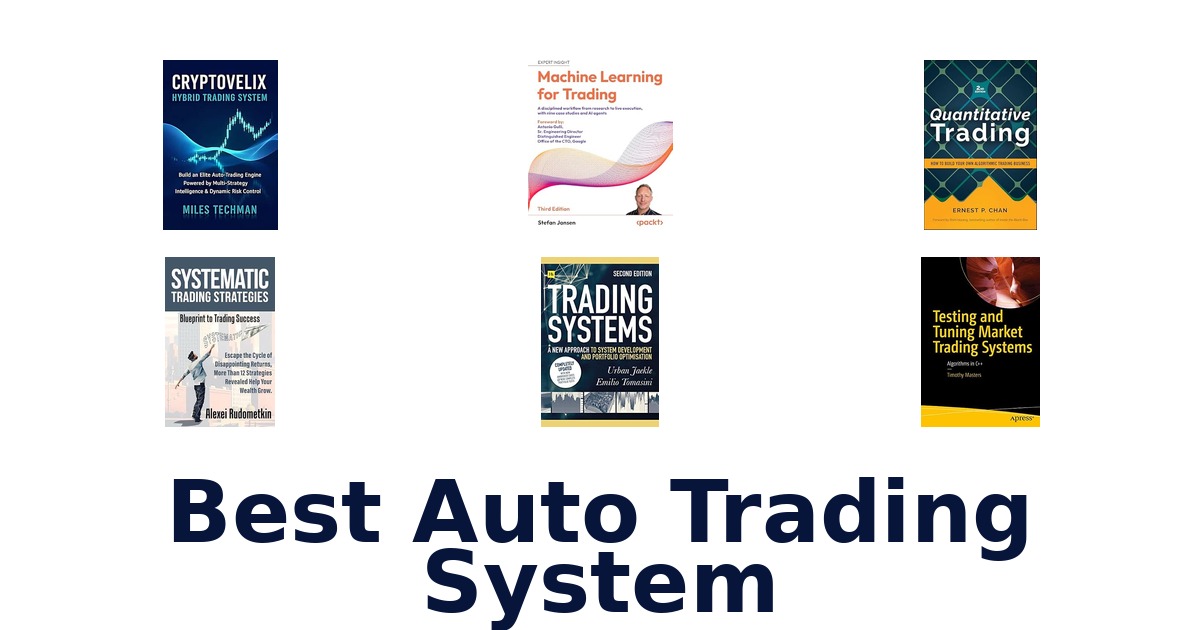
A strong choice for an auto-trading system search explains how to design, evaluate, or run systematic strategies, and suits readers who want a practical path from trading ideas toward automation. This roundup compares ten books, including titles explicitly about automated stock systems, algorithmic strategy development, machine learning, and system testing. The closest matches are not interchangeable: some focus on building a system, others on research workflows or a particular market such as crypto.
The listed formats include paperbacks, hardcovers, and Kindle editions, while a few entries provide more specific details about their methods and coverage. Use the rankings to identify the best fit for your goal, then check the buying factors to distinguish implementation guidance from research and testing material.
Building Winning Algorithmic Trading Systems is the best overall match because its subtitle traces a trader’s journey from data mining through Monte Carlo simulation to live trading. That progression connects system development with evaluation and deployment, making it a strong starting point for readers seeking an automated trading approach rather than a book limited to market theory. For a stock-specific focus, Automated Stock Trading Systems is a close alternative; readers interested in machine learning workflows can consider the two Stefan Jansen titles.
Our Top Picks
 Best Overall
Building Winning Algorithmic Trading Systems
Its subtitle covers data mining, Monte Carlo simulation, and live trading, connecting strategy development with evaluation and deployment.
View on Amazon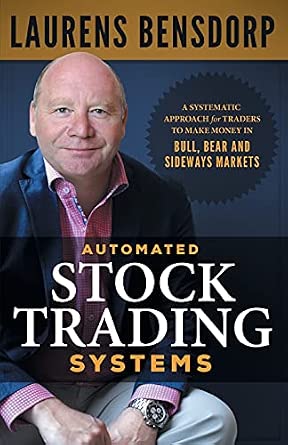 Best Stock Focus
Automated Stock Trading Systems
The title explicitly targets automated stock systems and names bull, bear, and sideways markets as its intended market conditions.
View on Amazon Best Crypto Focus
CryptoVelix Hybrid Trading System
It explicitly presents an auto-trading engine for crypto and names multi-strategy intelligence and dynamic risk control in its title.
View on Amazon- Best Live Workflow Machine Learning for Trading
- Best C++ Testing Testing and Tuning Market Trading Systems
Compare These Auto-Trading System Books
| # | Product | Buy |
|---|---|---|
| 1 | 1. Building Winning Algorithmic Trading SystemsBest Overall | View on Amazon |
| 2 | 2. Automated Stock Trading SystemsBest Stock Focus | View on Amazon |
| 3 | 3. CryptoVelix Hybrid Trading SystemBest Crypto Focus | View on Amazon |
| 4 |  4. Machine Learning for TradingBest Live Workflow 4. Machine Learning for TradingBest Live Workflow | View on Amazon |
| 5 |  5. Trading SystemsPortfolio optimisation learners 5. Trading SystemsPortfolio optimisation learners | View on Amazon |
| 6 |  6. Systematic TradingSystem design and investing 6. Systematic TradingSystem design and investing | View on Amazon |
| 7 |  7. Machine Learning for Algorithmic TradingPython ML strategy developers 7. Machine Learning for Algorithmic TradingPython ML strategy developers | View on Amazon |
| 8 |  8. Testing and Tuning Market Trading SystemsBest C++ Testing 8. Testing and Tuning Market Trading SystemsBest C++ Testing | View on Amazon |
| 9 |  9. Quantitative TradingIndependent quant trading builders 9. Quantitative TradingIndependent quant trading builders | View on Amazon |
| 10 |  10. Systematic Trading StrategiesSystematic trading newcomers 10. Systematic Trading StrategiesSystematic trading newcomers | View on Amazon |
Detailed Reviews: Best Auto Trading System
#1 · Best Overall
1. Building Winning Algorithmic Trading Systems
Best for: End-to-end system builders.
Why it ranks #1: Its subtitle covers data mining, Monte Carlo simulation, and live trading, connecting strategy development with evaluation and deployment.
The progression from data mining through Monte Carlo simulation to live trading gives this book a concrete end-to-end focus. That sequence helps readers connect strategy discovery with later evaluation and deployment, rather than treating algorithmic trading as a single isolated coding task. A website is also included with the paperback.
Its named stages—data mining, Monte Carlo simulation, and live trading—offer a route through several distinct parts of system development. Readers looking to move from exploring market data toward evaluating a system and taking it live can use that progression to frame their learning. The title also identifies the work as a trader’s journey, making it a fit for people interested in practical development steps. The included website provides an additional resource alongside the paperback.
- Covers data mining as part of system development
- Includes Monte Carlo simulation in its stated progression
- Extends its focus to live trading
- Includes a website with the paperback
- Its stated focus is algorithmic trading systems, not a broad survey of investing approaches.
Skip it if you want a portfolio-optimisation focus; Emilio Tomasini and Urban Jaekle’s Trading Systems explicitly covers portfolio optimisation.
A reader seeking a staged introduction to algorithmic system work, from data exploration through Monte Carlo simulation and live trading, will find the scope relevant. Choose another title if portfolio optimisation is the central need.
Listed on Amazon as: Building Winning Algorithmic Trading Systems, + Website: A Trader's Journey From Data Mining to Monte Carlo Simulation to Live Trading
View on Amazon#2 · Best Stock Focus
2. Automated Stock Trading Systems
Best for: All-market-regime stock system learners.
Why it ranks #2: The title explicitly targets automated stock systems and names bull, bear, and sideways markets as its intended market conditions.
Bull, bear, and sideways markets are all named in this book’s title, setting its automated stock-trading focus across three market conditions. That framing makes it relevant to readers exploring systematic stock systems with an interest in different regimes, rather than a book explicitly limited to one market phase.
The title joins automated stock trading systems with a systematic approach and names bull, bear, and sideways markets as its intended conditions. That combination gives readers a regime-aware framing for considering stock automation, instead of a focus limited to one direction in the title. It is a paperback, and Tom Basso is credited with the foreword. The supplied facts do not specify a programming language or particular strategy rules, so readers seeking implementation details should account for that limit.
- Focuses on automated stock trading systems
- Names a systematic approach
- Explicitly addresses bull, bear, and sideways markets
- Includes a foreword by Tom Basso
- The supplied description does not identify a programming language or specific strategy rules.
Skip it if you need a Python machine-learning workflow using alternative data; Stefan Jansen’s Machine Learning for Algorithmic Trading names both.
Stock traders interested in automation framed across bull, bear, and sideways conditions are the clearest audience. The supplied description does not name code or strategy rules, so readers needing implementation specifics should account for that boundary.
Listed on Amazon as: Automated Stock Trading Systems: A Systematic Approach for Traders to Make Money in Bull, Bear and Sideways Markets
View on Amazon#3 · Best Crypto Focus
3. CryptoVelix Hybrid Trading System
Best for: Hybrid crypto automation.
Why it ranks #3: It explicitly presents an auto-trading engine for crypto and names multi-strategy intelligence and dynamic risk control in its title.
A hybrid crypto trading engine combining multi-strategy intelligence with dynamic risk control is the system this Kindle title sets out to build. Those named elements make it relevant to readers exploring automated crypto trading through more than one strategy, with risk control presented as part of the system concept.
The title links a hybrid engine to multi-strategy intelligence, suggesting a focus on combining strategies rather than treating automation as one standalone rule set. Dynamic risk control is another named component, giving readers a specific risk-management theme to consider alongside automation. Its scope is explicitly crypto trading, and the Kindle edition suits readers using that format. The supplied details do not identify programming languages, exchanges, or implementation specifications, so this is not a clearly documented technical reference for those requirements.
- Focuses on an auto-trading engine
- Names a hybrid, multi-strategy approach
- Includes dynamic risk control in its stated concept
- Targets crypto trading
- The supplied description gives no programming language, exchange, or implementation specifications.
Skip it if you want a documented workflow across equities, FX, and futures; Stefan Jansen’s Machine Learning for Trading includes those markets in its case studies.
Crypto readers interested in a hybrid automated system concept with multi-strategy and dynamic-risk themes are the natural audience. Buyers who need named coding tools, exchange compatibility, or detailed implementation specifications should seek those explicitly.
Listed on Amazon as: CryptoVelix Hybrid Trading System: Build an Elite Auto-Trading Engine Powered by Multi-Strategy Intelligence & Dynamic Risk Control
View on Amazon#4 · Best Live Workflow
4. Machine Learning for Trading
Best for: Machine-learning workflow learners.
Why it ranks #4: Its 27 chapters follow workflow stages from trading idea and data to live trading, with nine case studies across six market types.
Nine case studies span equities, ETFs, FX, futures, crypto, and options, giving this book a concrete cross-market view of machine learning for trading. A shared pipeline connects those examples, while separate chapters use different markets and methods to show the workflow from research toward live execution.
The 27 chapters are grouped by workflow stage, from trading idea and data through live trading, so readers can follow the process in sequence. Nine case studies use a shared pipeline across six named market types, while each chapter presents a different market and method. That combination supports both a structured reading path and comparisons among applications. The AI agents named in the title add another topic, though the supplied facts do not specify their implementation or requirements.
- Organizes 27 chapters by workflow stage
- Includes nine case studies across equities, ETFs, FX, futures, crypto, and options
- Uses one shared pipeline across the case studies
- Covers the path from trading idea and data to live trading
- Each chapter uses a different market and method, so the examples do not hold both constant.
Skip it if you need a book explicitly centered on C++ algorithms; Timothy Masters’s Testing and Tuning Market Trading Systems names C++ in its title.
Readers wanting a workflow-oriented machine-learning book with varied market case studies are the intended audience. Its examples change market and method by chapter, which matters if you prefer repeated experiments on one consistent setup.
Listed on Amazon as: Machine Learning for Trading: A disciplined workflow from research to live execution, with nine case studies and AI agents
View on Amazon#5
5. Trading Systems
Best for: Portfolio optimisation learners.
Why it ranks #5: Its second edition focuses on system development and portfolio optimisation, making it relevant to readers designing systematic strategies.
Portfolio optimisation is named directly alongside system development, giving this second edition a broader stated remit than a title focused only on building a single trading system. Its new approach makes it a relevant choice for readers who want to consider how trading systems fit into a portfolio as well as how they are developed.
The pairing of system development with portfolio optimisation connects two decisions a systematic trader faces: creating systems and considering them together. That combination may suit readers whose learning goal extends beyond an individual strategy. The title identifies this as the second edition and names a new approach, while the paperback format provides a physical reading option. Its stated subject is trading systems, so buyers focused on machine-learning case studies or C++ algorithms may prefer a more specifically titled book.
- Covers trading-system development
- Names portfolio optimisation as a central topic
- Identifies itself as the second edition
- Connects system and portfolio-level concerns
- Its listed focus is system development and portfolio optimisation, not machine-learning workflows or C++ implementation.
Skip it if you need staged machine-learning case studies; Stefan Jansen’s Machine Learning for Trading lists nine case studies across markets.
Readers interested in both developing trading systems and considering portfolio optimisation are the clearest fit. Its stated remit is narrower than a general market guide, and buyers seeking machine-learning case studies should choose a more targeted title.
Listed on Amazon as: Trading Systems (Second edition): A new approach to system development and portfolio optimisation
View on Amazon#6
6. Systematic Trading
Best for: System design and investing.
Why it ranks #6: It offers a method for designing trading and investing systems, though the supplied title gives less detail about automation or execution.
A unique method for designing both trading and investing systems is the central promise of this hardcover. That dual focus makes it relevant to readers who want a systematic approach that reaches beyond trading alone, while the book’s title signals an emphasis on the design process rather than a named programming language.
By pairing trading systems with investing systems, the book speaks to readers considering systematic methods across both activities. Its emphasis on designing systems gives the material a process-oriented frame, useful for someone who wants to think about how an approach is formed rather than focus solely on code or a particular market. The hardcover format is a physical edition. The supplied description does not name a specific software tool or market, so buyers seeking those specifics may want a more explicitly targeted title.
- Covers trading-system design
- Also addresses investing-system design
- Presents a unique method as its central approach
- Available as a hardcover
- The supplied description names no programming language or specific market focus.
Skip it if you need Python examples and predictive models; Stefan Jansen’s Machine Learning for Algorithmic Trading explicitly centers Python and predictive modeling.
This is a fit for readers seeking a method for designing systematic trading and investing approaches without a stated language requirement. Those who need Python-based predictive models or a named market should look to a more specific resource.
Listed on Amazon as: Systematic Trading: A unique new method for designing trading and investing systems
View on Amazon#7
7. Machine Learning for Algorithmic Trading
Best for: Python ML strategy developers.
Why it ranks #7: Its second edition covers a machine-learning workflow from universe selection and feature engineering through strategy design and evaluation.
Python and predictive models are explicit in this book’s title, which frames machine learning as a way to extract signals from market and alternative data. The second edition adds examples illustrating a workflow from universe selection through feature engineering and model development to strategy design and evaluation.
The stated workflow connects universe selection, feature engineering, and machine-learning model development with strategy design and evaluation. That sequence can help readers relate predictive modeling to the larger systematic-trading process instead of treating signal extraction as the only task. The title identifies Python and both market and alternative data, giving buyers a clearer view of its technical and data scope. The second-edition examples are a central addition, though the supplied facts do not quantify them.
- Names Python as the programming language
- Covers market and alternative data
- Adds examples for the ML4T workflow in the second edition
- Connects universe selection and feature engineering to strategy evaluation
- Its stated scope centers predictive models and Python rather than C++ algorithm testing.
Skip it if you need C++ testing and tuning rather than Python machine learning; Timothy Masters’s Testing and Tuning Market Trading Systems names C++ algorithms.
Python users exploring predictive signals from market and alternative data are a strong match, especially if they want examples across the ML workflow. Readers focused on C++ testing should choose a more specifically targeted book.
Listed on Amazon as: Machine Learning for Algorithmic Trading: Predictive models to extract signals from market and alternative data for systematic trading strategies with Python
View on Amazon#8 · Best C++ Testing
8. Testing and Tuning Market Trading Systems
Best for: C++ system testing practitioners.
Why it ranks #8: It centers on testing and tuning market trading systems and specifically names algorithms in C++, suiting implementation-focused readers.
C++ algorithms are explicit in this book’s title, distinguishing its focus on testing and tuning market trading systems from broader introductions to systematic trading. That combination is relevant to readers who want to connect system evaluation with an identified programming language, rather than shop for a general strategy overview.
The title brings together testing, tuning, market trading systems, and algorithms in C++, giving technically minded readers a clearly defined subject. Testing and tuning point to evaluation and adjustment as central concerns, while the named language helps readers judge whether the book matches their coding interests. It is a paperback. The supplied description does not identify particular markets or a broader end-to-end workflow, so readers seeking those details may prefer a book whose title or facts specify them.
- Focuses on testing trading systems
- Includes tuning as a named topic
- Names algorithms in C++
- Available as a paperback
- Its stated technical scope is C++, not a cross-language trading guide.
Skip it if you need machine-learning examples spanning several markets; Stefan Jansen’s Machine Learning for Trading names nine cross-market case studies.
Readers specifically interested in testing and tuning trading algorithms in C++ are the best fit. If your priority is machine learning across multiple markets or a full workflow from research to live trading, consider a title that names those areas.
Listed on Amazon as: Testing and Tuning Market Trading Systems: Algorithms in C++
View on Amazon#9
9. Quantitative Trading
Best for: Independent quant trading builders.
Why it ranks #9: It addresses building an algorithmic trading business, a useful broader perspective but a less direct system-building match.
Building your own algorithmic trading business is the central focus of this revised edition, making it distinct from books framed only around designing or testing systems. Its business-building emphasis suits readers considering how quantitative trading could become an independent venture, rather than seeking a narrowly specified coding manual.
The title connects quantitative trading with building an algorithmic trading business, so readers can assess whether its perspective matches both their trading and entrepreneurial interests. Its revised-edition status is clearly identified, and the Wiley Trading imprint places it within a trading-focused series. The paperback offers a physical format. The supplied facts do not name a programming language, asset class, or detailed development pipeline, so buyers who require one of those specifics should compare against a more explicitly scoped title.
- Focuses on quantitative trading
- Addresses building an algorithmic trading business
- Identifies itself as a revised edition
- Published in the Wiley Trading series
- The supplied description does not specify a programming language or asset class.
Skip it if you need a stated workflow from data through live execution; Stefan Jansen’s Machine Learning for Trading lays out those workflow stages.
This is aimed at readers drawn to the business side of building an algorithmic trading operation, not just system mechanics. Its supplied description leaves language and market unspecified, a boundary for readers with technical requirements.
Listed on Amazon as: Quantitative Trading: How to Build Your Own Algorithmic Trading Business, Revised Edition (Wiley Trading)
View on Amazon#10
10. Systematic Trading Strategies
Best for: Systematic trading newcomers.
Why it ranks #10: Its title promises a systematic trading blueprint, but the supplied details do not identify automation, tools, or execution coverage.
A systematic-trading blueprint is the Kindle edition’s central promise, with the title positioning the book around moving beyond disappointing returns toward a more structured approach. That framing makes it relevant to readers seeking an introductory orientation to systematic trading rather than a book identified by a coding language or technical workflow.
The title emphasizes systematic trading strategies and presents the book as a blueprint to trading success. That framing may help readers decide whether they want a broad strategy-oriented entry point, especially if their interest is in replacing ad hoc decisions with a systematic perspective. Tom Basso is named as foreword contributor. The supplied facts do not specify markets, software, or quantitative methods, so buyers needing implementation detail or a defined technical workflow should look for those features elsewhere.
- Centers on systematic trading strategies
- Presents itself as a blueprint to trading
- Frames the topic around addressing disappointing returns
- Includes a foreword by Tom Basso
- The supplied description does not name markets, software, or quantitative methods.
Skip it if you want a defined research-to-live workflow with market examples; Stefan Jansen’s Machine Learning for Trading lists 27 workflow-organized chapters.
Readers looking for a broad, strategy-focused introduction to systematic trading may find its stated framing appealing. It is less clearly suited to buyers who need named markets, coding tools, or a specified research-to-execution workflow.
Listed on Amazon as: Systematic Trading Strategies: Blueprint to Trading Success: Escape the Cycle of Disappointing Returns, Dive into Systematic Trading, and Watch Your Wealth Grow
View on AmazonAutomation is not the same as a ready-to-run bot
A book about automated trading does not necessarily include a plug-and-play bot, broker connection, or code that can be deployed unchanged. The supplied details describe topics and workflows, not a guaranteed executable trading product. For example, Building Winning Algorithmic Trading Systems covers a path from data mining to live trading, while Machine Learning for Trading describes a workflow through live execution and case studies; those descriptions indicate subject coverage, not turnkey software.
CryptoVelix Hybrid Trading System advertises a crypto auto-trading engine in its title, but the supplied information does not specify compatible exchanges, code availability, or setup requirements. Treat “automated” as a strategy-development goal until the book’s contents confirm implementation details.
Before choosing, verify that the edition covers your preferred language, data source, broker or exchange, and the specific deployment steps you need.
Market coverage can limit how directly a method transfers
A strategy workflow may be useful across markets, but the supplied titles do not establish that every technique transfers unchanged between asset classes. Machine Learning for Trading lists case studies across equities, ETFs, FX, futures, crypto, and options, with a different market and method in each chapter; that breadth offers examples, not proof that one system works everywhere. Automated Stock Trading Systems is explicitly stock-focused, while CryptoVelix Hybrid Trading System targets crypto.
These distinctions matter when your actual account, data, or intended strategy is limited to one market. Match the title’s stated scope to your use case, and check the book itself for relevant instruments, data assumptions, and implementation tools before relying on a method.
A broad title can help with concepts, but a market-specific guide may be more directly applicable.
How to Choose an Auto-Trading Book
Development versus deployment
Look for a book whose stated scope matches whether you need to build a strategy or move one toward execution. Building Winning Algorithmic Trading Systems names data mining, Monte Carlo simulation, and live trading, while Machine Learning for Trading has 27 chapters spanning trading ideas and data through live trading. Trading Systems focuses on system development and portfolio optimisation.
If you are new to the full process, prefer a title that explicitly spans multiple workflow stages; if your strategy already exists, a narrower development or evaluation focus may be more relevant. The supplied descriptions do not confirm that any title provides a ready-to-run bot, so check the contents for the practical implementation detail you require.
Market and method fit
Choose a title that names your market or the techniques you want to learn. Automated Stock Trading Systems is explicitly about stocks across bull, bear, and sideways markets, while CryptoVelix Hybrid Trading System is crypto-focused. Machine Learning for Trading lists case studies in equities, ETFs, FX, futures, crypto, and options; its chapters use different markets and methods.
If your goal is a specific asset class, start with the matching focus rather than assuming a general method transfers directly. If you want examples across markets, the multi-market case-study book is a more suitable starting point.
The titles alone do not establish that every method applies to every broker, instrument, or account.
Technical depth and evaluation
Check whether the book’s stated emphasis matches your coding and testing needs. Testing and Tuning Market Trading Systems explicitly covers algorithms in C++, while the second edition of Machine Learning for Algorithmic Trading adds examples across universe selection, feature engineering, model development, strategy design, and evaluation. Building Winning Algorithmic Trading Systems includes Monte Carlo simulation in its subtitle.
Readers seeking programming-oriented testing may favor the C++ title; readers pursuing machine-learning examples may prefer the workflow-focused Jansen book. The supplied facts do not specify prerequisite skill levels or software versions, so verify those details in the edition description before buying, especially if you need code compatible with an existing setup.
Which Auto-Trading Book Should You Choose?
Choose Building Winning Algorithmic Trading Systems if you want the strongest stated progression from data mining through Monte Carlo simulation to live trading. Pick Automated Stock Trading Systems when your focus is stock strategies and its named bull, bear, and sideways conditions. For crypto-specific interest, CryptoVelix Hybrid Trading System is the most directly targeted title, though confirm its exchange, code, and setup coverage before expecting a deployable bot.
Readers who want a structured machine-learning workflow with varied market examples should consider Machine Learning for Trading; those seeking Python-oriented signal and model examples may prefer Machine Learning for Algorithmic Trading. If testing C++ algorithms is your priority, choose Testing and Tuning Market Trading Systems.
These books address different stages, so match the stated scope to your immediate task.
Related Buying Guides
Frequently Asked Questions
Can these books provide a plug-and-play trading bot or ready-to-run code?
Do not assume they provide a plug-and-play bot or ready-to-run code. The titles describe topics and approaches, but they do not establish what code, software, or setup instructions each book includes. Check the individual book’s contents and any stated companion materials before choosing it for implementation.
What broker, platform, or programming skills do I need to implement a trading system?
Requirements depend on the system you want to build and how you plan to execute it. The titles identify Python for Machine Learning for Algorithmic Trading and C++ for Testing and Tuning Market Trading Systems, but do not specify broker or platform requirements. Review the book’s contents and your intended execution setup before starting.
How should I paper-trade and validate a strategy before risking real money?
Test the strategy without real funds, and evaluate it on data or conditions beyond those used to develop it before considering live trading. Building Winning Algorithmic Trading Systems names data mining, Monte Carlo simulation, and live trading in its subtitle, but the supplied information does not specify a validation protocol. Set your own criteria and verify the book’s coverage.
Which titles fit stock or crypto trading interests?
For stock-focused strategies, Automated Stock Trading Systems is the direct match, with bull, bear, and sideways conditions named in its title. CryptoVelix Hybrid Trading System is the most directly targeted crypto title. Its title alone does not confirm exchange, code, or setup coverage, so check those details before expecting a deployable bot.
How do the two machine-learning trading books differ?
Machine Learning for Trading emphasizes a disciplined workflow from research to live execution and names nine case studies and AI agents. Machine Learning for Algorithmic Trading focuses on predictive models, market and alternative data, systematic strategies, and Python. Choose based on whether the workflow framing or Python-oriented signals and models better fits your interest.
Final Words
For the clearest stated progression from data mining through Monte Carlo simulation to live trading, choose Building Winning Algorithmic Trading Systems. If your focus is narrower, match the title to it: Automated Stock Trading Systems for stock strategies, CryptoVelix for crypto, or a Stefan Jansen book for machine-learning workflows. Treat titles as topic guides, not proof of ready-to-run code; verify implementation, platform, and validation coverage before relying on any system.