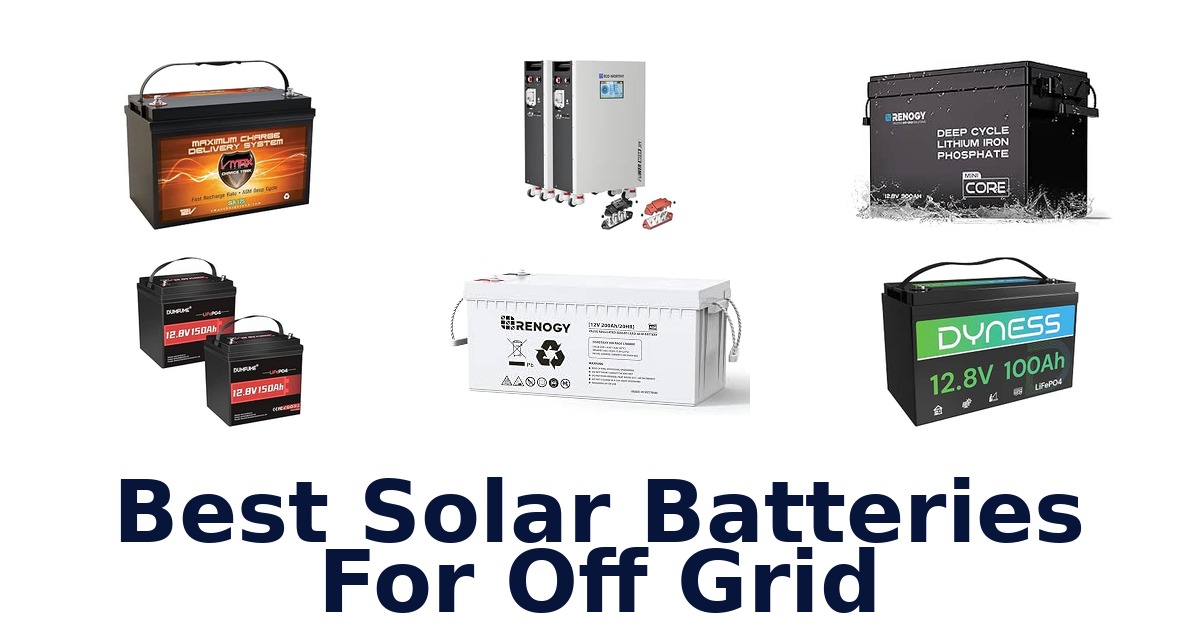
A strong off-grid solar battery should match your system voltage, store enough energy for your loads, and include protection suited to where it will operate. For larger home systems, the ECO-WORTHY Powermega 48V 314Ah offers 16.07kWh, UL 1973 certification, and a 10-year warranty. Smaller 12V batteries can suit RVs, cabins, and modular systems, but usually require more units to build comparable storage.
This roundup compares 10 listed batteries across 12V and 48V formats, including LiFePO4 and AGM options. Capacity, weight, low-temperature protections, and expansion details vary considerably.
Check your inverter and charge-controller requirements before choosing: a battery’s capacity alone does not confirm system compatibility, and the listed products do not all disclose the same specifications.
The ECO-WORTHY Powermega 48V 314Ah leads for off-grid solar because its listed 16.07kWh capacity is suited to larger storage needs, and it carries UL 1973 certification plus a 10-year warranty. Its product details also state support for up to 15 units in parallel. It is a substantial 48V system choice, not a universal drop-in battery: confirm your inverter, charging equipment, and installation plan support its voltage and configuration.
Our Top Picks
 Best Overall
Its 16.07kWh capacity, UL 1973 certification, 10-year warranty, and stated expansion to 15 parallel units suit substantial off-grid storage.
View on Amazon Best Single-Battery Capacity
This 314Ah LiFePO4 battery lists 6,000 cycles at 80% state of health, a 200A BMS, and dual breakers.
View on Amazon Best 12V High-Capacity Pick
Its 300Ah capacity and 55.1-pound listed battery weight offer substantial 12V storage in a format described as compact.
View on Amazon- Best 12V Capacity ECO-WORTHY 12V 314Ah
- Best Modular Pair Dyness 12V 100Ah 2-Pack
Compare the off-grid solar battery options
| # | Product | Voltage | Battery Capacity | Weight | Buy |
|---|---|---|---|---|---|
| 1 | 1. ECO-WORTHY Powermega 48VBest Overall | — | — | — | View on Amazon |
| 2 | 2. AOUSK 48V 314AhBest Single-Battery Capacity | — | 314 amp hours | 291 lb | View on Amazon |
| 3 | 3. Renogy 300Ah LiFePO4Best 12V High-Capacity Pick | 12.8 V | 300 amp hours | 57 lb | View on Amazon |
| 4 |  4. ECO-WORTHY 12V 314AhBest 12V Capacity 4. ECO-WORTHY 12V 314AhBest 12V Capacity | 12.8 V | — | 60.4 lb | View on Amazon |
| 5 |  5. Dyness 12V 100Ah 2-PackBest Modular Pair 5. Dyness 12V 100Ah 2-PackBest Modular Pair | 12.8 V | 100 amp hours | 25.3 lb | View on Amazon |
| 6 |  6. dumfume 12V 150Ah 2-PackFlexible 24V or 12V banks 6. dumfume 12V 150Ah 2-PackFlexible 24V or 12V banks | 12 V | 150 amp hours | — | View on Amazon |
| 7 | 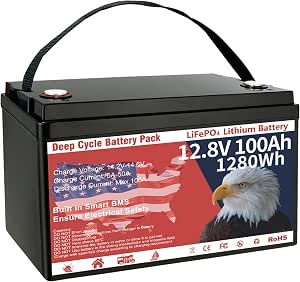 7. VEMDIA 12V 100AhCompact 12V lithium setups 7. VEMDIA 12V 100AhCompact 12V lithium setups | 12.8 V | 100 amp hours | 24 lb | View on Amazon |
| 8 |  8. Dyness 12V 100AhCold-weather 12V charging 8. Dyness 12V 100AhCold-weather 12V charging | 12.8 V | 100 amp hours | 21.8 lb | View on Amazon |
| 9 |  9. Renogy 12V 200Ah AGMHigh-capacity AGM systems 9. Renogy 12V 200Ah AGMHigh-capacity AGM systems | 12 V | 200 | 127.9 lb | View on Amazon |
| 10 |  10. VMAXTANKS SLR125 AGM12V AGM solar backup 10. VMAXTANKS SLR125 AGM12V AGM solar backup | 12 V | 125 amp hours | 75 lb | View on Amazon |
Detailed Reviews: Best Solar Batteries For Off Grid
#1 · Best Overall
1. ECO-WORTHY Powermega 48V
Best for: Large 48V home banks.
Why it ranks #1: Its 16.07kWh capacity, UL 1973 certification, 10-year warranty, and stated expansion to 15 parallel units suit substantial off-grid storage.
The two-battery package provides 16.07kWh of LiFePO4 storage at 48 volts, giving off-grid and home-backup systems a substantial starting bank. UL 1973 certification and support for expansion to as many as 15 parallel units make this an option for buyers planning a larger, scalable storage installation.
At 16.07kWh, the paired Powermega batteries provide a sizeable energy reserve for an off-grid system or outage backup. The 48V configuration is a different system scale from 12V batteries, so it suits buyers planning around a 48V setup. ECO-WORTHY states that up to 15 units can be connected in parallel, with expansion reaching 241kWh; UL 1973 certification adds a stated safety credential for long-term energy storage planning.
- Two-battery package
- 16.07kWh stated capacity
- 48V LiFePO4 configuration
- UL 1973 certified and supports up to 15 units in parallel
- Its 48V configuration is unsuitable for a system built around 12V batteries.
Skip it if you need a single 12V battery for a small system; this package is a 48V, two-battery storage setup.
Consider this package for a 48V off-grid or home-backup installation that may expand over time. Its two-battery format and stated 16.07kWh capacity are a substantial system commitment, not a compact 12V replacement.
Full product details
| Brand | ECO-WORTHY |
|---|---|
| Manufacturer | ECO-WORTHY |
| Part Number | L03L314A-HLH400A-2 |
| Manufacturer Warranty Description | 10 years |
| Size | 48V 314Ah*2 |
Listed on Amazon as: ECO-WORTHY Powermega 48V 314Ah (2 pack) UL1973 LiFePO4 Battery
View on Amazon#2 · Best Single-Battery Capacity
2. AOUSK 48V 314Ah
- Battery Capacity: 314 amp hours
- Weight: 291 lb
Best for: App-monitored 48V storage.
Why it ranks #2: This 314Ah LiFePO4 battery lists 6,000 cycles at 80% state of health, a 200A BMS, and dual breakers.
A display and app provide real-time monitoring for this 48V, 314Ah LiFePO4 battery, helping owners check system information through more than one interface. Its 16.07kWh capacity, 200A BMS, and dual breakers position it for substantial solar storage where protection and accessible status information are priorities.
The 200A BMS and dual breakers on both positive and negative poles provide layers of protection against overloads and short circuits, while Grade A cells are rated for up to 6,000 cycles at 80% state of health. The display and app make real-time monitoring available at the battery or through a connected device. At 291 pounds and more than 33 inches tall, it needs planned placement and suitable handling equipment.
- 16.07kWh capacity at 48V
- 200A BMS with six-layer protection
- Dual breakers on positive and negative poles
- Display and app provide real-time monitoring
- At 291 pounds, it is difficult to position without suitable handling equipment.
Skip it if you need a lightweight or portable battery; this 291-pound unit is a stationary-scale storage choice.
It fits solar owners planning a substantial 48V installation who value app and display monitoring alongside multiple protection layers. Allow for its 291-pound weight and tall dimensions when selecting a permanent installation location.
Full product details
| Brand | AOUSK |
|---|---|
| Battery Capacity | 314 amp_hours |
| Battery Weight | 291 pounds |
| Included Components | 51.2V314Ah battery*1 |
| Item Dimensions | 20.08 x 10.87 x 33.54 inches |
| Item Weight | 291 pounds |
| Manufacturer | Changsha Liwei Energy Technology Co., Ltd |
| Model | 51.2v314Ah A |
| Model Number | 51.2v314Ah A |
| Recommended Uses | Solar Devices |
| Warranty Description | 5 |
Listed on Amazon as: 48V 314Ah Lifepo4 16.07kWh Lithium Battery
View on Amazon#3 · Best 12V High-Capacity Pick
3. Renogy 300Ah LiFePO4
- Voltage: 12.8 V
- Battery Capacity: 300 amp hours
- Weight: 57 lb
Best for: High-capacity 12V systems.
Why it ranks #3: Its 300Ah capacity and 55.1-pound listed battery weight offer substantial 12V storage in a format described as compact.
A 300Ah capacity in a 12.8V LiFePO4 battery provides substantial storage in a unit weighing 55.1 pounds, according to Renogy’s supplied facts. Its compact, lightweight description and low-temperature cutoff make it relevant to off-grid owners balancing a larger battery reserve with transport and installation demands.
The 300Ah capacity gives a 12V solar or backup system a larger single-battery reserve than 100Ah options, while the 55.1-pound weight is described as manageable for one person to carry. Renogy also lists a low-temperature cutoff, a useful battery-protection feature in colder settings, and the specifications identify a 200A BMS and remote-monitoring compatibility. Check the system’s monitoring requirements and installation space before integrating the battery.
- 300Ah capacity at 12.8 volts
- 55.1-pound listed battery weight
- Low-temperature cutoff
- Specifications list a 200A BMS and remote-monitoring compatibility
- Its 12.8V configuration will not directly suit a system requiring a 48V battery.
Skip it if you need a 48V battery bank; this is a 12.8V unit, while ECO-WORTHY Powermega is a 48V option.
It fits off-grid owners seeking 300Ah in a 12V lithium battery and valuing a listed low-temperature cutoff. Its voltage is the key boundary: confirm that your inverter and system are configured for 12V.
Full product details
| Brand | Renogy |
|---|---|
| Battery Capacity | 300 amp_hours |
| Battery Weight | 55.1 pounds |
| Included Components | CASE |
| Item Weight | 57 pounds |
| Manufacturer | Renogy |
| Model | LiFePO4 Lithium Battery, 200A BMS for Ultimate Safety, Deep Cycle w/Remote Monitoring Compatibility, |
| Model Number | RBT12300LFP-M |
| Recommended Uses | RVs, travel trailers, motor coaches, boats, campers, home backup solar systems, off-grid solar systems, camping, marine use, solar energy storage See more |
| Voltage | 12.8 volts |
| Warranty Description | 5-year prorated material and workmanship warranty |
Listed on Amazon as: Renogy 300Ah LiFePO4 Lithium Battery, 12V Mini Size Deep Cycle Battery
View on Amazon#4 · Best 12V Capacity
4. ECO-WORTHY 12V 314Ah
- Voltage: 12.8 V
- Weight: 60.4 lb
Best for: Monitored 12V lithium storage.
Why it ranks #4: The 12.8V, 314Ah LiFePO4 battery lists a 200A BMS, low-temperature protection, SOC indicators, and a three-year warranty.
A built-in screen showing battery level and status gives this 12.8V LiFePO4 battery an at-a-glance monitoring advantage for off-grid setups. Its listed 314Ah capacity provides substantial storage in a 60.4-pound package, while Bluetooth, low-temperature protection, and a 200A BMS add system oversight and protection features.
The SOC and status LED display helps you check battery condition at the unit, and Bluetooth provides another monitoring route without relying solely on the screen. With 314Ah at 12.8 volts, it can serve larger 12V storage needs; the 200A BMS and low-temperature protection are relevant safeguards in a solar system exposed to varying conditions. Its 16.3-by-8.5-by-10.2-inch dimensions and 60.4-pound weight are installation factors to plan around.
- 314Ah capacity at 12.8 volts
- Screen displays battery level and status
- Bluetooth monitoring feature
- Low-temperature protection and 200A BMS
- Its 60.4-pound weight makes it heavier to handle than compact 12V batteries.
Skip it if you need a 48V bank or a two-battery kit; this listing is a single 12.8V battery.
It suits off-grid owners seeking high-capacity 12V lithium storage with visible status information and Bluetooth monitoring. Check that your system uses compatible voltage and has room for its listed dimensions and 60.4-pound weight.
Full product details
| Brand | ECO-WORTHY |
|---|---|
| Compatible with Vehicle Type | RV |
| Dimensions | 16.3"D x 8.5"W x 10.2"H |
| Item Weight | 60.4 pounds |
| Manufacturer | ECO-WORTHY |
| Part Number | L13080202127-1 |
| Manufacturer Warranty Description | 3 years |
| Size | 12.8V 314Ah |
| Voltage | 12.8 volts |
Listed on Amazon as: ECO-WORTHY 12V 314AH LiFePO4 Lithium Battery Bluetooth with SOC LEDs, Low Temp Protection, 4019WH, 200A BMS Up to 15000 Deep Cycle for Off-Grid, RV, Solar Power System, HomeBackup
View on Amazon#5 · Best Modular Pair
5. Dyness 12V 100Ah 2-Pack
- Voltage: 12.8 V
- Battery Capacity: 100 amp hours
- Weight: 25.3 lb
Best for: Expandable 12V battery banks.
Why it ranks #5: Two 100Ah batteries can connect up to four in series and four in parallel, and the listed warranty is five years.
This two-pack can connect in series and parallel, with the listing specifying support for up to four batteries in each arrangement and a 20.48kWh energy bank. Each 12.8V, 100Ah Dyness battery weighs 25.3 pounds, making the pair a modular option for off-grid owners planning expandable storage.
The stated 4S4P connection capability lets buyers plan beyond a single battery, with the listing giving 20.48kWh as the resulting bank capacity. Each unit measures 13 by 6.77 by 8.42 inches, a useful fit reference for arranging multiple batteries in a defined space. Low-temperature protection and a built-in 100A BMS are listed features for individual units. At 25.3 pounds each, they can be handled separately during installation rather than as one heavy block.
- Two 12.8V, 100Ah batteries included
- Supports up to four in series and four in parallel
- 20.48kWh stated energy-bank capacity
- Low-temperature protection and built-in 100A BMS
- Each battery provides 100Ah, so a larger bank requires additional units and system connections.
Skip it if you want one high-capacity battery rather than a modular pair; each included unit is rated at 100Ah.
This pair fits off-grid users planning a modular bank who can make use of series and parallel connections. Confirm that the 4S4P arrangement and stated 20.48kWh capacity align with your system architecture.
Full product details
| Brand | Dyness |
|---|---|
| Battery Capacity | 100 amp_hours |
| Battery Weight | 25.3 pounds |
| Included Components | AR1.2 |
| Item Dimensions | 13 x 6.77 x 8.42 inches |
| Item Weight | 25.3 pounds |
| Manufacturer | Dyness |
| Model | AR1.2 |
| Model Number | AR1.2 |
| Recommended Uses | RV |
| Voltage | 12.8 volts |
| Warranty Description | 5 Year Manufacturer |
#6
6. dumfume 12V 150Ah 2-Pack
- Voltage: 12 V
- Battery Capacity: 150 amp hours
Best for: Flexible 24V or 12V banks.
Why it ranks #6: The pair provides 300Ah in parallel or 24V at 150Ah in series, with an independent 100A BMS in each battery.
Two 150Ah LiFePO4 batteries can be connected in parallel for 300Ah at 12V or in series for 24V and 150Ah, giving this dumfume set useful configuration flexibility. Each unit has its own 100A BMS, which independently protects against overcharge, over-discharge, over-current, short circuits, and temperature extremes.
The two-battery package lets an off-grid owner choose between a 12V bank with 300Ah total capacity and a 24V, 150Ah series configuration. Independent 100A BMS units provide listed protection for each battery, rather than relying on a single shared unit. Each measures 10.04 by 7.68 by 9.84 inches and weighs 43 pounds, so installation planning should account for the space and handling needs of both batteries.
- Two 150Ah LiFePO4 batteries included
- Parallel connection provides 300Ah at 12V
- Series connection provides 24V at 150Ah
- Each battery has an independent 100A BMS
- Each battery weighs 43 pounds, so moving the two-unit set requires handling both units separately.
Skip it if you need a lighter single-battery installation; this set includes two batteries weighing 43 pounds each.
It suits off-grid builders who want to choose between 12V and 24V configurations using a two-battery set. Plan for the pair's combined space and weight, and select the connection arrangement your system requires.
Full product details
| Brand | dumfume |
|---|---|
| Battery Capacity | 150 amp_hours |
| Compatible with Vehicle Type | RV |
| Manufacturer | dumfume |
| Part Number | 2 PCS 12.8V 150AH MAX |
| Manufacturer Warranty Description | 5 Year |
| Model Number | 12.8V 150AH MAX |
| Size | (10.04×7.68×9.84)2PCS 12V150AH MAX |
| Voltage | 12 volts |
Listed on Amazon as: 2 Packs 12V 150Ah Max LiFePO4 Battery With 100A BMS 15000+ Deep Cycles
View on Amazon#7
7. VEMDIA 12V 100Ah
- Voltage: 12.8 V
- Battery Capacity: 100 amp hours
- Weight: 24 lb
Best for: Compact 12V lithium setups.
Why it ranks #7: This 12.8V LiFePO4 battery lists a 100A BMS, off-grid solar compatibility, and 3,000–5,000 cycles at 80% discharge.
At 24 pounds, this 12.8V 100Ah LiFePO4 battery offers a comparatively manageable package for off-grid solar, RV, and marine storage. Its built-in 100A BMS protects against overcharging, over-discharging, over-current, overheating, and short circuits, giving buyers several listed safeguards in a compact Group 31 format.
The 12.9-by-6.6-by-8.5-inch dimensions and 24-pound weight can ease handling when positioning a battery in a constrained setup. Its 100Ah capacity suits a 12V system, while the built-in 100A BMS addresses common electrical and temperature risks. VEMDIA lists charging in three ways, including a lithium iron phosphate charger, and states an operating range from -20°F to 140°F. The combination supports varied installation contexts, but capacity remains 100Ah per battery.
- 100Ah capacity at 12.8 volts
- 24-pound weight and compact listed dimensions
- 100A BMS protects against several electrical and temperature risks
- Listed operating range from -20°F to 140°F
- Its 100Ah capacity is limited for buyers seeking a large single-battery reserve.
Skip it if you need more than 100Ah from one battery; this unit provides 100Ah, while Renogy's 300Ah LiFePO4 battery offers a larger single-battery capacity.
This battery suits buyers assembling a compact 12V solar, RV, or marine setup who want a built-in BMS and manageable weight. Consider the 100Ah limit when estimating daily loads and required storage.
Full product details
| Brand | VEMDIA |
|---|---|
| Battery Capacity | 100 amp_hours |
| Compatible with Vehicle Type | Boat, Golf Cart, Home Energy Storage, Household Backup Power, Marine Engine Starting, Off-Grid Solar Power System, RV, Solar Energy Storage System, Trolling Motor |
| Included Components | 1* 12V 100Ah LiFePO4 Lithium Battery, 1* Manual, 2 * Insulating Caps, 2 * M8- 5/8" (16mm) Terminal Bolts |
| Dimensions | 12.9"D x 6.6"W x 8.5"H |
| Item Weight | 24 pounds |
| Manufacturer | VEMDIA |
| Part Number | 12v 100Ah |
| Manufacturer Warranty Description | 2 Years |
| Model Number | 12V 100Ah-Blue |
| Size | 12V 100Ah LiFePO4 |
| Voltage | 12.8 volts |
Listed on Amazon as: 12V 100Ah LiFePO4 Battery Group 31 Deep Cycle Lithium Battery for RV Marine
View on Amazon#8
8. Dyness 12V 100Ah
- Voltage: 12.8 V
- Battery Capacity: 100 amp hours
- Weight: 21.8 lb
Best for: Cold-weather 12V charging.
Why it ranks #8: Its 100A BMS includes low-temperature charging protection, and the battery lists a five-year manufacturer warranty.
Low-temperature charging protection automatically pauses charging below 32°F and resumes at 41°F, giving this 12.8V 100Ah battery a clear cold-weather advantage. Its smart 100A BMS and additional power cutoff at -4°F provide safeguards for off-grid users operating in temperatures that can affect lithium charging.
The temperature-controlled charging cutoff helps protect the battery when conditions fall below freezing, then allows charging to resume once temperature reaches 41°F. A further cutoff at -4°F adds a specified response to more severe cold. For a 12V solar system, the 100Ah capacity and 100A BMS define its storage and protection profile. Its 21.8-pound weight and 13-by-6.77-by-8.43-inch size also give buyers concrete handling and placement dimensions.
- 100Ah capacity at 12.8 volts
- Charging disconnects below 32°F and resumes at 41°F
- Power cutoff at -4°F
- Smart 100A BMS
- Charging pauses below 32°F, so solar charging is unavailable until the battery warms to its 41°F restart point.
Skip it if you require uninterrupted charging below freezing; this battery stops charging below 32°F and resumes at 41°F.
Choose it for a 12V off-grid or RV system exposed to cold, where its automatic temperature cutoffs are useful safeguards. Its 100Ah capacity and cold-weather charging pause should fit the expected loads and climate.
Full product details
| Brand | Dyness |
|---|---|
| Battery Capacity | 100 amp_hours |
| Compatible with Vehicle Type | Boat, Bus, Class B, Fifeth Wheel, RV, Tracel Trailer, Truck Campers |
| Included Components | AR1.2 |
| Dimensions | 6.77"D x 13"W x 8.43"H |
| Item Weight | 21.8 pounds |
| Manufacturer | Dyness |
| Part Number | AR1.2 |
| Manufacturer Warranty Description | 5 Year Manufacturer |
| Model Number | AR1.2 |
| Size | 1 Pack |
| Voltage | 12.8 volts |
Listed on Amazon as: Dyness 12V 100Ah LiFePO4 Lithium Battery for RV, Solar System and Off-Grid
View on Amazon#9
9. Renogy 12V 200Ah AGM
- Voltage: 12 V
- Battery Capacity: 200
- Weight: 127.9 lb
Best for: High-capacity AGM systems.
Why it ranks #9: The 200Ah AGM capacity suits 12V storage, but Renogy recommends avoiding discharge below 50% to limit cycle-life shortening.
Its 200Ah capacity gives a 12-volt off-grid setup a substantial lead-acid storage option, while AGM construction uses absorbent glass mat separators and valve-regulated technology. That sealed design avoids acid leakage and frequent maintenance, making it a practical fit for buyers who want deep-cycle storage without routine electrolyte upkeep.
Renogy’s proprietary alloy plates and treated grids support discharge currents up to 10 times the battery’s rated capacity, a useful trait for systems with high-current demands. The 200Ah rating offers more nominal capacity than smaller 12V batteries, but the manufacturer recommends avoiding discharge below 50% to protect cycle life. At 127.9 pounds and 20.5 inches long, it calls for sturdy, accessible installation space. Charge it fully before storage and recharge it afterward.
- 200Ah capacity at 12 volts
- AGM construction helps prevent acid leakage
- Valve-regulated design avoids frequent maintenance
- Supports discharge currents up to 10 times rated capacity
- The manufacturer recommends keeping discharge above 50% to avoid shortening cycle life.
Skip it if you need lithium chemistry or a battery weighing less than 127.9 pounds; this AGM unit is a heavy lead-acid option.
Choose it for a stationary 12V solar bank where AGM construction and 200Ah capacity suit the system. Its 127.9-pound weight and recommended 50% discharge limit matter when planning placement and usable storage.
Full product details
| Brand | Renogy |
|---|---|
| Battery Capacity | 200 |
| Included Components | 12V 200Ah Deep Cycle AGM Battery with M8 Terminal Bolts |
| Item Dimensions | 20.5 x 9.4 x 8.8 inches |
| Item Weight | 127.9 pounds |
| Manufacturer | Renogy |
| Model | 12 Volt 200AH |
| Model Number | RNG-BATT-AGM12-200 |
| Recommended Uses | RV |
| Voltage | 12 volts |
| Warranty Description | 2-year prorated material and workmanship warranty |
Listed on Amazon as: Renogy 12 Volt 200Ah Deep Cycle AGM Battery, Lead Acid Solar Battery
View on Amazon#10
10. VMAXTANKS SLR125 AGM
- Voltage: 12 V
- Battery Capacity: 125 amp hours
- Weight: 75 lb
Best for: 12V AGM solar backup.
Why it ranks #10: Its 125Ah AGM format is explicitly described for solar backup and off-grid use, but its listed warranty is one year.
Military-grade custom-made plates distinguish this 12V, 125Ah AGM battery for buyers seeking lead-acid solar storage. Its listed 99% recombination capability means the battery is specified not to emit dangerous fumes or gases, while included 8mm screw-in terminals are intended for ring-terminal connections.
The 125Ah capacity and 12V rating place the VMAX SLR125 in the conventional deep-cycle range for solar backup, RV, and camper applications. Military-grade plates and a stated float service life of 8 to 10 years speak to its stationary-use profile, while AGM recombination capability is specified at 99%. At 75 pounds, it calls for secure placement and planned handling; the 8mm screw-in terminals suit ring terminals rather than every connection style.
- 125Ah capacity at 12 volts
- Military-grade custom-made plates
- 99% recombination capability; specified not to emit dangerous fumes or gases
- 8mm screw-in terminals included for ring terminals
- At 75 pounds, it is a heavy battery to handle during installation.
Skip it if you need a lighter battery for frequent relocation; this AGM unit weighs 75 pounds.
Consider it for a stationary 12V solar backup or RV setup that suits AGM chemistry and ring-terminal connections. Its 75-pound weight makes fixed, secure placement a more natural fit than frequent repositioning.
Full product details
| Brand | VMAXTANKS |
|---|---|
| Battery Capacity | 125 amp_hours |
| Compatible with Vehicle Type | Boat, CAMPER, RV, SOLAR |
| Dimensions | 6.8"D x 12.9"W x 8.7"H |
| Item Weight | 75 pounds |
| Manufacturer | VMAXTANKS |
| Part Number | SLR125 |
| Manufacturer Warranty Description | 1 YEAR |
| Model Number | VMAXSLR125 |
| Voltage | 12 volts |
Listed on Amazon as: VMAX SLR125 AGM Battery 12V 125Ah Deep Cycle Solar Battery compatible with Solar Backup Off-grid RV
View on AmazonMatch Battery Voltage to the Rest of Your System
A battery bank must be compatible with the inverter and charging equipment; nominal voltage is a system-matching check, not just a capacity detail. This list includes 12V and 12.8V batteries as well as 48V-class choices: the ECO-WORTHY Powermega 48V is listed as 48V, while the AOUSK model title says 48V and its specifications identify a 51.2V model. Confirm the battery’s actual nominal voltage and the equipment’s accepted range before ordering.
Do not assume a 12V battery can replace a 48V battery just because both store energy for solar. Connection plans matter too: the Dyness pair listing states up to four batteries in series and four in parallel, while the dumfume pair describes 24V/150Ah in series or 300Ah in parallel.
Use only combinations the manufacturer permits, and avoid mixing different battery types or capacities without explicit compatibility guidance.
Cold-Weather Charging Is a Different Risk From Cold Storage
For lithium batteries, charging temperature can be a limiting factor even when the battery is intended for outdoor or off-grid use. The Dyness 12V 100Ah specifies that charging disconnects below 32°F and resumes at 41°F; it also lists a power cutoff at -4°F. The VEMDIA product describes operation from -20°F to 140°F and says its BMS provides protection, but that operating range does not establish a specific charging cutoff.
These details are not interchangeable: check the manufacturer’s charging-temperature limits, not only an operating-temperature range. In a cold cabin or seasonal installation, the battery may need to be located or managed so charging stays within its stated limits.
Also verify that the solar charge controller and any other charging source use settings appropriate to the selected battery chemistry.
How to Choose an Off-Grid Solar Battery
Capacity and Useful Storage
Look for enough battery capacity to cover your expected energy use between charging opportunities. The listed range runs from 100Ah models such as the Dyness and VEMDIA to 300Ah for the Renogy LiFePO4, 314Ah for the ECO-WORTHY 12V model, and a stated 16.07kWh for the ECO-WORTHY Powermega. Amp-hours alone do not compare storage across different voltages; use the listed voltage and energy units where available, and size against your actual loads.
Larger-capacity choices favour homes with greater storage demands, while 100Ah batteries may suit smaller systems or incremental builds. The Renogy AGM listing recommends not discharging below 50%, so its full rated capacity should not be treated as fully usable.
Voltage and Expansion
Choose a voltage and connection arrangement supported by your inverter and charge controller. The products include 12V and 12.8V batteries, a 48V Powermega, and an AOUSK model described as 48V in its title but 51.2V in its specifications. The Dyness two-pack listing permits up to four units in series and four in parallel, and dumfume describes a two-battery series or parallel arrangement.
Those details can help buyers planning a modular bank, but do not establish compatibility with every system. A buyer adding capacity to existing 12V equipment may favour a compatible 12V model; a buyer building a larger system may consider the 48V options.
Confirm nominal voltage, supported configurations, and manufacturer instructions before connecting batteries.
Chemistry, Protection, and Warranty
Compare chemistry, protection features, and warranty terms for your installation conditions. Most options here are LiFePO4 and list a BMS; examples include the VEMDIA’s 100A BMS, the ECO-WORTHY 12V battery’s 200A BMS, and the AOUSK’s 200A BMS with dual breakers. The Renogy 12V 200Ah and VMAXTANKS SLR125 are AGM, which may fit buyers seeking that chemistry but have different discharge guidance and listed warranty periods.
Warranty descriptions range from one year for the VMAXTANKS to five years for several lithium models and 10 years for the ECO-WORTHY Powermega. Buyers in cold locations should give temperature protection particular attention; those prioritizing long listed coverage may favour the Powermega, subject to system compatibility.
Which Off-Grid Solar Battery Fits My System?
For a larger, compatible 48V installation, choose the ECO-WORTHY Powermega 48V for its stated 16.07kWh capacity, UL 1973 certification, and 10-year warranty. If you want a 48V-class single battery with a 200A BMS and listed 6,000-cycle figure, consider the AOUSK 48V 314Ah, while checking its stated 51.2V model details against your equipment. For substantial 12V storage, the Renogy 300Ah LiFePO4 or ECO-WORTHY 12V 314Ah are stronger fits.
Choose the Dyness 12V 100Ah 2-Pack or dumfume 12V 150Ah 2-Pack when their stated series and parallel configurations suit your planned bank. For AGM, the Renogy 12V 200Ah offers more listed capacity than the VMAXTANKS SLR125, but follow its discharge guidance.
Related Buying Guides
Frequently Asked Questions
How do I size an off-grid battery bank for my daily electricity use?
Start with the energy your essential loads use in a typical day, measured in kilowatt-hours, then account for how much of the battery’s capacity you can use and the time you need to run without charging. Check that the bank’s voltage and usable capacity match your inverter and charging equipment.
Can I connect batteries with different capacities or chemistries in one bank?
Avoid mixing different chemistries, capacities, ages, or battery models in one bank unless their manufacturers explicitly approve that arrangement. Batteries can charge and discharge unevenly when their characteristics differ, potentially reducing performance or creating a safety concern. Follow each product’s connection guidance and consult a qualified installer if compatibility is unclear.
What charging setup is needed to protect a lithium battery in freezing weather?
Use a charger or charge controller configured for the battery’s chemistry and temperature limits, and prevent charging below the battery’s stated minimum temperature. Some batteries include low-temperature protection, but confirm what that feature permits and whether it stops charging. Follow the product manual and account for sensor placement and charging conditions.
How can I check whether a battery will work with my inverter?
Compare the battery’s stated voltage and configuration with the inverter’s supported battery input, then confirm the charging equipment is compatible with the battery chemistry. For multi-battery banks, verify that the intended series or parallel arrangement is permitted by both products. When details do not match clearly, ask the manufacturers or an installer.
What should I consider when choosing AGM instead of lithium storage?
Compare the listed capacity and follow the battery’s discharge guidance, charging requirements, and installation instructions. Do not assume the full stated capacity is available for routine use. The Renogy 12V 200Ah AGM lists more capacity than the VMAXTANKS SLR125, but the right fit depends on your system and how you plan to use it.
Final Words
For a larger, compatible 48V installation, the ECO-WORTHY Powermega stands out for its listed 16.07kWh capacity, UL 1973 certification, and 10-year warranty; verify your inverter and charging setup first. Consider the AOUSK 48V option only after checking its stated voltage details. For 12V storage, compare the Renogy 300Ah and ECO-WORTHY 314Ah with your system, or choose a listed two-pack configuration that fits your plan.
For AGM, follow the Renogy’s discharge guidance.