How to Remove Mildew Stains From Fabric Without Bleach
Mildew stains on fabric are discolorations and odors caused by fungal growth in damp textile fibers. To remove them without chlorine bleach, brush away dry residue, pretreat with diluted white vinegar or oxygen bleach, wash at the warmest safe temperature, and dry completely in sunlight or moving air. Key Facts / Quick Answer White vinegar […]
How to Remove Mold From Shower Caulking Safely
How to remove mold from shower caulking depends on whether growth is superficial or has entered the bead and backing. Surface mold can often be treated with a labeled bathroom disinfectant and adequate contact time, while peeling, cracked, or deeply discolored caulk usually requires complete removal, drying, and replacement. Key Facts / Quick Answer Typical […]
How to Remove Black Grease From Clothes Home Remedies
Black grease is a hydrocarbon-based clothing stain containing oil, carbon, dirt, and sometimes metal particles from machinery or vehicle parts. The most reliable home remedy is absorbent powder followed by concentrated dish soap, controlled brushing, and a care-label-approved wash. Water alone usually spreads the oil instead of removing it. Key Facts / Quick Answer Blot […]
How to Remove Cooking Oil Stains From Clothes After Washing
How to remove cooking oil stains from clothes after washing depends on the fabric, the oil’s age, and whether a dryer heated the garment. Start with a grease-cutting liquid dish soap, let it work for 15-30 minutes, rinse thoroughly, and wash at the hottest temperature the care label permits. Air-dry until the mark is gone. […]
How Much Bleach to 1 Liter of Water for Disinfecting
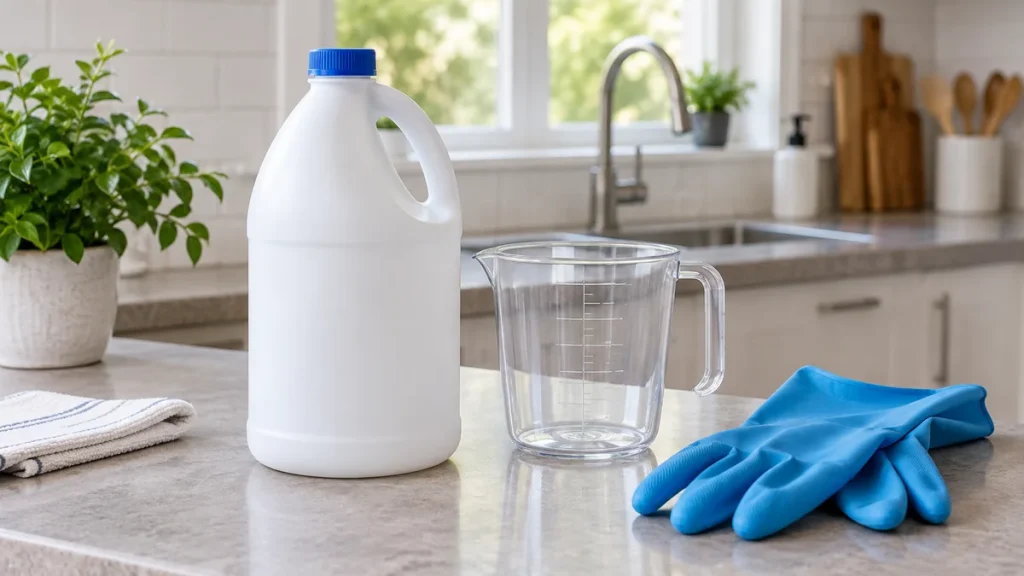
For general hard-surface disinfection, add 20 mL of plain, unscented 5%-6% sodium hypochlorite bleach to 1 liter of cool water to make an approximately 1,000 ppm solution. The exact amount depends on the bleach percentage, product label, surface, and required contact time, so never use the 20 mL rule for food, drinking water, skin, or […]
How to Remove Old Oil Stains From Clothes WD-40
WD-40 can help loosen an old oil stain because its petroleum-based solvents soften oily residue, but it does not remove the stain by itself. The reliable process uses a very small amount of WD-40, concentrated dish soap, appropriate laundering, and air-drying before inspection. Always check the care label and test hidden fabric first. Key Facts […]
How to Remove Set in Oil Stains From Clothes Safely
How to remove set in oil stains from clothes depends on the oil, fabric, and heat exposure. For washable cotton, polyester, and denim, apply concentrated dish soap to the dry mark, work gently, wait 15-30 minutes, wash at the hottest label-approved temperature, and air-dry until the stain disappears. Key Facts Water alone does not dissolve […]
What Causes Rust Stains on Concrete: Sources and Fixes
Rust stains on concrete are orange, red-brown, or yellow-brown deposits created when iron-bearing material reacts with water and oxygen, then enters or contacts concrete pores. Common sources include steel furniture, fertilizer, iron-rich irrigation water, iron-bearing aggregate, and corroding reinforcement. The pattern and whether cracks are present usually identify the source. Key Facts / Quick Answer […]
How to Remove Old Rust Stains From Concrete Safely
Old rust stains on concrete are iron oxide deposits held in the slab’s pores, not ordinary surface dirt. To remove them, use a concrete-safe oxalic acid or reducing-agent cleaner, keep the treatment wet for 10-20 minutes, scrub with nylon, and flush away the dissolved iron before it dries. Key Facts About Removing Old Rust The […]
How to Remove Rust Stains From Concrete Garage Floor Safely
Rust stains on a concrete garage floor are iron oxide deposits held in the slab’s porous surface. The most reliable process is to remove oil and loose dirt, apply an oxalic-acid or other chelating rust cleaner, keep the area wet for its stated dwell time, scrub with nylon, extract the slurry, and rinse thoroughly without […]